
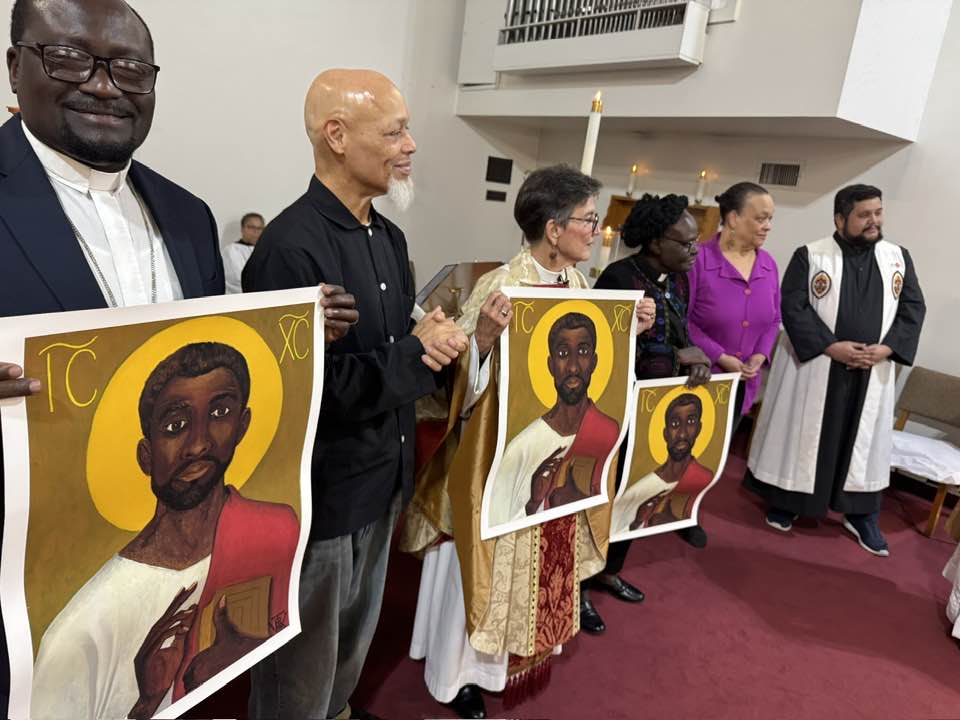
 Dr. Martin Luther King Jr., while responding to the 1968 Memphis sanitation workers strike, prophetically linked the civil rights struggle for equality with segregation’s legacy of racism, poverty, and unsafe and unhealthy communities, said the Rev. Melanie Mullen, guest preacher at “Advocating for Environmental Justice,” the Jan. 18 annual diocesan commemoration of the slain civil rights leader.
“The strike was about labor, but it was also about the environment,” said Mullen, the newly appointed interim director of the Ministry Feasibility Study for East of the Anacostia, an underserved community in the Episcopal Diocese of Washington (D.C.).
“It was about men who went to work breathing in toxic fumes and realizing something was wrong, that their employers thought they weren’t worthy of a safe and healthy life,” added Mullen, who most recently served as The Episcopal Church’s director of reconciliation, justice and creation care under former Presiding Bishop Michael Curry.
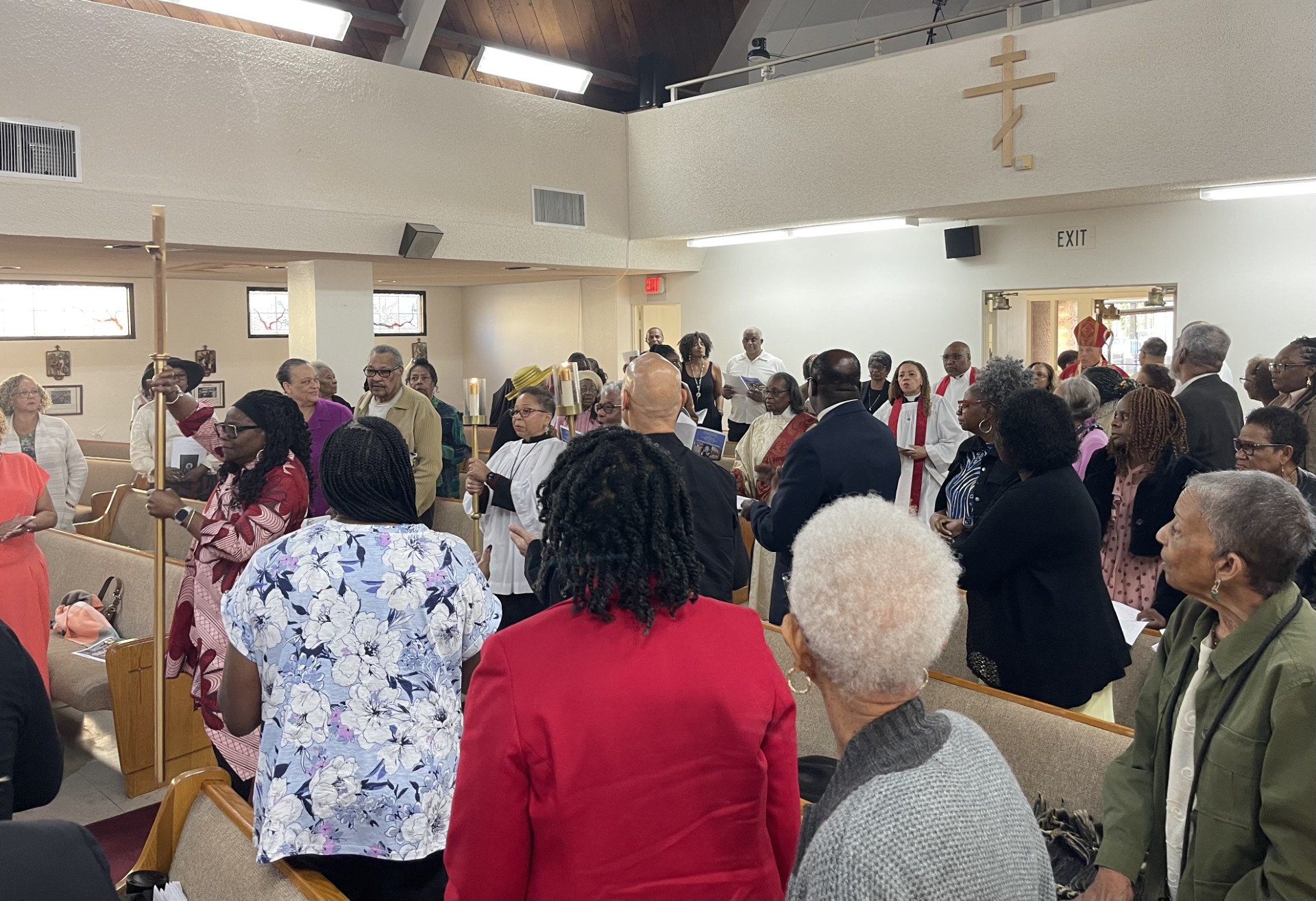
Procession enters for MLK Eucharist.
“King knew, before we had these words environmental justice, that care for the earth is part of caring for vulnerable people. He knew, if you devalue Black and Brown lives, you’re going to devalue land. You’re going to devalue water. Today, we call it frontline communities. It just means a barrio or a hood, a neighborhood … systematically targeted or abandoned. And when that child living in East L.A. has asthma, it’s not an accident that the freeway is so close to their house. Or, when that indigenous community’s water gets poisoned — it’s not an accident. It’s not an accident that there’s a whole string of neighborhoods in Louisiana called cancer alley. It is not an accident.”
Mullen shared a curated reading list of environmental justice resources, available here.
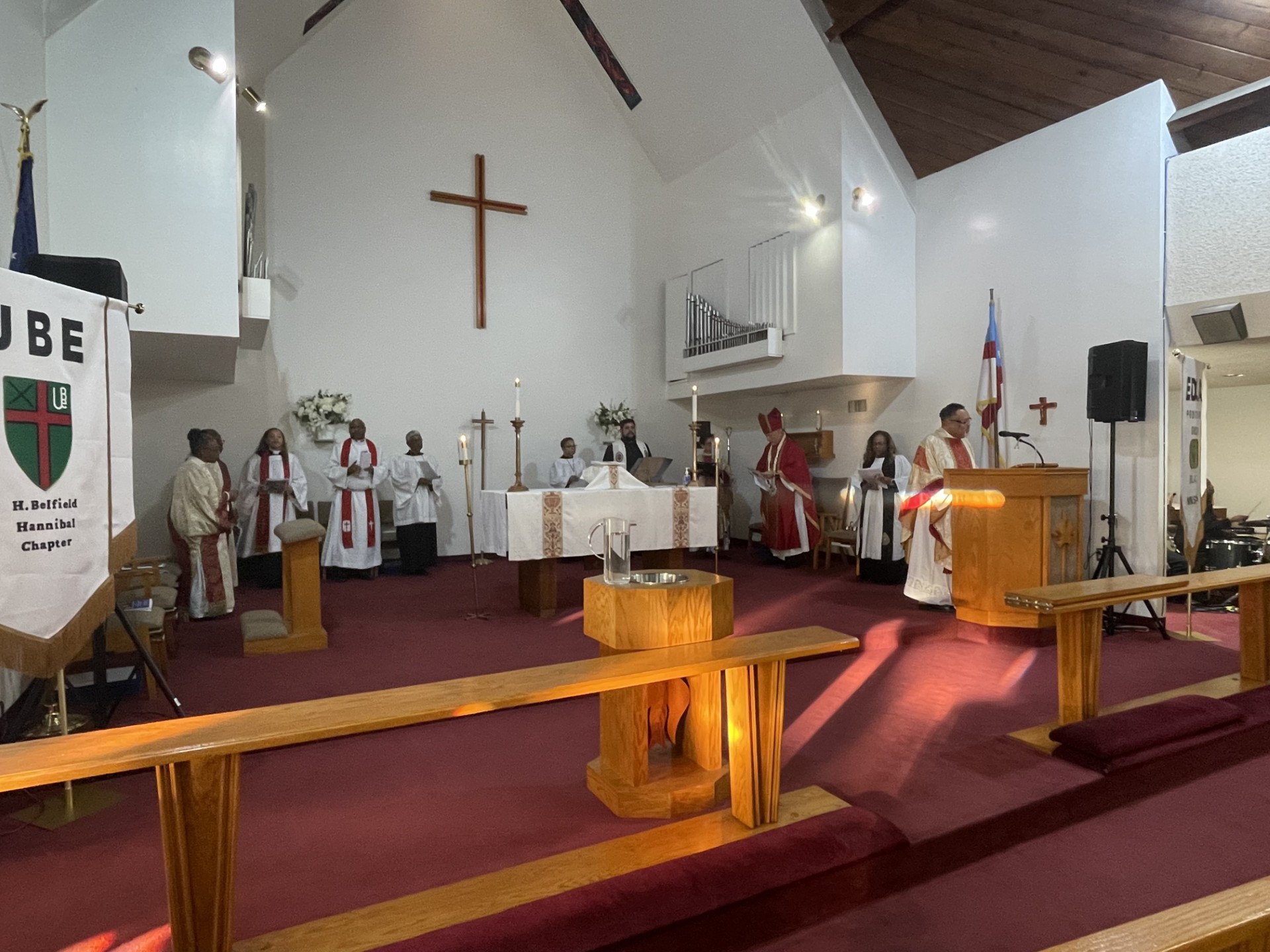
The Rev. Guy Leemhuis opens service.
Welcoming those attending the gathering at Christ the Good Shepherd Episcopal Church in Los Angeles, were Bishop John Harvey Taylor; Canon Suzanne Edwards-Action, chair of the diocesan Program Group on Black Ministries; the Rev. Guy Leemhuis, chair of L.A.’s H. Belfield Hannibal Chapter of the Union of Black Episcopalians; and the Rev. Susan Anderson-Smith, priest-in-charge of Christ the Good Shepherd, located in the Leimert Park neighborhood.
Taylor recalled King’s ethic of love. Preaching a few weeks before his 1968 assassination, King spoke “about the challenges of being a disciple in a dangerous world. He said … every one of us has a war going on inside us. It’s a civil war. Every time you set out to be good, there’s something pulling on you, telling you to be evil.
“Every time you set out to love, something keeps pulling on you, trying to get you to hate. Every time you set out to be kind and say nice things about people, something is pulling on you to be jealous and envious, to spread evil gossip. Just a few weeks later, in Memphis, they tried to cut him down, just as hate had tried to destroy Jesus. But hate stopped neither Jesus, nor his prophet Martin. And hate cannot stop us, because for us, the triumph of love has already been won.”
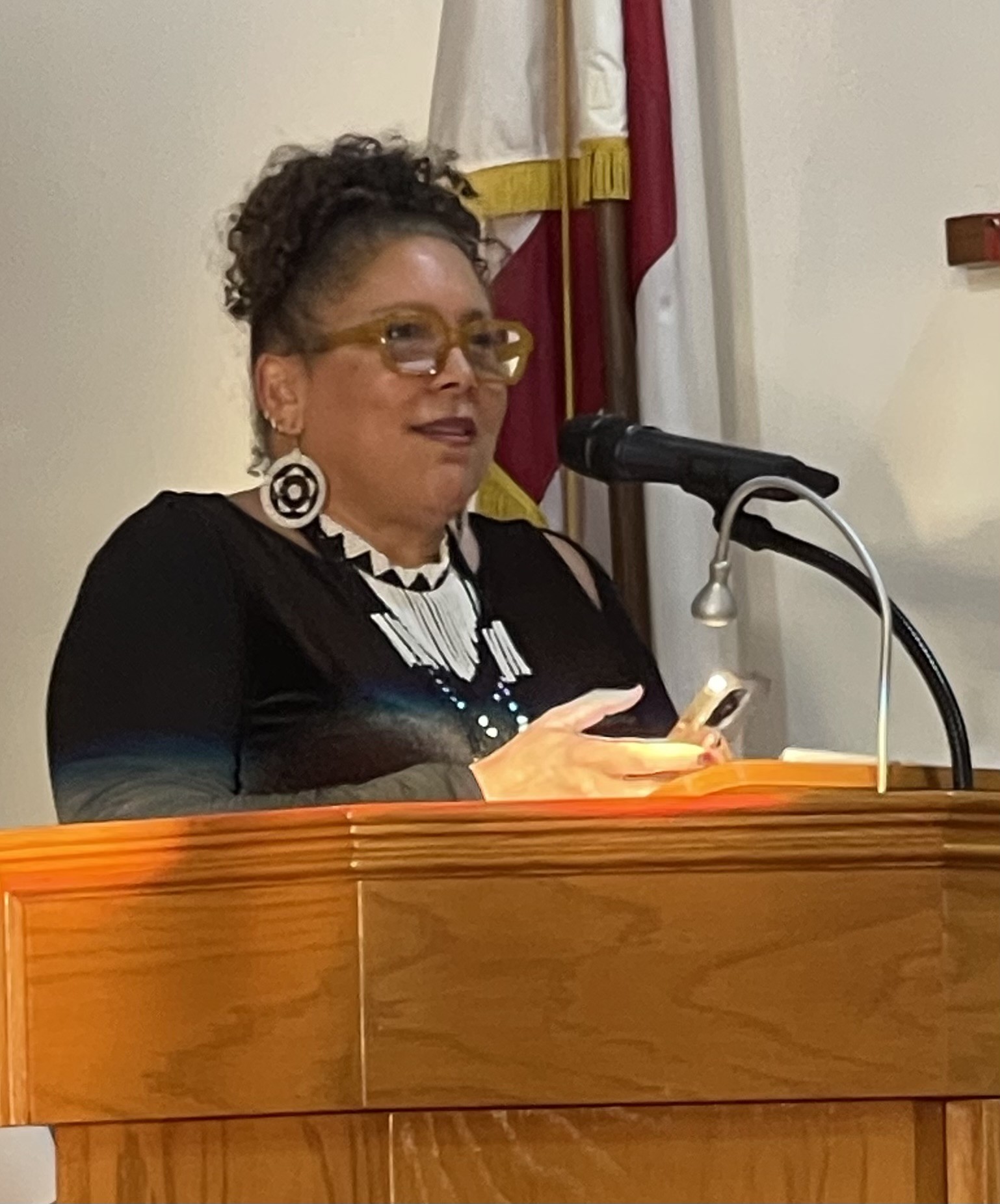
Canon Suzanne Edwards-Acton, chair of diocesan Program Group on Black Ministries, shares insights at MLK Eucharist.
Often, remembrances of King’s message seem sanitized, sterile, said Edwards-Acton, who shared a couple of Facebook posts linking King’s struggle for equality to the current politically charged climate.
The freedom movements of King and others have targeted the fascism that can be traced “all the way back to the founding of this country,” according to a Facebook post by Andre Ricardo. “In 1935, Langston Hughes said fascism for the Negro is not a new thing. He was talking about Jim Crow. Nazi scholars studied our immigration laws, the Jim Crow bans on interracial marriage and used them as a model for the Nuremberg laws. So, history tells us something uncomfortable, but important. What we’re seeing today is not America acting like Nazi Germany, it’s America being America.
“Fascism is what happens when the owner class resorts to law and terror to stop democratic progress, because real equality would cost them wealth and power,” according to the post. “That is why the Ku Klux Klan rose after Emancipation, why Jim Crow terror followed Reconstruction, why police were militarized after the Civil Rights Movement, and why America is only again trying to protect wealth and power against the gains of today’s freedom movements,” according to Ricardo’s post.
“America doesn’t just need better leaders; it needs a new system based on better values. Do not despair. A new world is possible,” according to the post.
Similarly, Edwards-Acton shared a post by Tonya Hylton linking the murder of George Floyd to the recent ICE killing of Renee Nicole Good, both occurring in Minneapolis.
“It’s taken four blocks and five years to go from kneeling on a Black man’s neck to shooting a white woman in the face at point-blank range. It’s been interesting to watch white America wrestle with the conditions that have plagued Black and Brown communities since the inception of this country, the terrorizing of communities by law enforcement. Now, it’s on your doorstep. We’ve told you. See why we’ve been saying, defund the police. Seems like many are ready for defunding ICE now. Now, do you understand?”
Engaging King’s view of ‘creative maladjustment’
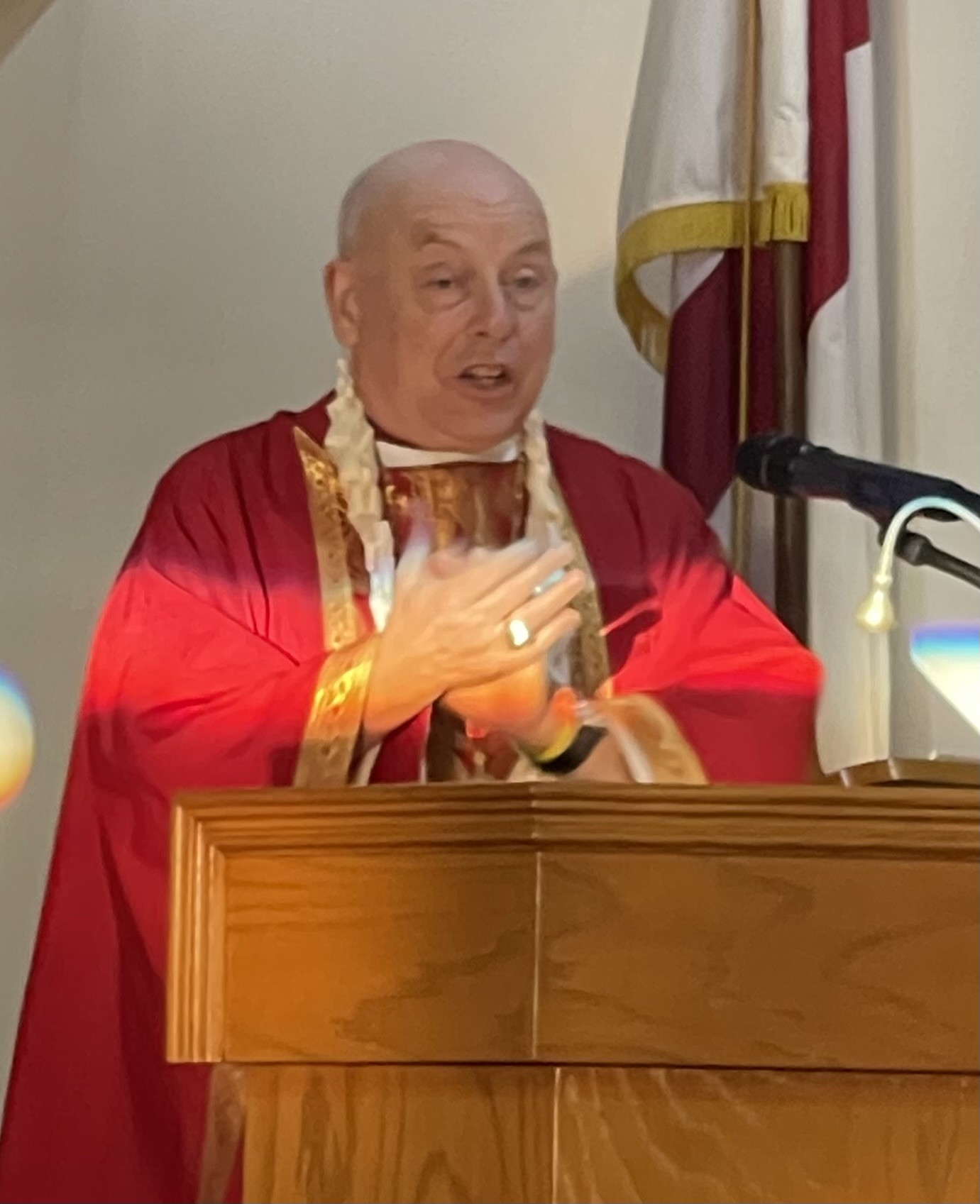
Bishop John Harvey Taylor applauds organizers of MLK Eucharist.
Taylor also linked environmental justice to the one-year anniversary of the devastating Los Angeles area wildfires, which “killed 31 of our neighbors. They destroyed tens of hundreds of homes and livelihoods, and they burned hotter and longer because of climate change,” he said.
“It was a catastrophe that gave us an incarnational experience of Rev. Mullen’s specialty, climate change, that had once been confined largely to People of Color living in the Southern hemisphere, along with those picking our crops in the Central Valley for the last century, who continue to labor without representation,” Taylor said.
Mullen told the gathering she learned about the intersection of racism and environmental justice the hard way, when her beloved grandmother died and the family burial plot could not be located because it was in an area that had flooded.
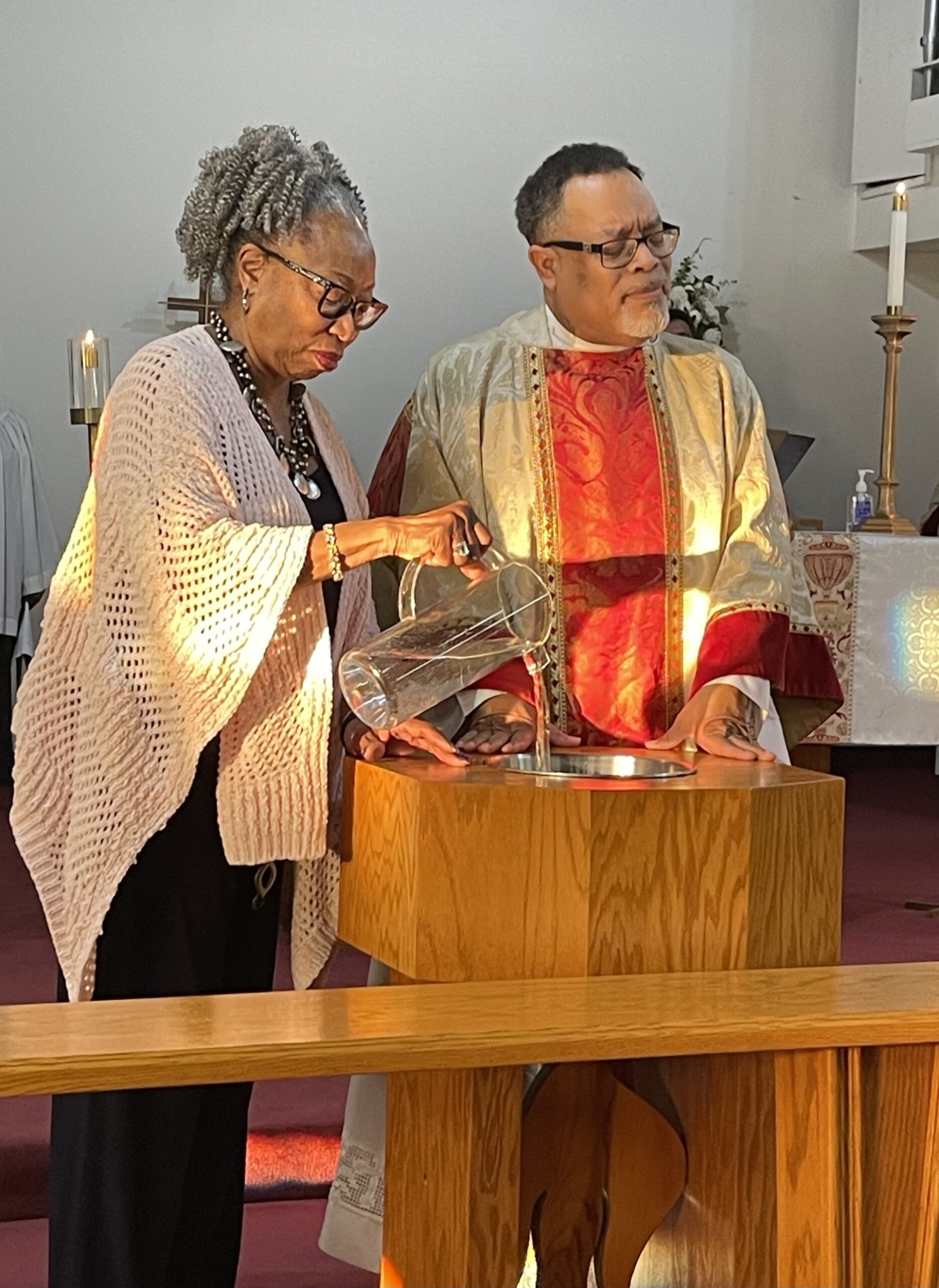
National Union of Black Episcopalians Treasurer joins the Rev. Guy Leemhuis in leading “Libations of the Ancestors” litany.
“Every church and every cemetery carried the bones of racial injustice,” in her hometown Goldsboro, North Carolina, about 35 miles southeast of the state capital Raleigh. There, segregation had dictated that “the hollows, the lower land, the worst land, the wetlands, were the only lands deemed fit for Brown people. The church beside the cemetery was literally called the little ditch church.”
Similar stories surface across the world and relate to money and power and who has it and who wields it,” she said. Those who target communities do so because those communities “didn’t quite look like they would give too much trouble or were worth too much hassle, those that didn’t have much power, who they thought wouldn’t fight.”
Mullen challenged the gathering to continue King’s “creative maladjustment … (that) we should never get adjusted to the idea of environmental destruction. We should never get adjusted to the idea that children drink poison water. We should never get adjusted to the idea that some neighborhoods are buried under toxic waste while others are pristine. Sometimes, psychological health requires being a little maladjusted, especially when communities can’t breathe clean air or drink safe water.”
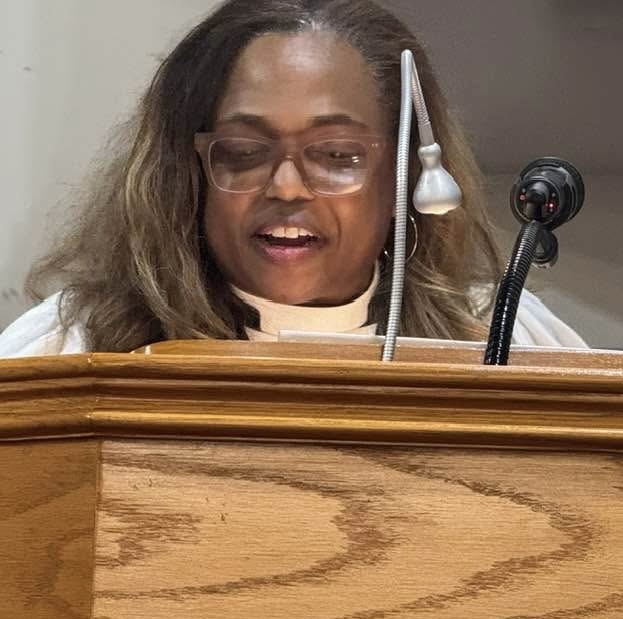
The Rev. Melanie Mullins preaches homily during MLK Eucharist.
She asked: “What will you do to understand that God means for people who are vulnerable to live in a better place, a healthy place for God’s children?
“Dr. King had that answer, creative maladjustment. What he meant was, you don’t forget about the landfill. You don’t forget about the disaster. You integrate your prayer life, your personal life, and you keep fighting when folks of color refuse to assume that the system is bigger and more powerful than they are, because they know that there’s nothing bigger and more powerful than the God who says they deserve care and safety and they are good.”
Mullen said it means resisting imperialism, “whether it’s toxic waste or ICE raids. We get to be the ones to say, I know God had created something better for me. This is the promised land I’m thinking about. And the beautiful thing is, we know how to get there. We’ve seen the models of those like Dr. King, who went to the mountaintop, who faced injustice and taught us how to fight. We’ve got the wisdom in frontline communities. They’re not throwaway places just because people are poor.
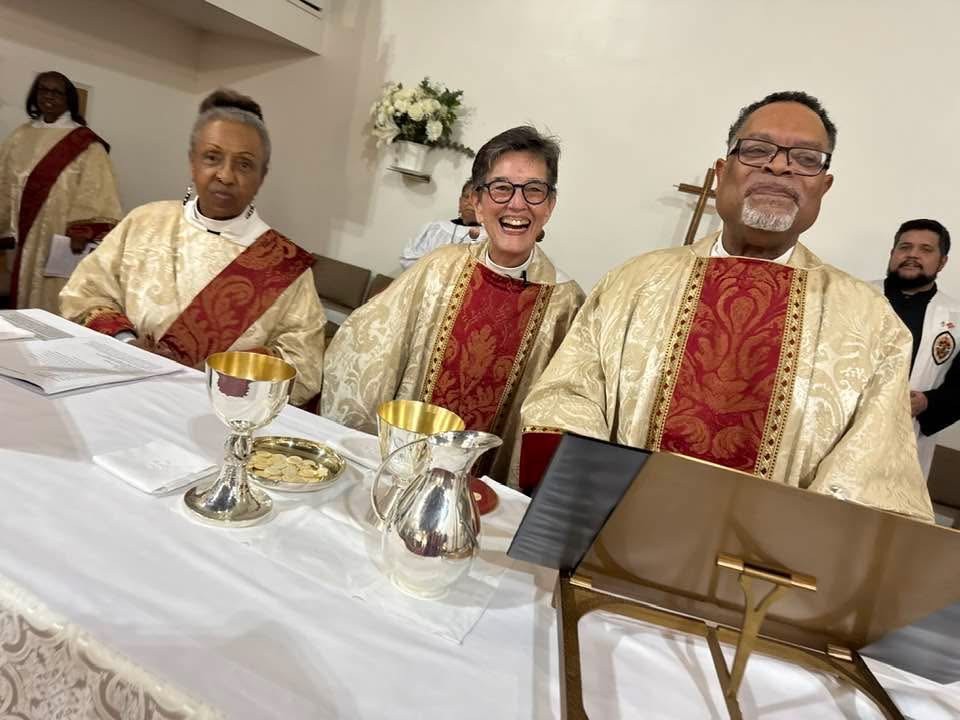
Deacon Margaret Hudley McCauley, and priests Susan Anderson- Smith and Guy Leehmuis smile from altar during for MLK Eucharist.
“They know how to organize for survival. We can be creatively maladjusted, … we have a spiritual calling that demands we do better for God’s creation. The Promised Land isn’t just a future promise. It’s a project. It’s our evangelism. It’s our ministry. Our calling starts with knowing and doing better. It starts right now, with us. Do we know better? Let us go to this mountaintop and see the beauty of a land that’s not just good, but is everything God meant for us to be.”
The program was followed by a seafood gumbo buffet including peach cobbler.