
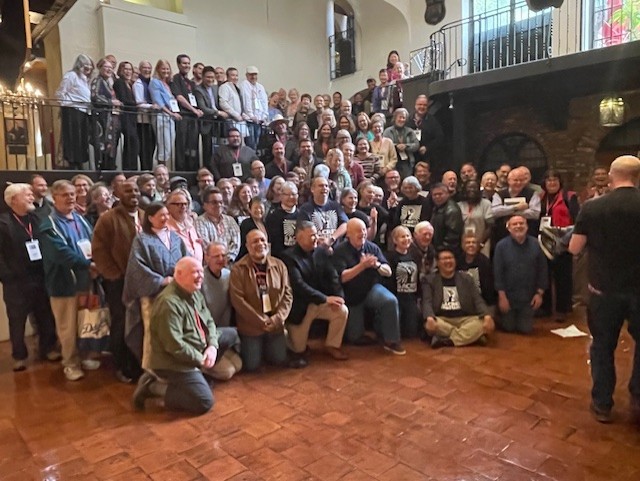
 More than 150 clergy — meeting May 4-6, 2026, in Riverside — wished fond “Happy Trails” to retiring Bishop John Harvey Taylor and Canon Kathy O’Connor, and enthusiastically welcomed incoming Bishop-elect Antonio J. Gallardo Lucena, who will be consecrated July 11 at All Saints Church in Pasadena.
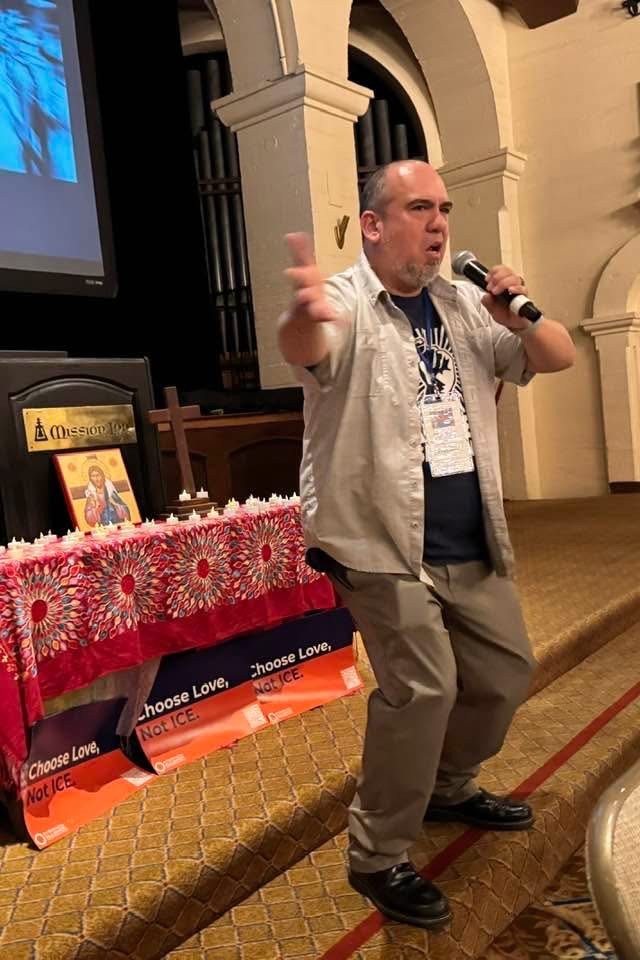
Panelists addressed the three-day annual conference, themed “Love in the Time of Rampant Injustice: Sacred Resistance and Renewing Christian Community in the Way of Jesus,” with resources, and stories of hope, courage and resistance work across the diocese. Keynote speaker the Rev. Dr. Francisco Garcia, a community organizer and adjunct faculty member of the Church Divinity School of the Pacific, invited participation in ongoing sacred resistance efforts throughout the six-county Los Angeles diocese.
Sacred Resistance emerged from the 2016 annual convention declaring Los Angeles a sanctuary diocese. Since, this movement has involved resistance, protest, education, advocacy and community—incorporating individuals into a collective “story of us … responding to the fierce urgency of now,” Garcia said.
 ‘Happy Trails’ and peace
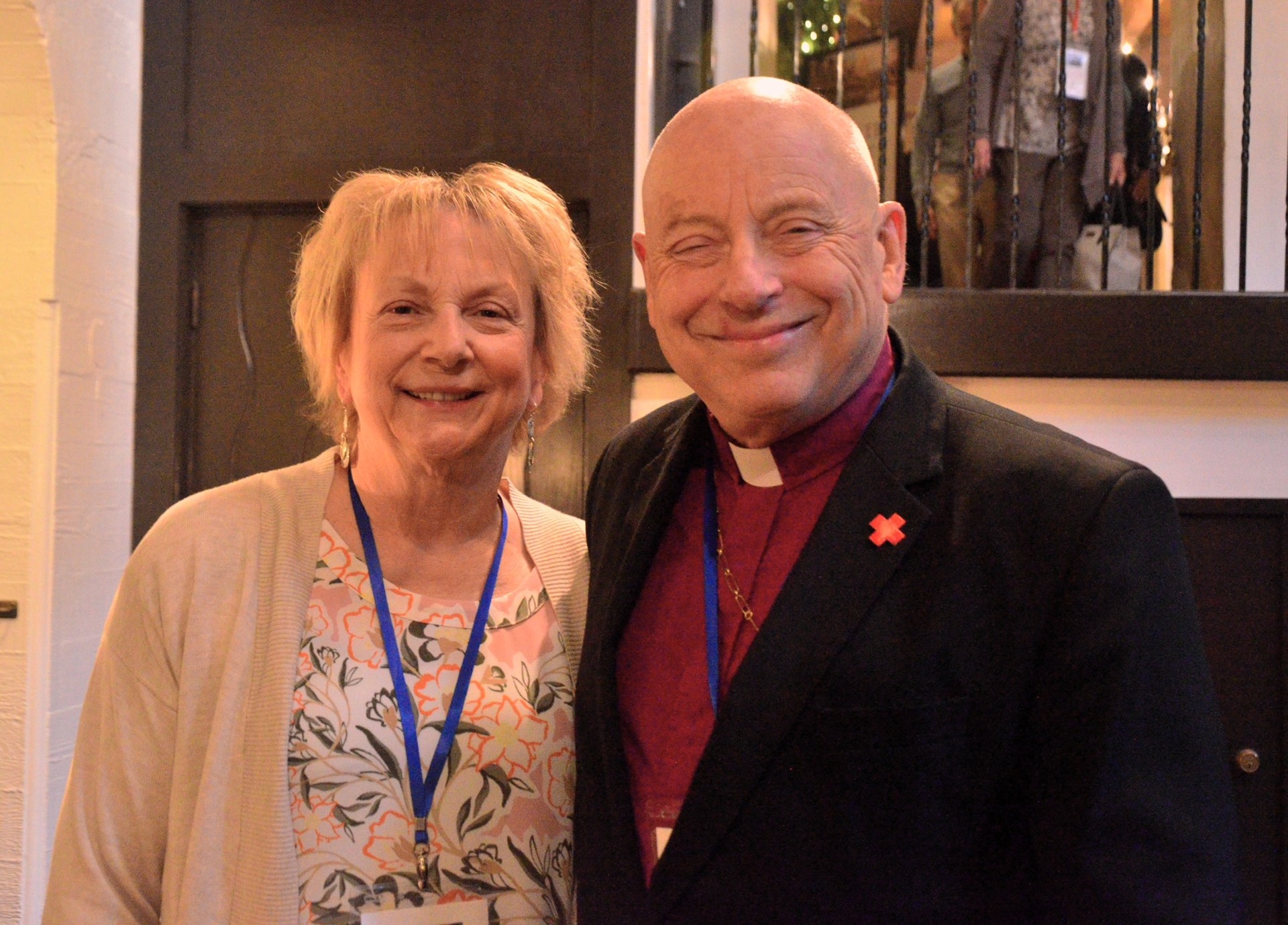
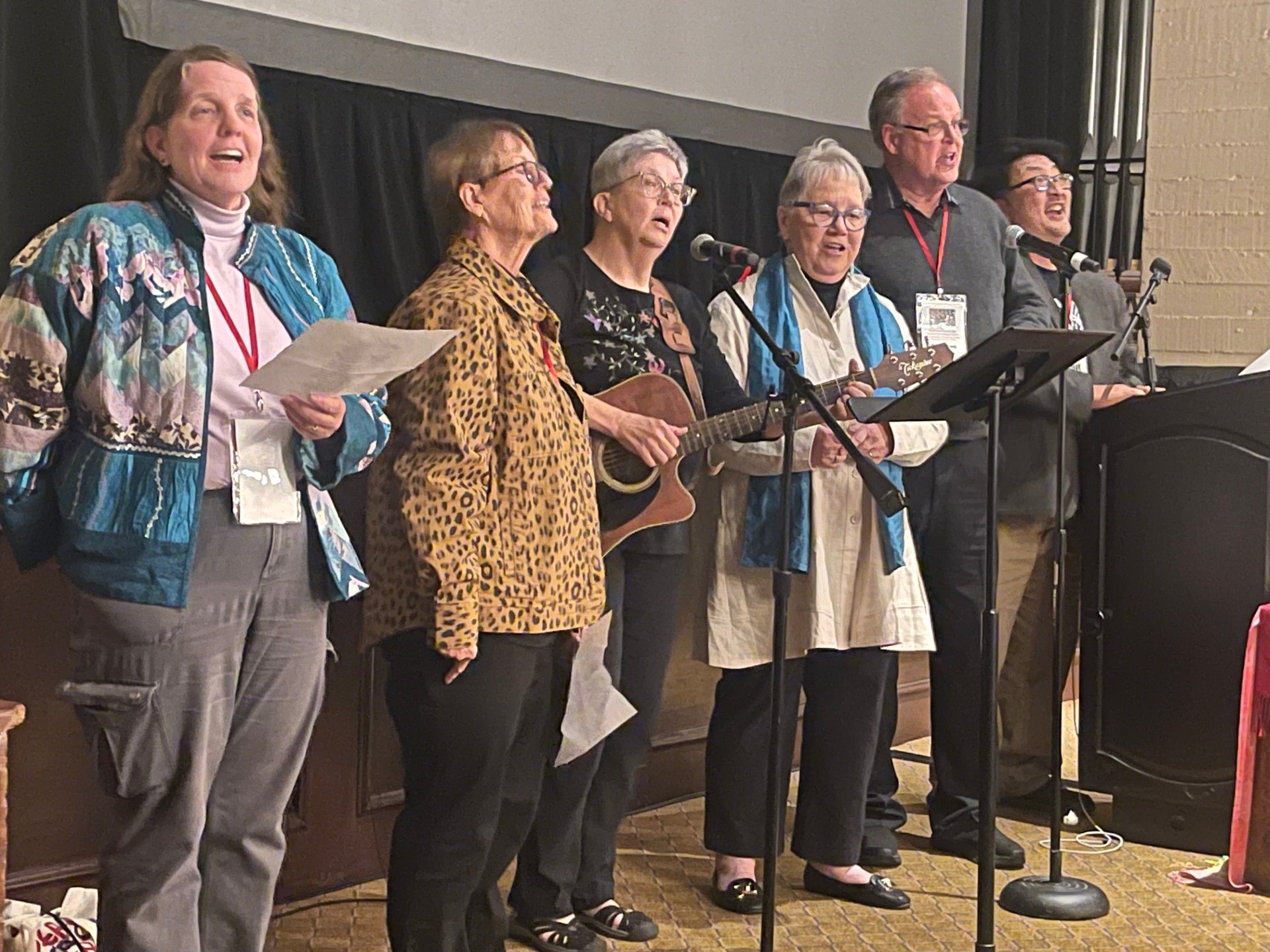
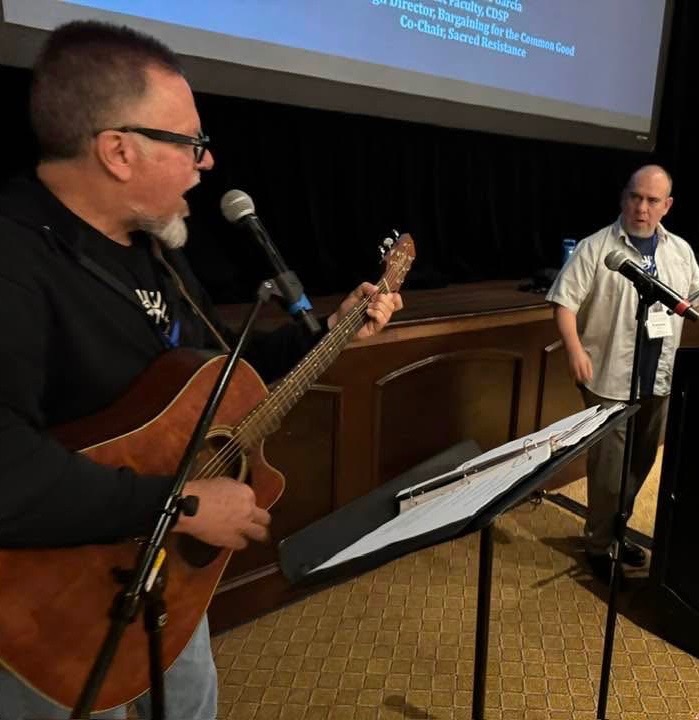
“Happy trails to you, until we meet again, happy trails to you, keep smiling until then,” clergy serenaded Taylor and O’Connor at a joyous May 5 dinner, with a rendition of the 1952 theme song from the Roy Rogers Show.
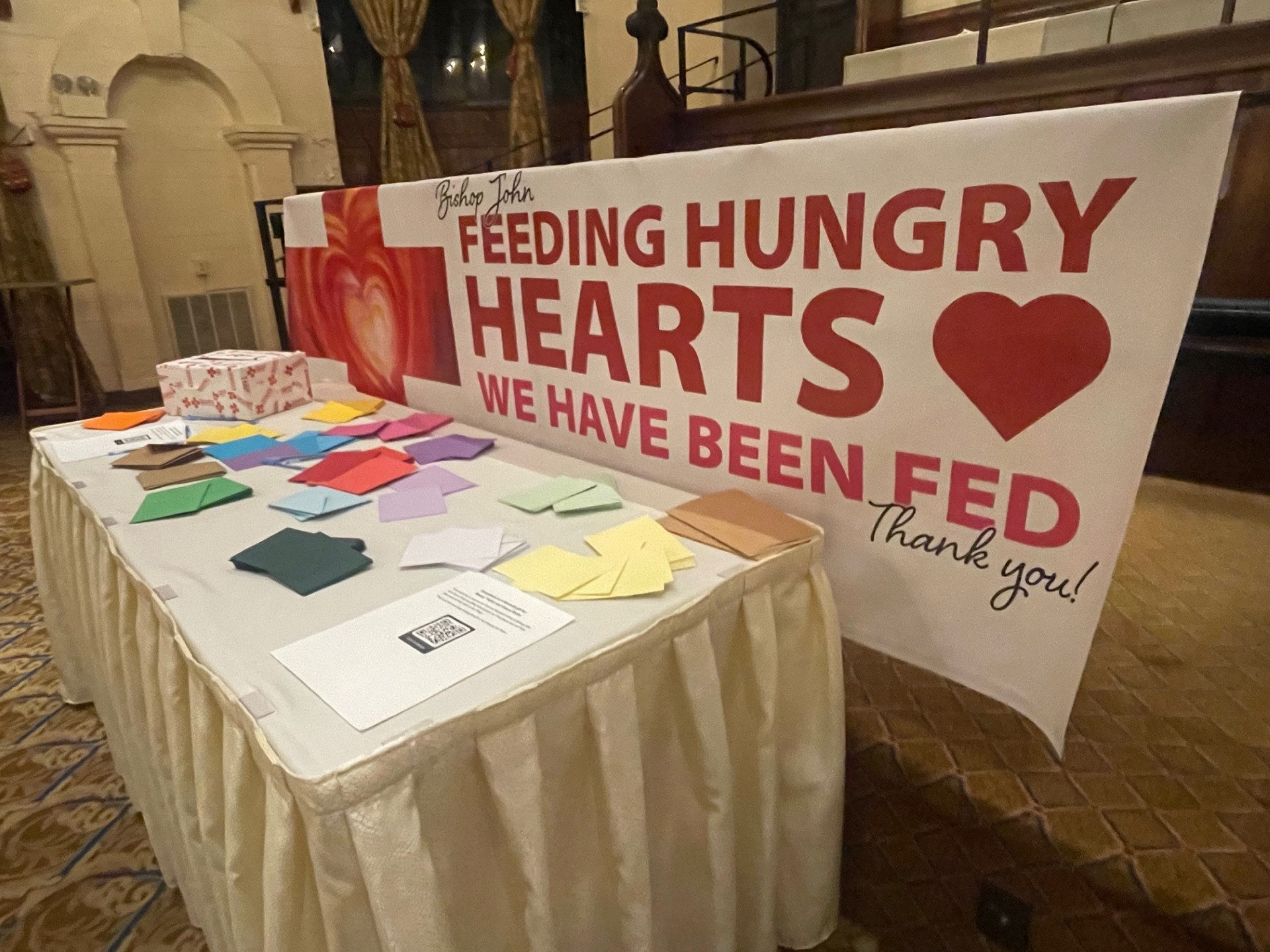
Since 2017, Taylor’s “Feeding Hungry Hearts” episcopate has included developing affordable housing, resilience and relief efforts through both the 2020 pandemic and disastrous 2025 wildfires, strengthening partnerships with churches in the Middle East and Taiwan, regularizing diocesan finances and providing college scholarships to underserved, often immigrant youth, “notwithstanding the harassment of their government, as they make America great.”
 Amid applause, cheers and whistles, Taylor told clergy: “You are an amazing community of pastors, theologians, teachers, and preachers – you work long hours — you love and care for your people — and you gather and treasure the narratives of the places you serve, each of them precious and unique – it has been an incredible blessing and honor to serve with you.”
 Bishop-elect: A listener and a doer
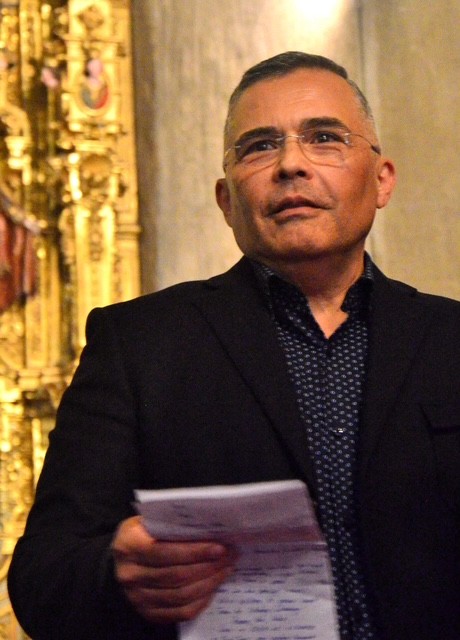
Clergy also enthusiastically cheered Gallardo-Lucerna, a self-described listener and “doer” who invited prayer, support, patience, feedback and spreading the good news of his episcopate, expected to be framed in a spirit of love and truth.
Prayer “is the best gift you can give me,” said Gallardo L., who concluded his ministry as rector of St. Luke’s Church in Long Beach on April 12. “Prayer has sustained me through the process of election, and prayer will continue to sustain us through our work together.”
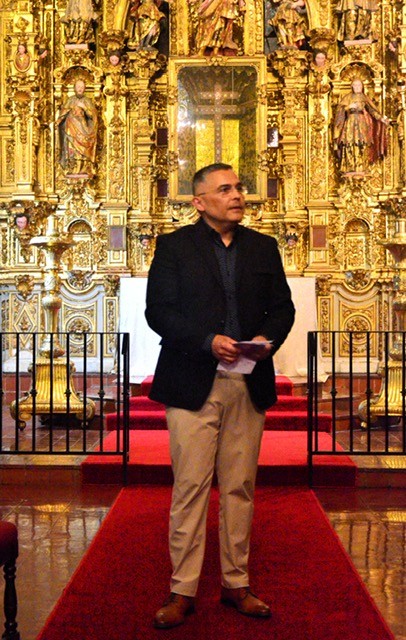 While getting to know diocesan staff, clergy, congregations and church members, through online or in-person conversations, he is developing a framework to “see what God is calling us to do in the next however many years, have a general sense of how we’re going to get it done and then have some values that guide our work.”
In meetings with members of the diocese, he will be seeking answers to: “Where is your heart? In your community, what is God calling you to do?” he said.
“You’re going to give me your ideas about what could be done better. I want you to be patient with that, if I don’t put it into practice right away,” added Gallardo-Lucerna, who distributed business cards. “I want the diocese to be a resource to you.”
More detailed information about his July 11 (link here) consecration is forthcoming.
 A diocese of ‘us-es’ coming alongside
From the Inland Empire to Santa Barbara, from L.A. to Orange County, multiple opportunities exist to engage the ministry of sacred resistance, Garcia said. Direct action might include monitoring immigration courts, organizing or joining prayer vigils, street protests or rapid response teams and contacting elected officials. Churches might also consider offering safe space for those who have been targeted to gather, as well as raising awareness through education and communication.
A panelist, the Rev. Jennifer Hughes said congregations in the Inland Empire have been actively organizing, meeting, and protesting along with other faith communities. “The work continues, in fits and starts, and my small parish in Rialto, has become a sanctuary parish. It’s been a process of real, powerful discovery and just moving from the guts of ‘we want to do this and we want to understand what it means’. They’re really embracing that identity, and it is small but growing in a very visible way.”
The Ven. Laura Siriani, who serves as diocesan archdeacon and at St. George’s, Laguna Hills, in South Orange County, said the congregation has become a hub for lively activity, including a taco restaurant and a weekend open-air market in the parking lot which serves many in the local Latino community.
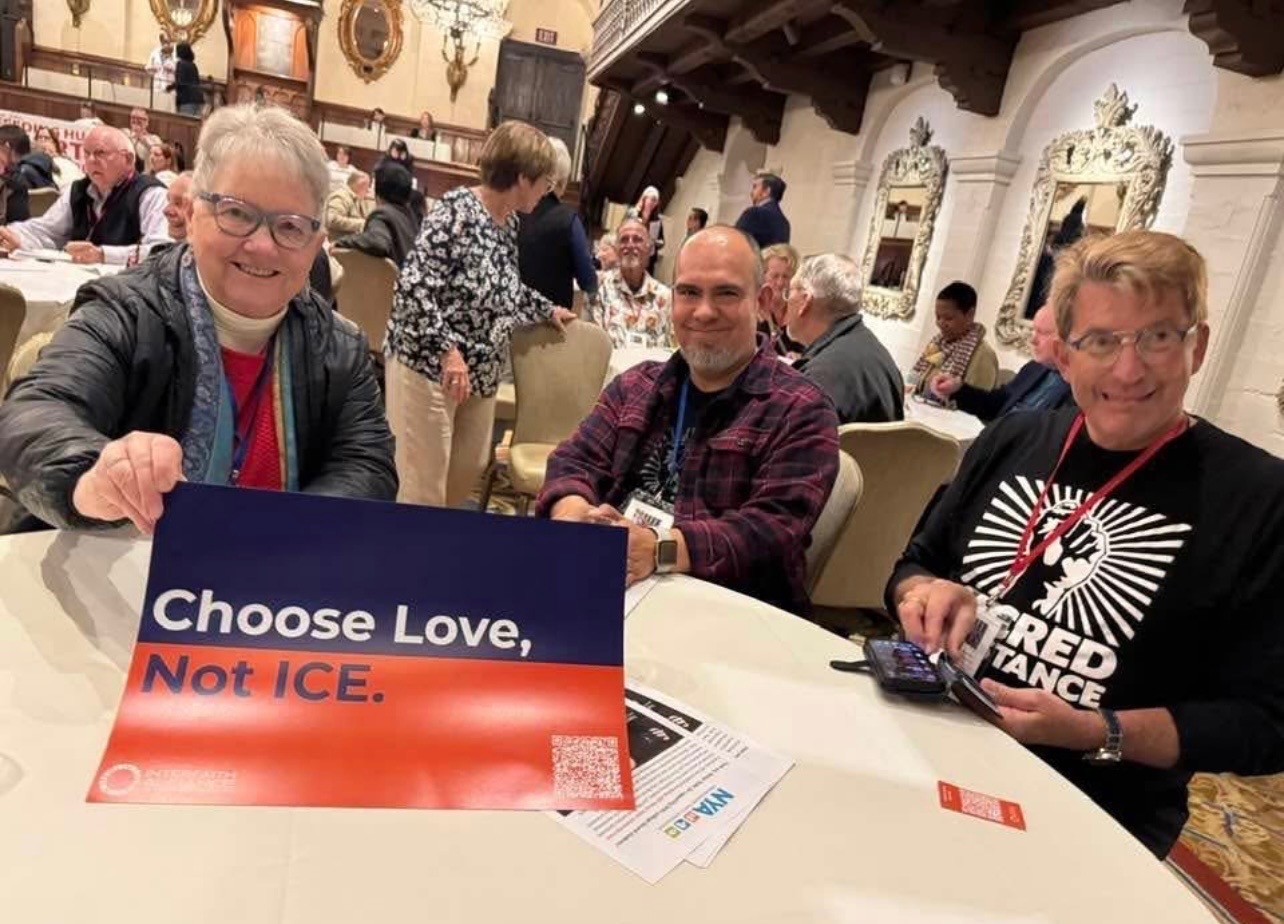 Clearly, the Spirit is moving, she said. “We started discussing it and realized this effort needed to be way beyond st. George’s. We have gathered a number of key people and are beginning to build outward.” A day of Sacred Resistance drew more than 100 activists, advocates, interfaith partners and community members, and included a letter writing campaign to elected officials, she said. “And we came away saying, Yes, we can do this.”
Similarly, the Rev. Mark Chase, director of equity advocacy and organizing at All Saints, Pasadena, agreed the Spirit is moving in powerful ways. Responding to news that Jose Maduro, a lead organizer in Pasadena had been arrested by police, in collaboration with ICE, he joined a group gathering outside the jail, singing and chanting for Maduro’s release.
 An impromptu march led the protestors to the mayor’s office and challenges for the police to protect and serve the community, rather than aiding in the kidnappings of community members. The organizer said: “We have been doing your job. And she started to cry. She’s like, we are tired. We are exhausted. The same handful of people are doing patrols trying o keep our neighbors safe, for the last nine months.”
Chase approached and offered All Saints’ help, with drivers for the patrols. “We set up a training to train 10 people and 800 showed up,” he said. “And just last week, four of their organizers used my office as a safe space for a meeting. These are some examples of how the story of us is coming alongside the work. We’re developing relationships.”
In Santa Barbara, the Rev. Sara Thomas, associate rector at Trinity Church, shared how she turned to the diocesan Sacred Resistance team to organize a protest at a local Target store. “People showed up. We had signs. We learned songs. We practiced. We marched into Target singing. Just having a template, having your support was so empowering.”
The protest drew about 20 people, but interest has ballooned, she said. “Then, 60 people contacted me and want to do it again.”
 Similarly, the Rev. Catherine Wagar, a deacon, shared how her family has offered her home to asylum-seekers. “Over a period, from about 2009 to about 2024, we’ve had a succession probably 12 to 14 people seeking asylum who have lived with us for periods from two weeks to three years,” she said. Mainly, the work is about finding the courage to say yes, she said. “In one case, it was a family of four. Sometimes, it was individuals who were short-term, sometimes longer-term.”
The Rev. Carlos Ruvalcaba, associate rector, St. Stephen’s, Hollywood, said yes six years ago to an invitation to celebrate the feast of St. Mark’s, from an Anglican community of about 50 from Veracruz, who eventually became St. Stephen’s members.
Seven months after they joined St. Stephen’s, ICE targeted 14 members of that community and “I started witnessing all their pain and suffering,” Ruvalcaba said. “We come from a place that is not this place. We have cultures, traditions, food, we have family roots. We have so many things that are unique and we love them. So, one foot is there. But our faith is in this new country, this new culture, this new set of traditions. What people really want is that we see them or we would like to be seen, for what we are, not for what we represent.”
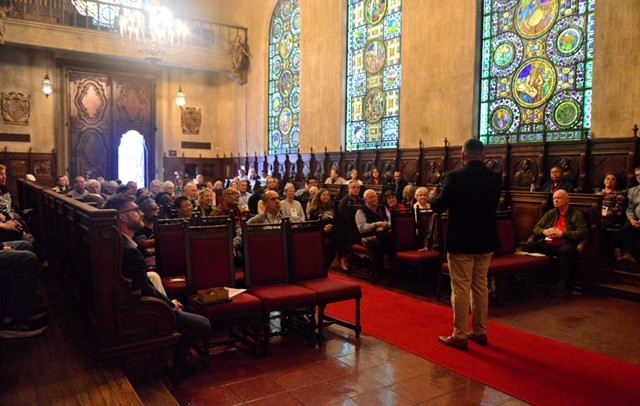 The Rev. Guy Leemhuis, vicar of St. Luke’s of-the-Mountains, La Crescenta, said many marginalized communities are being targeted, all People of Color, including African Americans, and the LGBTQ+ community. “We have to know, from our Jesus movement viewpoint that we have to continue until we win this fight for love.
“There’s lots of ways to get involved. Giving money. Being a legal observer. It takes a village.”
The Rev. Payton Hoegh, program director for the Center for Spirituality in Nature, shared about assisting with disaster relief efforts in communities devastated by the January 2025 wildfires. He is working with Disaster Relief Officer Grace Wakelee-Lynch to assist in long-term recovery efforts, offering ethical recovery financing, disaster preparedness and resiliency resources, as well as pastoral support for those displaced by the fires.
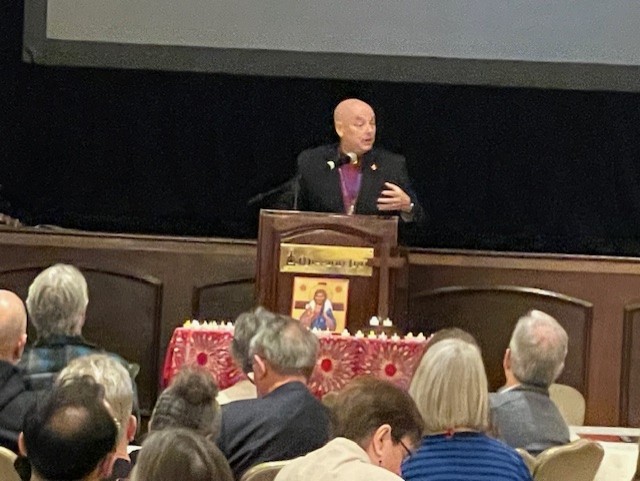 During the conference’s celebratory dinner on May 5, Taylor named the Rev. Thomas Quijada-Discavage, canon for formation and transitions ministry since 2021, as an honorary canon of the diocese (see story here). As the evening program continued, attendees shared milestones and transitions in their lives, and Taylor paid tribute to Bob Williams, diocesan canon for common life, who announced his retirement this summer after 40 years of service in the diocese and wider Episcopal Church (see story here). Both Quijada-Discavage and Williams received standing ovations, as did Taylor and O’Connor, in appreciation for their leadership and service.
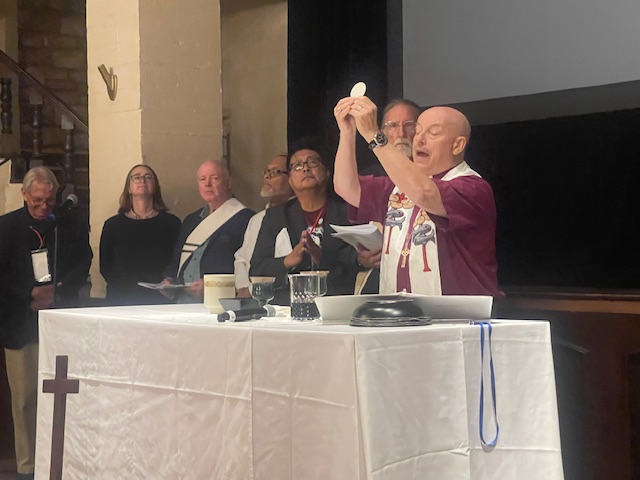 The Rev. Canon John Watson, interim canon to the ordinary and conference emcee, preaching at a May 6 closing Eucharist, acknowledged the “moment of change” facing both the disciples and the diocese. “When Jesus says I will not leave you orphaned (John 14:1-14), that is a promise but is also a challenge.
“This is a moment of change, when we say goodbye to one bishop and say hello to another. A moment of change, when we say thank you to all that has been. A moment of change when we say thank you for all that will be and look forward to all that God might be doing among us and together pray as a united people that God will continue to pour out his spirit upon us. Because, when Jesus says I will not leave you as orphans, he doesn’t promise that things will remain the same.”