
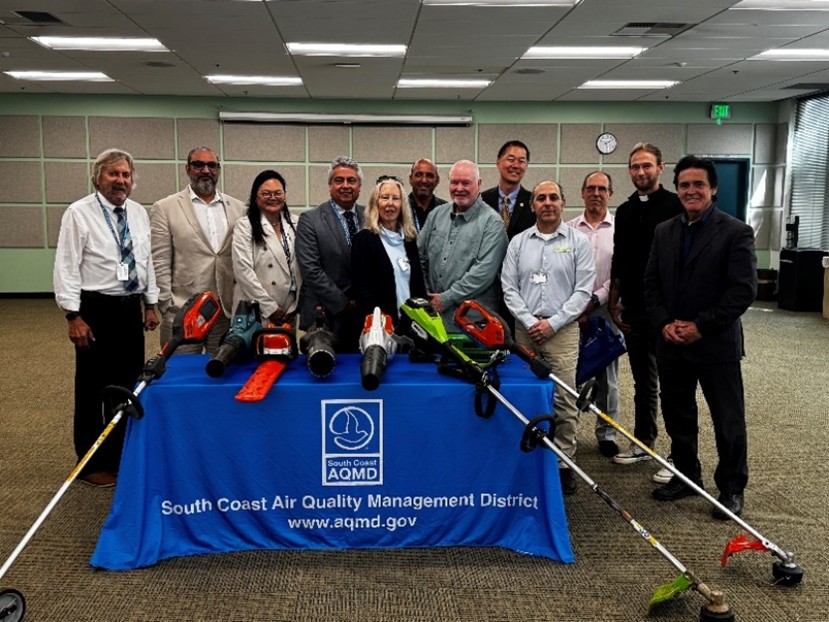
BCCC members with AQMD team.
Members of the Bishop’s Commission on Climate Change visited the Diamond Bar offices of the South Coast Air Quality Management District (South Coast AQMD) on March 24 to learn more about the agency’s work and explore ways the Diocese of Los Angeles might support clean air efforts across Southern California.
Bishop John Harvey Taylor said the invitation emerged from a recent conversation with South Coast AQMD Governing Board Chair Michael Cacciotti during an adult education forum at Holy Family Roman Catholic Parish in South Pasadena, where Cacciotti worships. He is also a member of the South Pasadena City Council.
“Michael and I got to know one another talking about our respective churches’ positions on global warming,” Taylor said, adding that Cacciotti extended the invitation at the South Pasadena forum. Taylor was unable to attend the tour because of a scheduling conflict with the spring House of Bishops meeting.
“My SCAQMD colleagues and I were inspired by the policies adopted by The Episcopal Church to address air pollution, the climate crisis and the efforts of you and your colleagues to advocate for environmental stewardship of our precious, limited natural resources on Mother Earth,” Cacciotti told Taylor. “We look forward to collaborating with you and your colleagues in the near future to share our resources and talents in this effort.
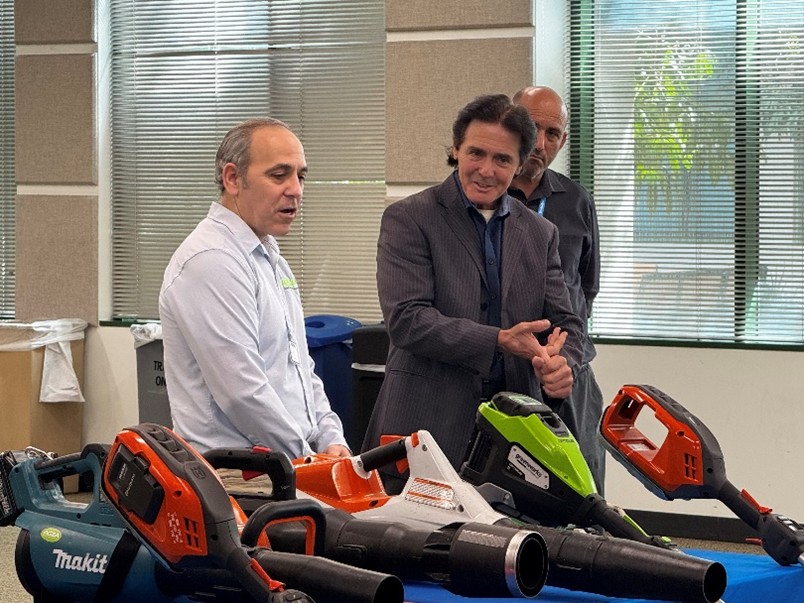
Chair Cacciotti and Dan providing details on benefits of eL&G Program
During the visit, Cacciotti offered participants an overview of South Coast AQMD’s mission, resources, and public-facing programs, including incentives and educational initiatives aimed at reducing air pollution and improving public health. He and commission members discussed the shared language of care and responsibility that often bridges environmental work and faith communities.
“It was helpful to have this opportunity to learn more about and to connect with AQMD,” said the Rev. Payton Hoegh, co-chair of the commission, describing the agency as one that undergoes “important efforts to preserve air quality, serve public health, and advocate for lifestyle changes that support integrated wellness for individuals, communities, and our environment.” Hoegh said the conversation made it clear that both groups share a commitment to community health and thriving — and a recognition that “community wellness intersects with ecological and spiritual concerns.”
Several reflections highlighted the importance of project-based partnerships that can also catalyze broader cultural change. Hoegh pointed to examples of institutional collaboration, including support for transitioning from gas-powered lawn care equipment to electric alternatives — changes that can reduce pollution and noise while improving conditions for workers and neighborhoods. Hoegh described it as “project-oriented” work that also reinforces “the kinds of profound cultural change that is needed to respond to the significant environmental challenges we face.”
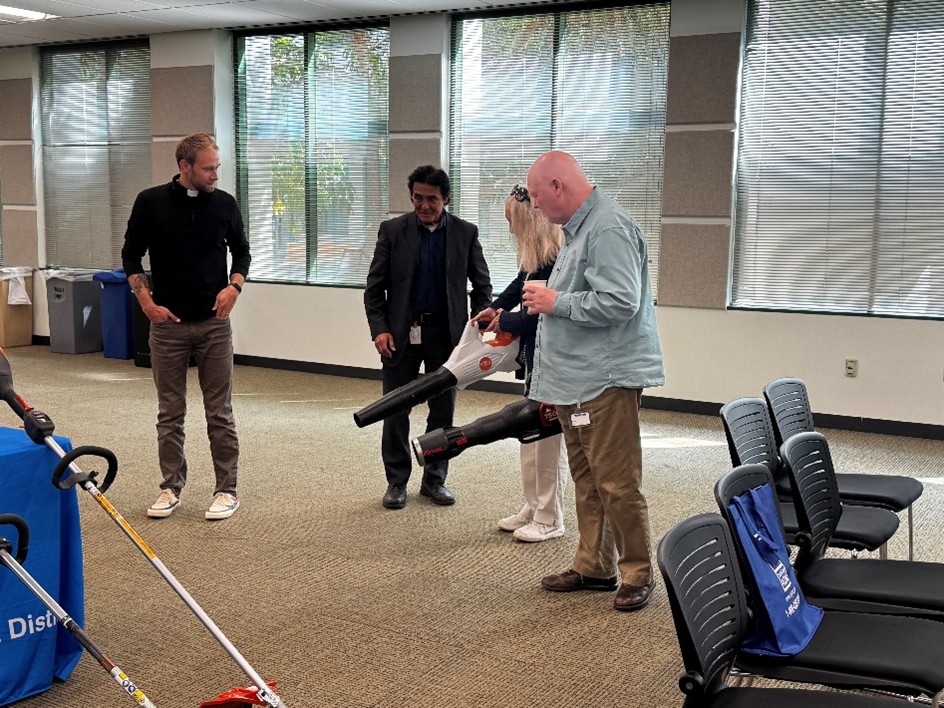
Members of Episcopal Church holding lawn blower equipment at ease with one hand and coffee in another.
The visit also surfaced the commission’s interest in helping translate climate and air-quality work into practical steps congregations can take. The Rev. Daniel Tamm, co-chair of the commission, said South Coast AQMD officials invited collaboration on projects such as “unfolding a just energy transition,” expanding education on air pollution solutions, and promoting clean air incentives. Tamm noted that agency staff seemed to be working under the weight of public reluctance to accept the reality of the climate crisis, and were seeking ways to relate their work to the kind of spiritual grounding and connection faith communities can offer.
Kate Varley Alonso, a parishioner of St. Martin in-the-Fields, Winnetka, said the meeting at South Coast AQMD was “grace-filled,” and emphasized that many diocesan communities can benefit from programs available now. Alonso described learning the history of the agency and hearing about resources designed to reduce air pollution and improve health across the region. She added that “most of the diocese is within the South Coast AQMD district and can benefit right now from an array of clean air incentives programs for individuals and businesses.”
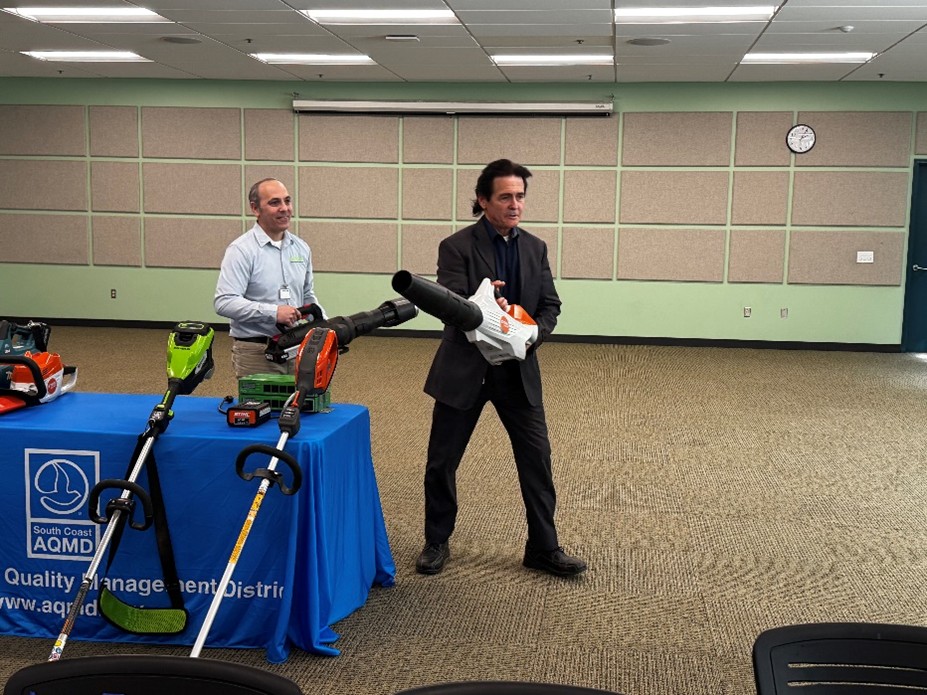
Chair Cacciotti demonstrating ease of electric blower.
Alonso also highlighted everyday steps South Coast AQMD encourages residents to take—actions she framed as a way of putting faith into practice through care for creation. She cited suggestions such as carpooling, using public transit, choosing water-based paint, wetting down sources of dust, avoiding burning wood, replacing gasoline-powered lawn and garden equipment with electric models, and conserving energy.
“This sort of documented success makes it easy to dream of ways the Diocese of Los Angeles might partner with AQMD as we nurture healthier communities and care for creation as God has always called us to,” Hoegh said.
The Bishop’s Commission on Climate Change plans to continue exploring how diocesan communities can access existing clean-air incentives and participate in partnerships that support public health and the care of creation.