 Dear Friends:
“The old leaves wither, die, and fall away, and the new growth extends forward into the light.”
This quote by Bryant McGill, American author, speaker, and thought leader who advocates for human rights and gender equality, is about the natural cycle of life and the importance of letting go of the past to embrace new beginnings.
It uses the metaphor of a tree to illustrate that the end of one phase is necessary for the start of another, encouraging the idea that change is a vital and continuous process.
We Christians are starting the season of Advent, which marks the end of a liturgical year, or the beginning of a new one, depending on how you see it.
For some, the Advent season focuses on preparation and expectation, the anticipation of Christ’s birth in the season leading up to Christmas, and this is part of the story, but there’s more to Advent.
The reading for Advent 1 from the prophet Isaiah reminds us that the covenant that God made with creation will be fulfilled with the coming of Jesus Christ.
“For out of Zion shall go forth instruction, and the word of the Lord from Jerusalem. He shall judge between the nations, and shall arbitrate for many peoples;…” (Isaiah 2:3).
These words from the prophet Isaiah are a multi-voiced meditation of faith around the crisis of the destruction of Jerusalem in 587 B.C.E, and the ensuing crises of deportation and loss that the people of Israel and Judah were suffering.[1]
These words are also meant to offer a hopeful message of restoration.
“… they shall beat their swords into plowshares, and their spears into pruning hooks; nation shall not lift up sword against nation, neither shall they learn war any more” (Isaiah 2:4).
Even though the makers of the book of Isaiah did not know the way ahead, it is clear that they did not doubt that there was a way ahead.
The book of Isaiah “rolls” toward the future that has just begun with God’s promise, a promise which is not fully formed, or developed, and yet it is a future that is as sure as the God who plans and builds.[2]
At the beginning of this Advent season, we are reminded that the consummation of God’s purpose for creation is pictured as the second coming of Christ. And when that time comes, we won’t meet a stranger, but the one who has already been among us, the one that we did not meet in person, and yet, we know, we love, and we experience every day.[3]
We are also reminded that the end of times will come unexpectedly, and that like our ancestors, we will experience moments when what is ahead of us is uncertain.
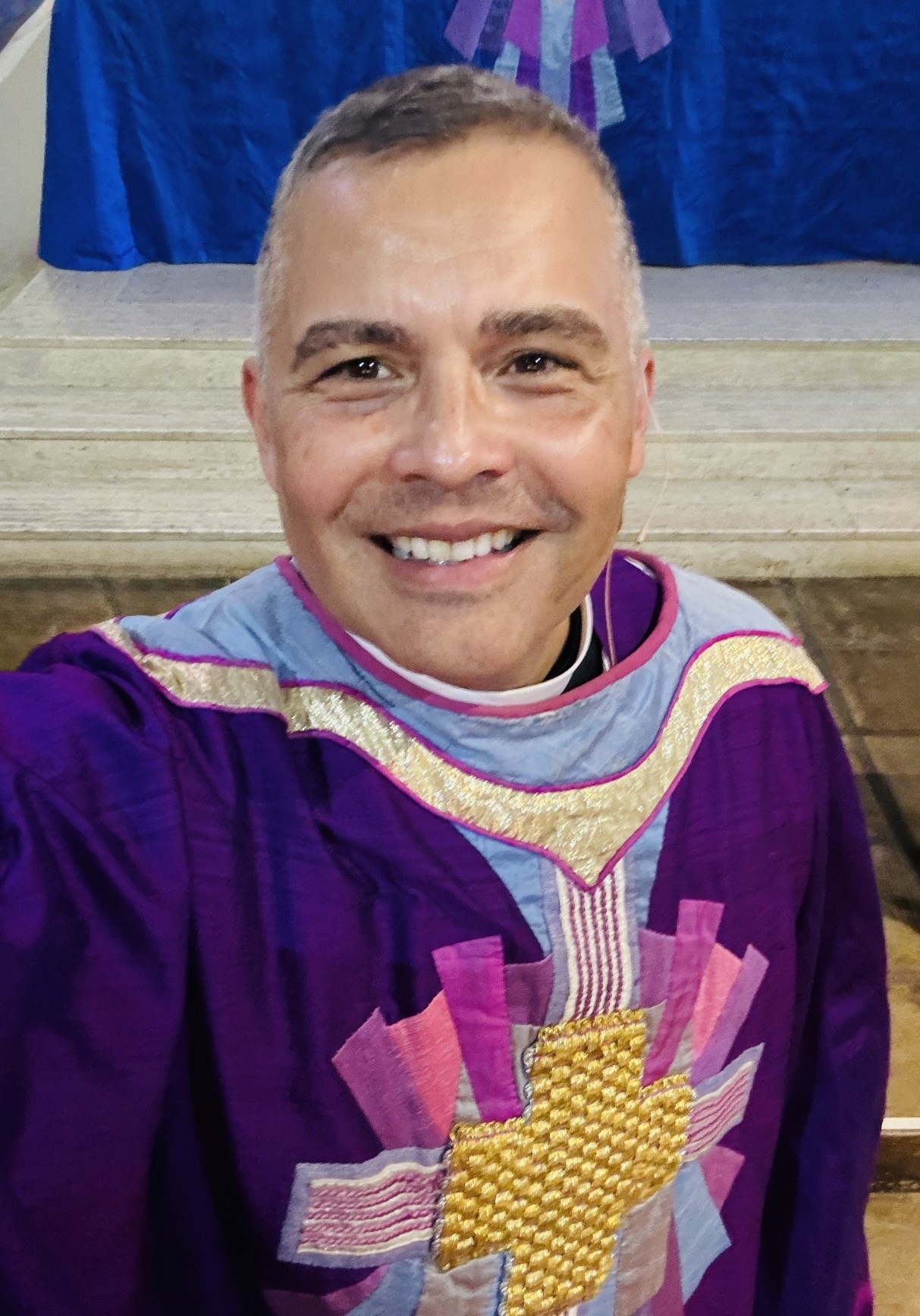
Just three weeks ago I was elected as the next bishop of our diocese. Such news may naturally bring to some the uncertainty of the future, or the melancholy that endings bring along.
The first Sunday of Advent is perfectly appropriate for that moment in the life of our diocese, because we are invited to shift our focus from our earthly worries to the branch that will spring up as God has promised. We are invited to prepare our hearts and our minds for what God has in store for us.
People at the time of Isaiah found hope in the promise of a savior.
People at the time of the Matthew found hope in the second coming of Christ.
We are people of hope, and we find hope in a Christ that is coming back one day, and who is always ready to renew our lives, every single day.
This beginning of Advent we are either focusing on the worries of what is ahead for our communities and our diocese, or we can look forward to the renewal that God has in store for us.
This beginning of Advent, Jesus is inviting us to wait with patience, and on guard.
He is inviting us to wait with hope, so that our hearts are not weighed down by the worries of this moment of transition.
In the middle of our worries, God is at work bringing to pass an all-encompassing goal. God continues working on transforming the beautiful spiritual communities in our diocese; God is working in making sure that the old will give way to something radically new.
At the beginning of this Advent season, through the book of Isaiah and the Gospel of Matthew, we realize that we are living challenging and uncertain times like our ancestors.
We are also reminded of the promise running throughout the Bible, that God will ALWAYS be present among our communities and our diocese, as promised in the book of the prophet Isaiah:
“Fear not, for I am with you; be not dismayed, for I am your God; I will strengthen you, I will help you, I will uphold you with my righteous right hand.” (Isaiah 41:10).
After the election of a new bishop, this diocese is in a similar situation to Israel at the end of the Old Testament: waiting and hoping in prayerful expectation for what is ahead.
Israel looked back to God’s past gracious actions on their behalf, in leading them out of Egypt in the Exodus, and on this basis, they called for God once again to act for them.
In the same way, and during Advent, I invite you and your communities to look back on God’s past gracious actions on your behalf, while at the same time you look forward in eager anticipation to what God has in store for us.
In this light, the Advent hymn “O Come, O Come, Emmanuel” perfectly represents this diocese’s cry during the Advent season:
O come, O come, Emmanuel,
And ransom those who cannot see ahead.
Those who worry about what’s so near
Until the Son of God appears.
Rejoice! Rejoice!
Emmanuel shall come to thee, as he came to Israel.
Wait with patience;
Expect with hope;
Pray incessantly;
Be on guard;
And rejoice, because God is with you. Amen

“Redemption Draws Near” by Mark Lawrence
[1] Walter Brueggemann, “An Introduction to the Old Testament,” page 177
[2] Walter Brueggemann, “An Introduction to the Old Testament,” page 189
[3] Boring & Craddock, “The People’s New Testament Commentary,” page 266