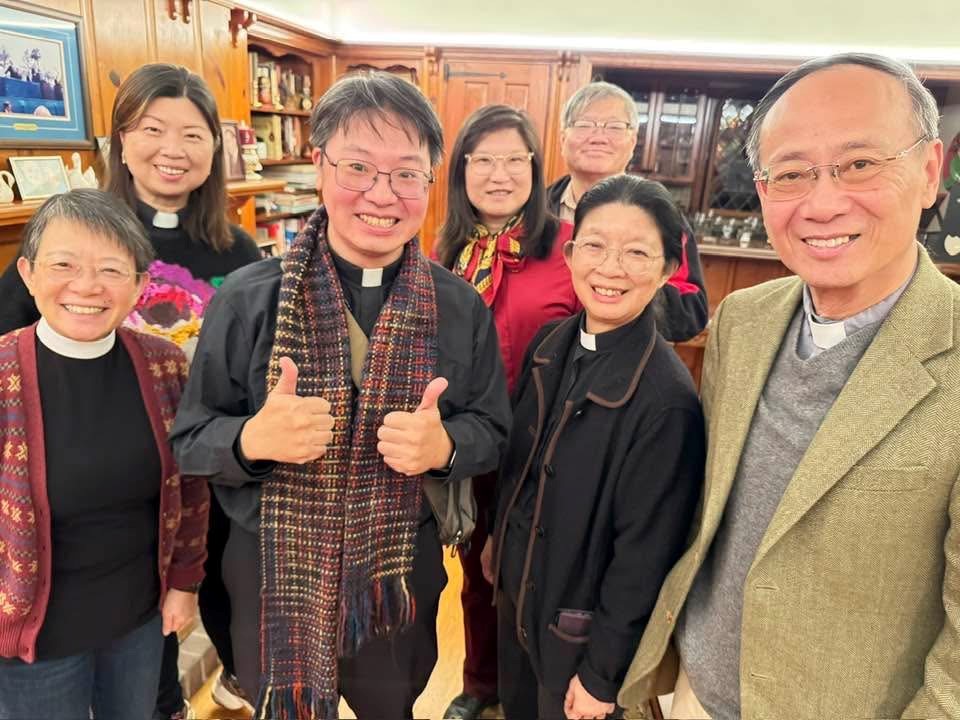
Gathered with the Rev. Joseph Jui-en Ho (third from left) are (from left) L.A. diocesan leaders in Chinese ministry: The Rev. Fennie Chang, the Rev. Katherine Feng; lay leaders Sandy and Daniel Whang; the Rev. Canon Ada Wong-Nagata, and the Rev. Thomas Ni. Photo: Bishop John Harvey Taylor. Other photos and captions courtesy of the Rev. Joseph Jui-en Ho.
Under a clergy and student exchange program launched last year between the companion dioceses of Taiwan and Los Angeles, the Rev. Joseph Jui-en Ho, priest of St. Stephen’s Episcopal Church in Keelung City, Taiwan, is now assisting for three months at St. Gabriel’s Episcopal Church, Monterey Park, one of the Diocese of L.A.’s three Chinese congregations.
Fr. Ho, 43, is assisting the Rev. Canon Ada Wong-Nagata, longtime priest at St. Gabriel’s. His visit is timed between last summer’s visit of Bishop Lennon Yuan-Rung Chang and a delegation from Taiwan to Los Angeles, and this summer’s mission trip that will bring youth from the Diocese of Los Angeles to Taiwan.
Like the Diocese of Los Angeles, the Diocese of Taiwan is part of the U.S.-based Episcopal Church and its Province of the Pacific.
In the following question-and-answer interview with The Episcopal News, Fr. Ho shares insights on ministry and the importance of the companion relationship shared by the two dioceses.
Q: What are you especially enjoying about the congregation of St. Gabriel’s, Monterey Park, and your time so far in Southern California?
A: I am greatly enjoying my time at St. Gabriel’s Church. The congregation is warm, energetic, and deeply committed to many ministries. They care for others generously and are always ready to help. I have participated in the choir, the online prayer meeting, the shared Bible study, the visitation group, pickleball team, and the fellowship meals after worship. The members have taken very good care of me—bringing me to many Hong Kong-style restaurants, walking with me in the L.A. Arboretum and Huntington Library, teaching me Cantonese, and explaining things in Mandarin when I do not understand. Our recent outdoor meditation was also very meaningful. Although the time was short, everyone experienced the blessing of silence.
I am grateful as well for Bishop Taylor’s invitation, hospitality, and introduction. I have joined the Chinese Ministry Zoom meetings and in‑person gatherings, and I have confirmed that I will visit and preach at St. Thomas’ Episcopal Church, Hacienda Heights, on Feb. 8. Our Lunar New Year Joint Gathering of the diocese’s three Chinese-language congregations will be held at St. Gabriel’s Church on Feb. 21, and I have been invited to visit and preach at Church of Our Saviour on Feb. 22. I look forward to serving together with everyone involved in Chinese ministry.
Q: Would you tell us more about your home church of St. Stephen’s – how many people attend, and what are its ministries and opportunities?
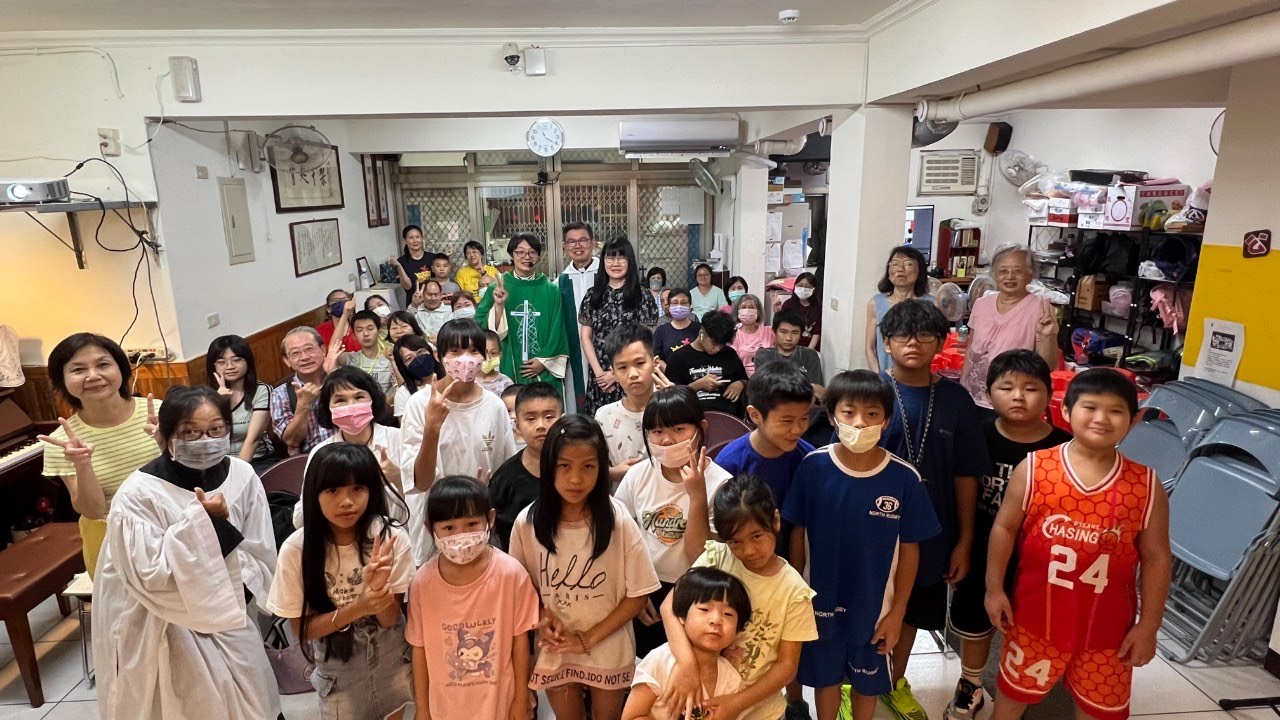
Backpack blessings service in 2025 at St. Stephen’s, Keelung City, Taiwan.
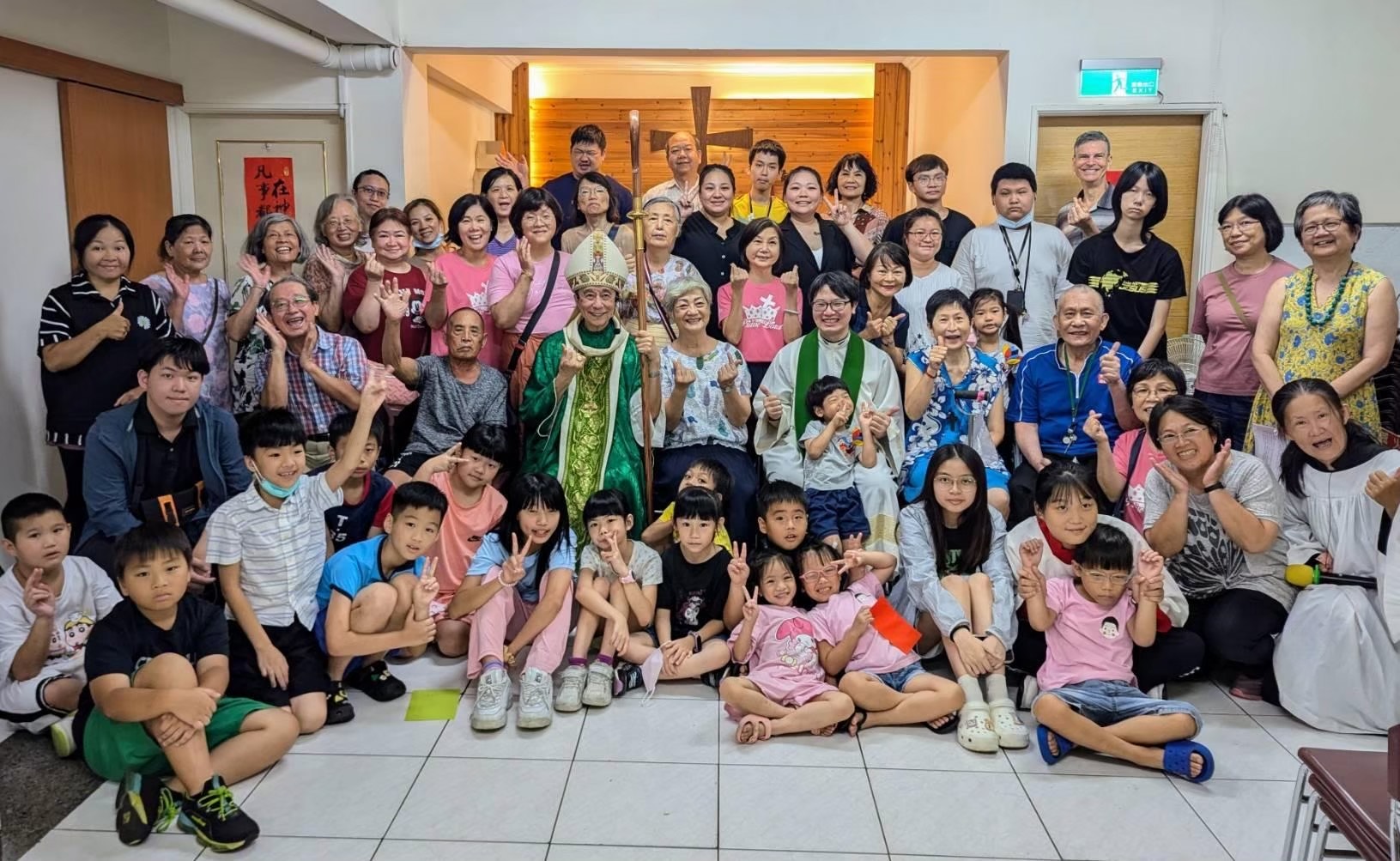
A: St. Stephen’s Church has an average Sunday attendance of about 32 people. It is a community‑based ministry with a special focus on caring for disadvantaged families and children in the neighborhood. We run an after‑school program and social‑service program staffed by one social worker and three teachers. Our ministry also extends to students’ parents, grandparents, and others in the community who may need support.
Recently, we have begun building deeper connections with local community centers. Together we offer exercise classes, sing gospel songs, and last year co‑hosted a year‑end thanksgiving tea gathering. At the church, we also provide basic electrical‑work classes and art classes for all ages. For youth, we offer piano, guitar, and basketball programs. We have a college‑student fellowship of about eight members who meet weekly during semester, serve in Sunday worship once a month, assist with Sunday school twice a month, and help with programs during winter and summer breaks.
Q: Would you tell us more please about your family, and the dates when they are coming to visit here in Southern California?
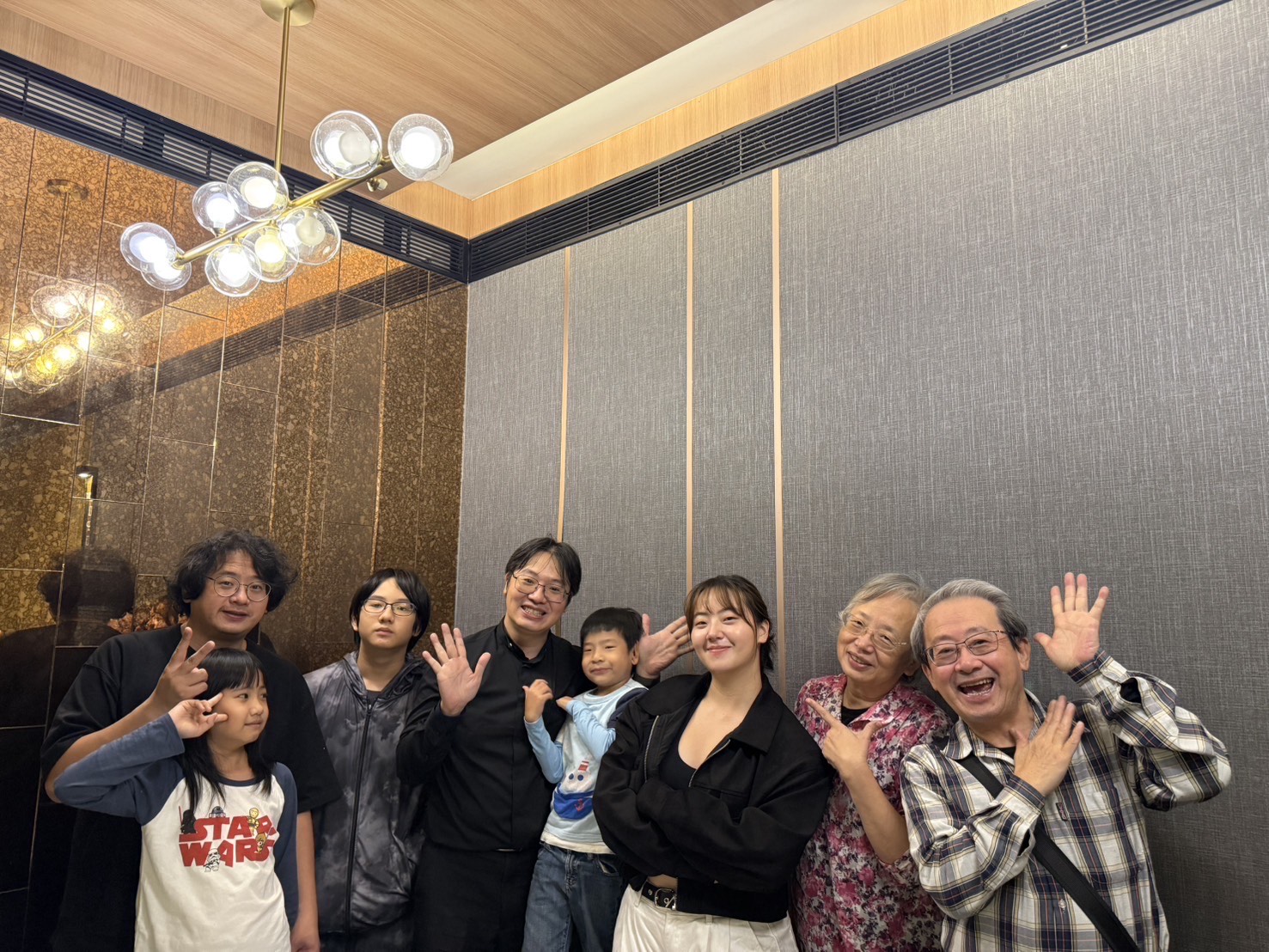
Fr. Joseph’s family at Christ Church, we exchanged sermons every fifth Sunday.
A: My wife and our two children—Angel, Elizabeth, and James—will arrive in Los Angeles on March 12 and stay until Palm Sunday on March 30, for a total of about 18 days. Our children are nine and five years old, and they are very excited to visit the United States. This will be their first time traveling abroad, and their first time seeing the Grand Canyon, Antelope Canyon, and Disneyland.
Because we homeschool, Angel serves as their teacher, so our schedule does not need to follow the Lunar New Year or winter‑break calendar. We consider this trip an important part of their learning experience. Once again, we thank God and are grateful for this opportunity.
Q: What do you especially appreciate about the companion relationship between the dioceses of Taiwan and Los Angeles, and why is this exchange important for The Episcopal Church and for the countries of Taiwan and the United States at this time?
A: I deeply appreciate this exchange and companion relationship, especially because it carries real potential for future growth. Los Angeles is a richly multicultural city, with many languages and cultural backgrounds. Cross‑cultural ministry is challenging in ways that are hard to imagine, yet it also brings tremendous opportunities and blessings.
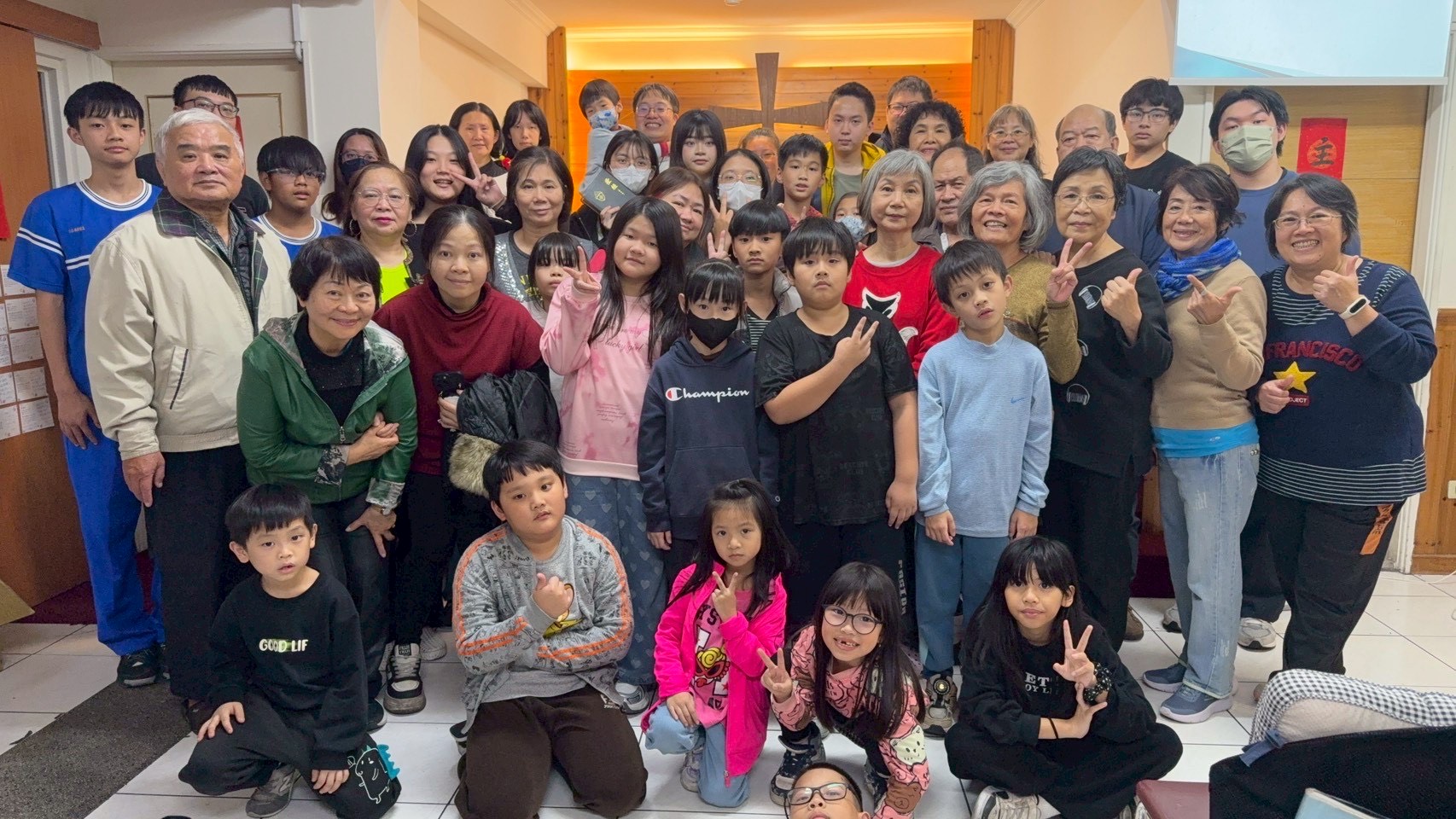 For the Diocese of Taiwan, learning more about the Chinese ministries in the Diocese of Los Angeles and gaining a deeper understanding of The Episcopal Church is extremely valuable. Language is always the first barrier, but today we have many tools and media that help us communicate and learn more effectively. When both sides are willing to learn each other’s language, it greatly enriches our understanding of one another’s cultures. I also hope that my participation, ministry experience, and perspective from Taiwan may offer new insights or possibilities.
Taiwan is currently facing significant global pressure and the threat of war. This partnership affirms trust in Taiwan’s situation and serves as a meaningful witness of people‑to‑people, church‑to‑church, and cultural and spiritual exchange between Taiwan and the United States. Both American and Taiwanese churches face the realities of declining birthrates and aging populations. Learning to step outside our church walls and explore new possibilities is essential, and this exchange program is a promising beginning.
Q: What are your priorities, or special interests, in your ministry as an Episcopal priest?
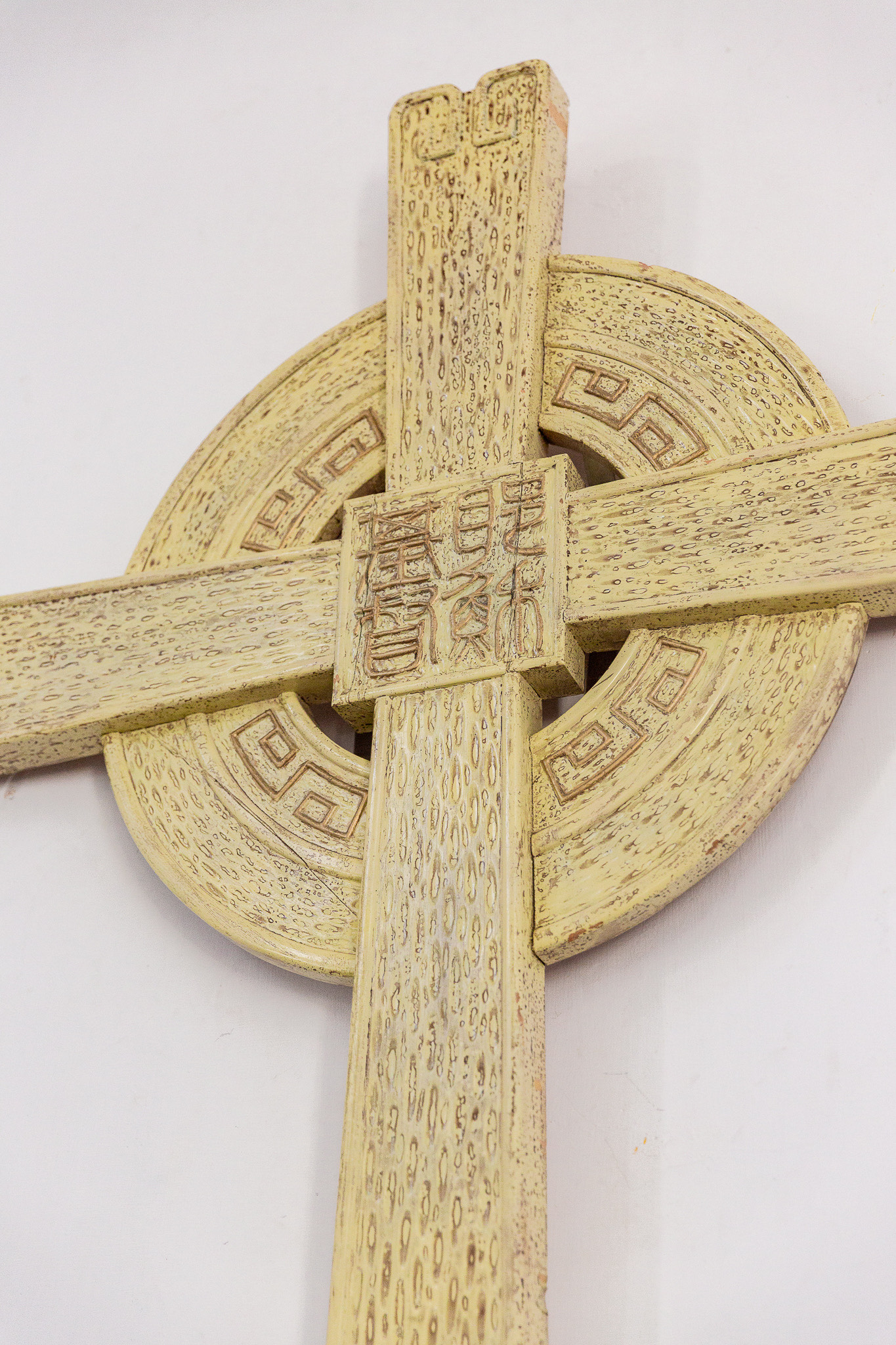
Tainan Seminary’s emblem—a Celtic cross with a Chinese clerical‑script character “Jesus Christ” at center.
A: As an Episcopal priest, my priorities are church unity and multicultural ministry—two aspects that are closely connected. I value unity because the Book of Common Prayer and the Anglican tradition preserve space for dialogue between the old and the new, and through such dialogue we also preserve cultural diversity. Many denominations today are reflecting on the same question of unity.
My particular interest lies in exploring diverse liturgical expressions within multicultural contexts—discovering traditional cultural practices or creating new seasonal activities rooted in the church’s history. I also look for new ideas and liturgies on Episcopal Church resources, such as the Blessing of the Backpacks at the start of the school year, or the Epiphany tradition of marking the doorway with “20 + C + M + B + 26.” Every activity carries a story and a spiritual meaning, and at the center of all these stories is Jesus Christ and the gospel. My hope is to share the same gospel through many different stories.
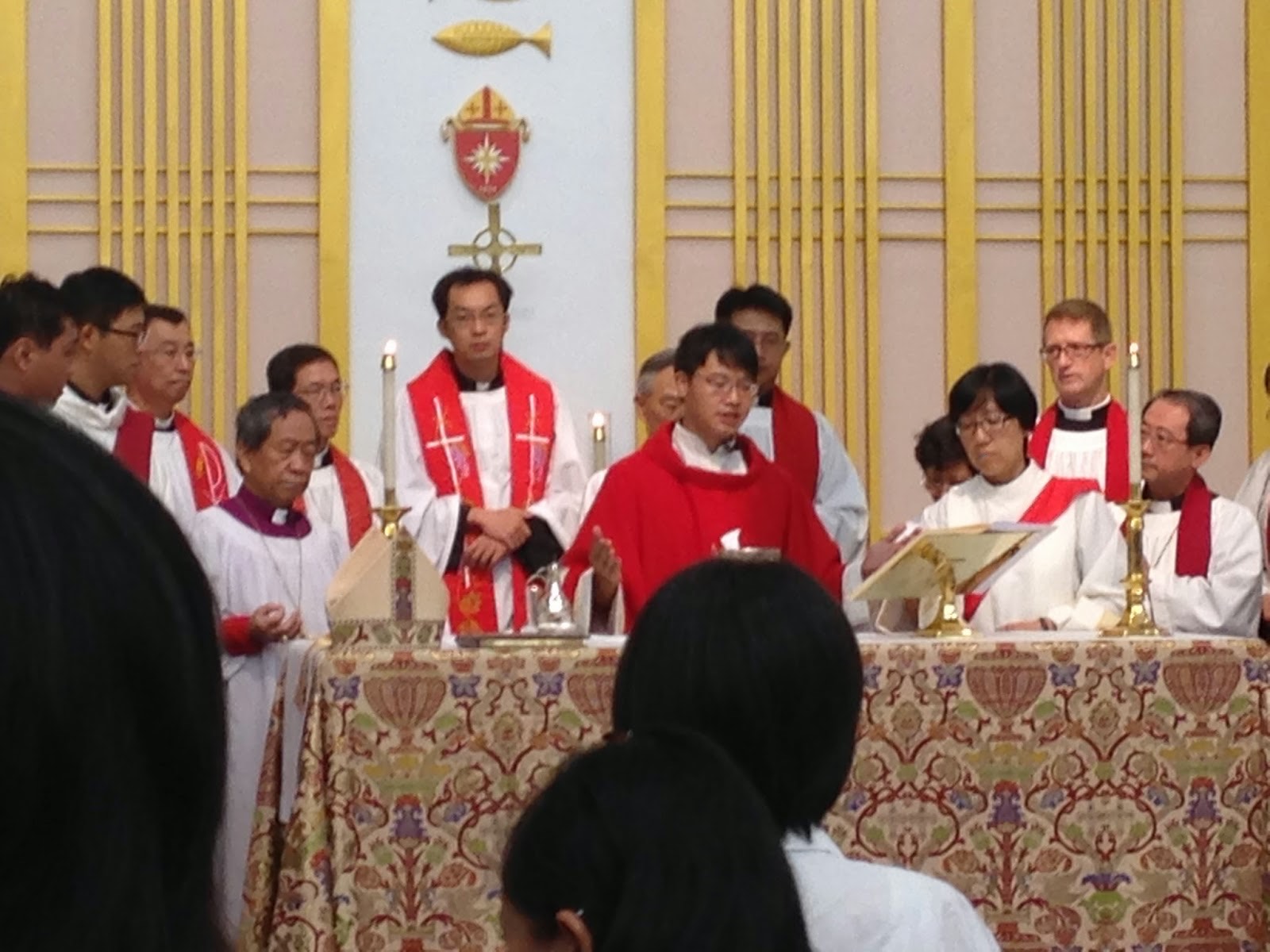
Ordination in 2014 at St. John’s Cathedral, Taipei.
Q: In what year were you ordained, and where did you attend seminary after your father invited you to pursue the ministry?
A: I was ordained as a deacon in 2013 and as a priest in 2014. I attended Tainan Theological College and Seminary, a Presbyterian seminary that was originally a joint institution of the Presbyterian Church and the Episcopal Church. Many early Episcopal clergy in Taiwan were trained there.
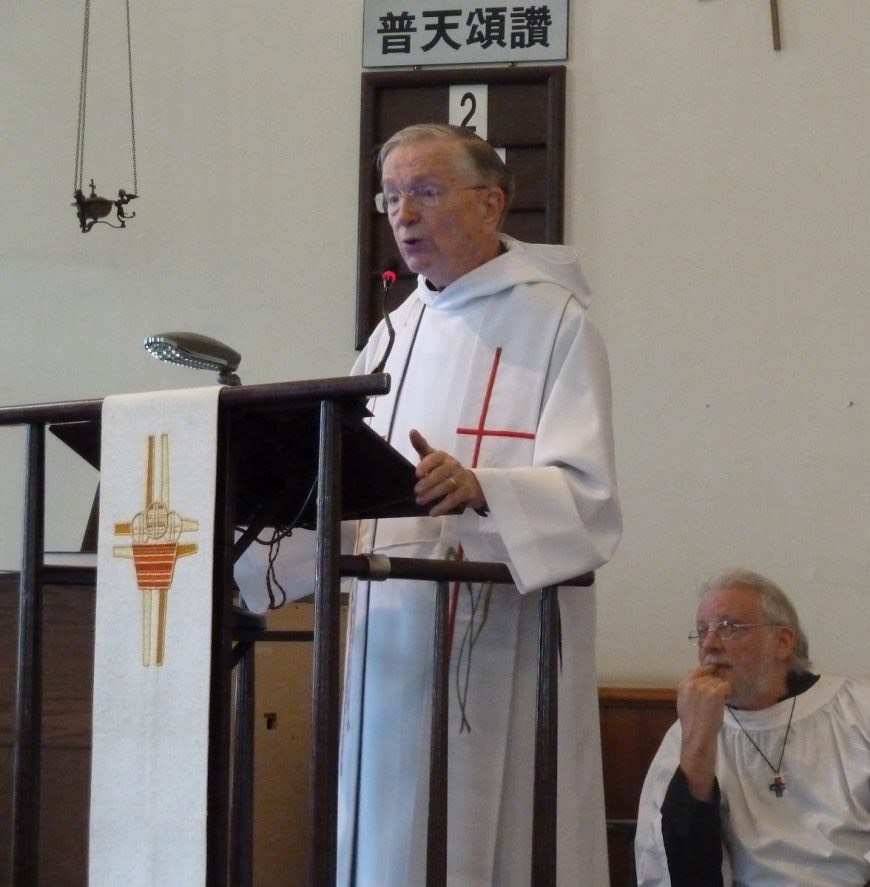
The Rev. Dr. Peyton Craighill preaches in St. James Church in Taiwan in 2012.
An American professor, the Rev. Peyton G. Craighill, who taught liturgy, served as associate dean, and worked closely with the Presbyterian Church in Taiwan. In 1977, he designed the seminary’s emblem—a Celtic cross with a Chinese clerical‑script character “Jesus Christ” at the center.
Although the formal partnership had ended by the time I studied there, I gained a deep understanding of the Presbyterian Church in Taiwan—the largest denomination in the country—and its early missionary history. After seminary, Episcopal candidates must complete additional studies in liturgy, constitution and canons, and church history as “The Chung Hua Sheng Kung Hui” in order to qualify for ordination.
Q: Would you tell us, please, about your parents and siblings?
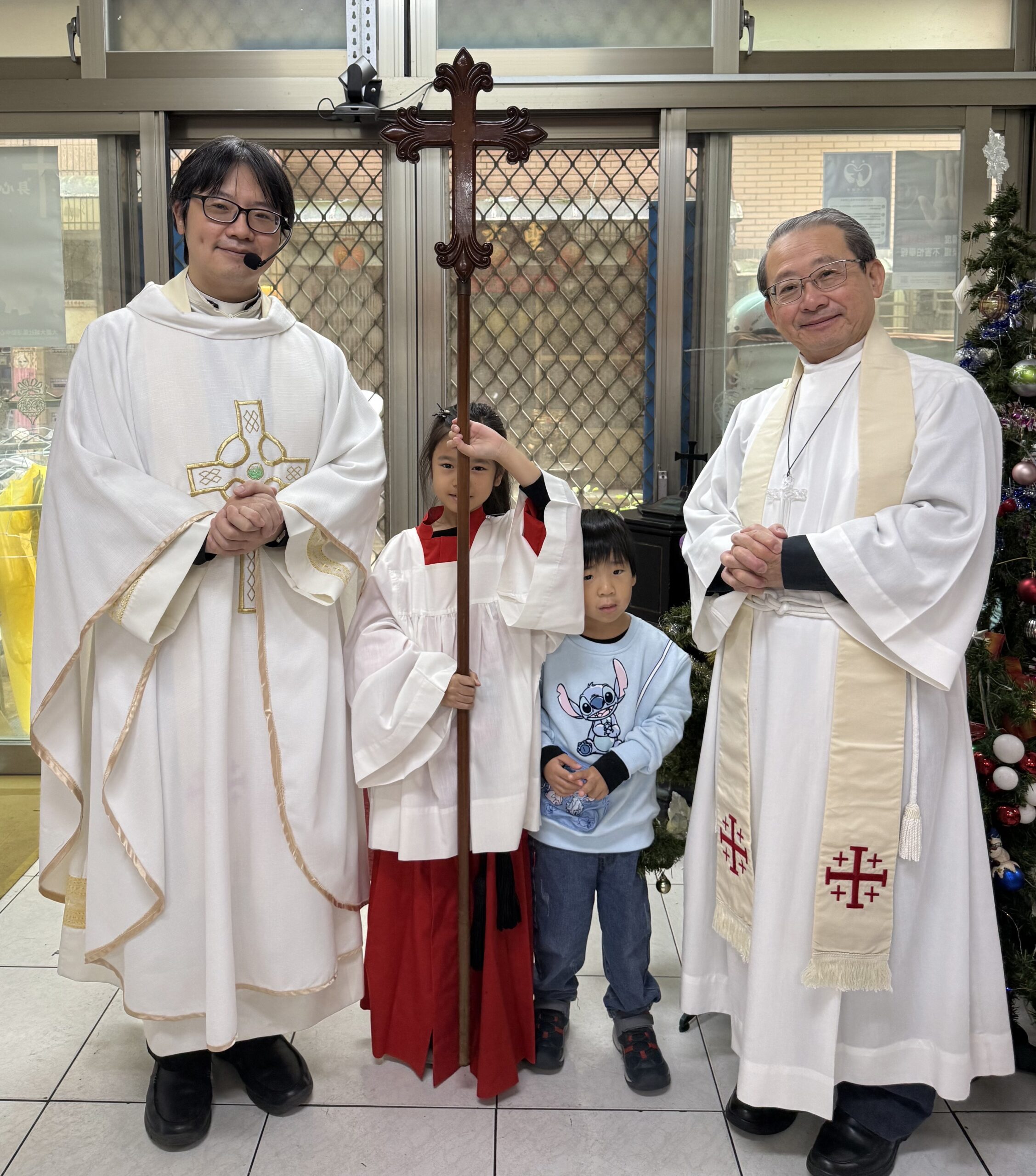
Fr. Joseph’s family at Christ Church; father and son exchange pulpits for sermons every fifth Sunday.
A: Both of my parents were high school teachers and retired after many years of service. After retiring, my father earned a Ph. D. degree in the United States and later returned to Taiwan to serve at St. John’s University for one year before discerning a call to full‑time ministry. My mother also joined him in ministry after her retirement.
I have one younger brother and one younger sister. My brother works at Becker & Son Violin Shop located beneath the National Concert Hall. He is very musically gifted and often assists as a pianist in various churches. My sister is an online content creator who advocates for food freedom and intuitive eating, hoping to help others through her work.
Q: Is there anything else you would like to tell us in this interview?
A: I am very grateful for this exchange opportunity and hope to learn more about The Episcopal Church, the Diocese of Los Angeles, and the current landscape of Chinese ministry here. Although our countries and societies face different challenges, and the church’s struggles may differ as well, meaningful exchange allows us to enter one another’s lives. It is like Jesus’ invitation in the Gospel of John: “Come and see.” When the disciples stayed with Him, they discovered a new horizon.
So if you are reading this article, I hope you will continue to support and learn about our partnership. It is more than cross‑cultural ministry—we are building bridges of friendship, faith, and even connection between our two countries.