Let’s begin tonight with our astonishment. Let’s get our red and green Christmas socks knocked off and then see where the little child leads us.
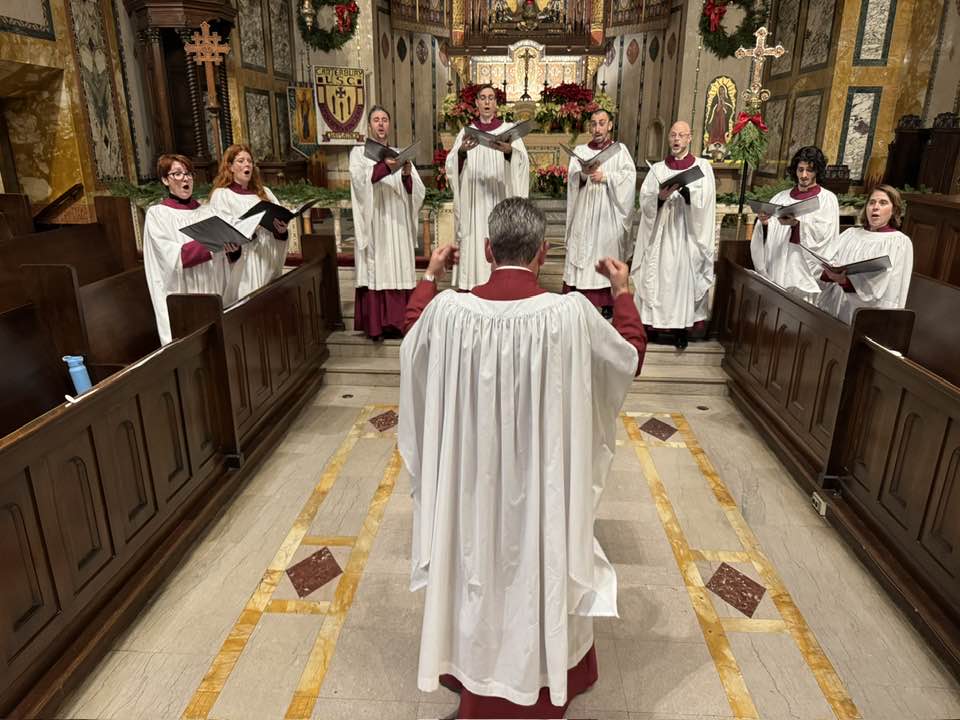
The prophet Isaiah reckons that the birth of a Savior would provoke God’s people to joy, rejoicing, and exaltation. People who had been walking in darkness would see a great light in the holy child’s eyes, and it would astonish them. According to the words of the psalm, set tonight to Chris’s lovely music and offered by the magnificent St. John’s Choir, the whole world sings as it encounters God, whether animal or inanimate. Even the trees of the wood shout and the seas thunder.
Our good old shepherds in the fields near Bethlehem were following in an ancient tradition of experiencing astonishment at God’s mighty acts. When days are long and times are dark, whenever they are, God breaks through with holy light and always gets our attention.
The angels preached their seven-word sermon: “Glory to God, and peace on earth.” Frightened at first, perhaps by the crazy wishful thinking about peace on earth, the shepherds were then amazed, and they ran to the manger. They didn’t just find the baby and his family. Obviously the whole village had come, because the gospel says the shepherds told everyone. Now everyone was amazed.
Except Mary. Luke says Mary treasured all these words, and she pondered them in her heart. We sometimes encounter skeptics about the birth narratives. We read about Jesus’s birth in Luke and Matthew, but not Mark and John. Luke and Matthew don’t quite mesh. We’ll talk about that later in Bible study! But Mary was there. No way anybody can say Mary wasn’t there. Does a mother remember the birth of her child? Joseph was there, too. Does a parent ever forget the birth of their child? And do parents ever stop telling the story? Do they ever stop telling the good news?
I can still tell this story. My elder daughter, Valerie, had a forceps birth. This was in Manhattan in 1985, in Beth Israel Hospital. I was terrified, because they suddenly took us from a birthing room with Impressionist prints on the wall to an operating room drenched in light, where a dozen people flooded in, as if from all four corners of the hospital. To this day I remember the way a medical worker’s tired eyes looked above her mask, smiling and nodding reassurance just for me as she helped wrap Valerie in her swaddling clothes. There may have been angels singing. I can’t say for sure.
The skeptics like to say no one was paying any attention to Jesus when he was born. He wasn’t famous yet. But Mary remembered. The gospel writers naturally would’ve heard about it – not just the shepherd’s amazed memories, but a mother’s intimate recollection of every event from Bethlehem to the crucifixion and Resurrection.
We too must look beyond amazement if we are to ponder Christmas in our hearts. This Christmas, Kathy and I give thanks for a total of eleven kids, kids’ spouses, and grandchildren, in Orange County, San Diego, and New York. With our retirement just around the corner, it’s fun figuring out how we can be in four places at once, which we fully intend to do.
But if we don’t have children, then nieces and nephews, or the offspring of friends, neighbors, or coworkers. Each a new creation. A newly minted citizen of Eden. A joyful echo of Bethlehem. When we see them the first time, we’re amazed. We make all our pre-verbal sounds, our goo-goos, coos, and clucks. We cover our mouths with our hands, and our eyes grow wide. But then life goes on. Amazement fades. Parenthood becomes less idyllic. Sometimes it’s like a 40-year journey through the wilderness toward the promised land.
But this child – the Christ Child, scripture says, came with authority. Our being together on this rainy night suggest that we agree. Whether to Jews in the seventh century before Christ, when this part of Isaiah was written, or Christians in the 21st century – the prophet proclaimed that authority rests on the holy child’s shoulders. These words sing in our hearts thanks to George Frederick Handel. The child will be wonderful counselor, the mighty God, the everlasting father, the Prince of Peace.
In Matthew, chapter 28, Jesus says that all authority in heaven and on earth has been given to him. The prologue to John says, “In the beginning was the Word, and the Word was with God.” That’s why our processional hymn proclaimed, “Word of the Father, now in flesh appearing.”
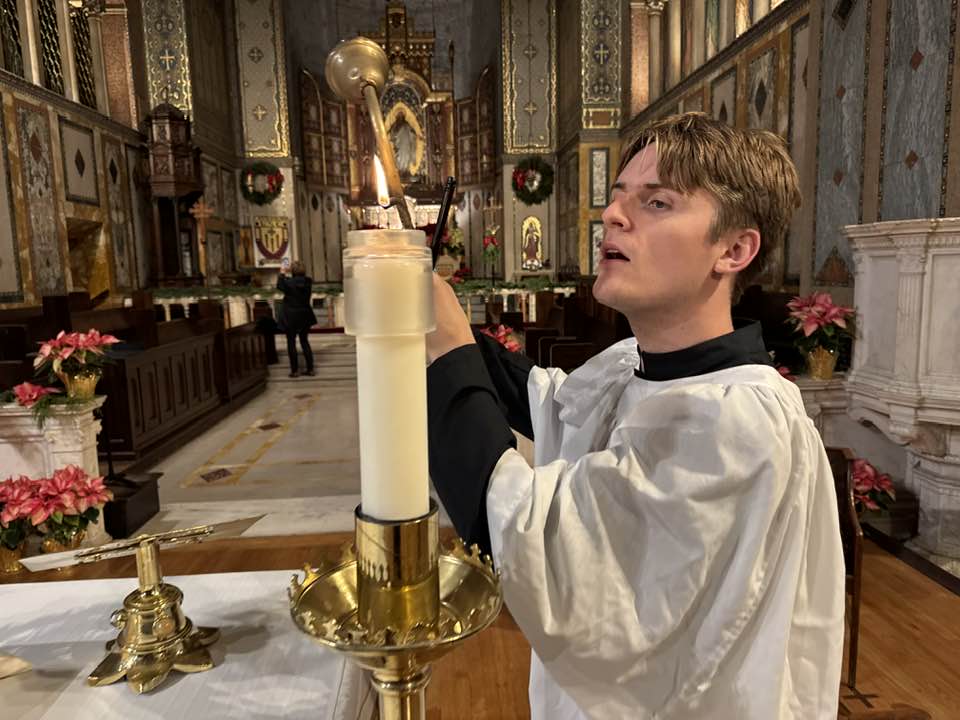
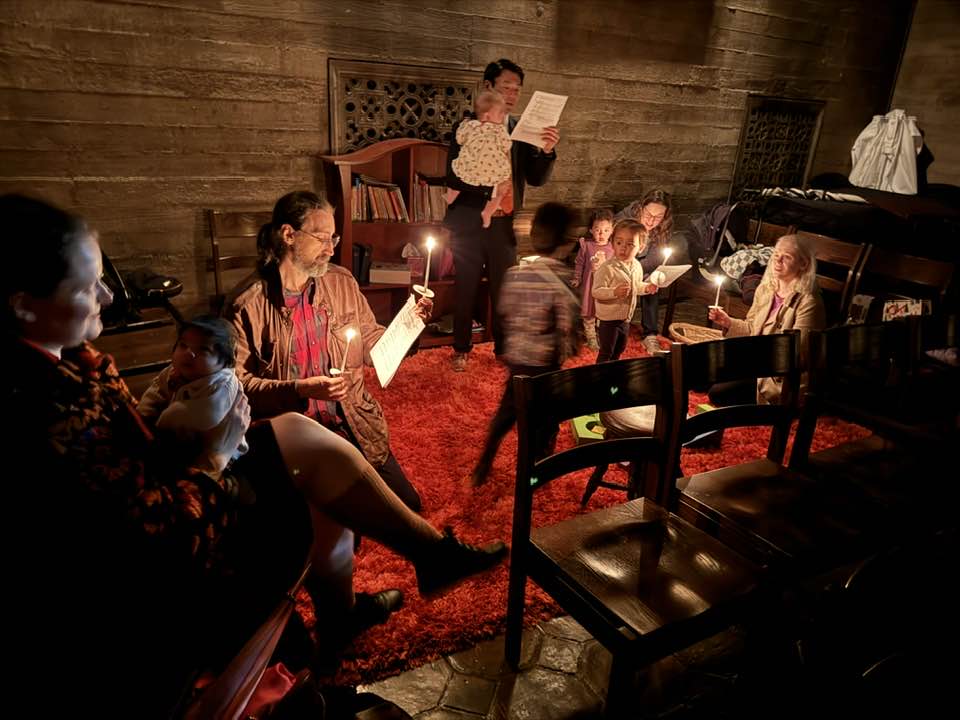
All over the Bible we find evidence of Jesus’s authority. We might even be newly amazed when hear about it in church. When the sopranos take the descant in the last verse of the hymn. The candles are lit before services. Children’s faces light up. The preacher momentarily gets our attention. For just a moment, we may be as amazed as the shepherds.
But if we are to participate fully in the life of the living Word, we have to ponder it in our hearts, as Mary did — open our arms and cradle the baby, comfort the Christ, shelter the God of the universe with all our heart. We must fall before the manger in subjugation.
I love to drive around the American southwest. I take a trip into the heartland every summer. On those long stretches of highway, and sometimes even in the city, I see the strangest religious billboards you can imagine. There’s one around now. You can find it on Glendale Blvd. in Echo Park. It was taken out by the World’s Last Chance church. It proclaims, “Jesus is not God.”
At Sunday coffee hour, we could have a good discussion about the divinity of Christ. We could join in the ancient conversation about whether the Holy Spirit proceeds from the Father and the Son or just from the Father. We could debate about the real presence in Holy Eucharist of the nature of baptism, sin, or grace.
But at Christmastime – all the time, but especially on this holy night — my theological challenge is whether I intend to place myself in submission under the authority of the Holy Child – “Jesus Lord at thy birth,” as we’ll sing at the end of our service in candlelight. Questioning the divinity of Christ – suggesting that the substance of Christ didn’t exist before Bethlehem – these arguments can lead us away from an understanding of what it means for the powerless and the most vulnerable to have authority over us, especially when we have power and privilege.
Minimizing the authority of Christ might distract me from my submission to God’s purposes – which are, in Mary’s own words, to lift up the lowly and cast down the mighty from their thrones. My deciding where I’m going to put my loyalty, my deciding what conception of the divine I’m going find the least inconvenient for investing my faith, time, and treasure, my making the rules will inevitably give me more authority than the Christ Child wants me to have. It tempts me to substitute my plan for Jesus’s plan and activates my default temptation to put my interests ahead of my neighbor’s.
Sometimes we like to say that Jesus came to teach us about love. But we’ve always known about love. We’re biological creatures. Love comes naturally. The peafowl, dog, cat, and human parent has always cared for its offspring. Christ came not to teach us to take care of our families but to learn to enfold the whole world in our arms, as God does. From Jesus’s explicit, literal, orthodox teachings, we learn that how we treat the unhoused person, the hungry person, the immigrant worker, the trans and non-binary person, whoever our neighbor is — however we treat them, it is as though we are doing it to Jesus, so we had better do it right.
Jesus came in his vulnerability that we might better understand how easy it is for us to victimize the vulnerable. This is the way we have to go through life now. The way of Christ sets a high bar for us disciples. It sends us into the world each day intending that wherever we encounter someone, we will get a chance to cradle the Christ child. This is not an invitation to stop protecting ourselves from danger and dangerous people. It is an invitation to be less dangerous ourselves.
Some of the purported Christians in charge of our government will say that a nation can’t follow the golden rule. I disagree. At long last, it may have become a survival imperative for humanity that governments obey the golden rule, and so we citizens must insist on it. This doesn’t mean we stop defending and protecting our country. But we insist that our government stop committing acts of cruelty against immigrant workers of color and trans and nonbinary people and stop torturing and abusing the foreigner and stranger and murdering people on the high seas in the name of national security.
In Charles Dickens’ “A Christmas Carol,” Scrooge looks out his bedroom window and sees ghosts trying desperately to interfere for good in the lives of people. These are the spirits of those who failed to love their neighbor when they were alive. Dickens writes that some of the spirits whom Scrooge sees manacled together may be guilty governments. Marley’s ghost might well reappear to say that our government has been working on its chain link by link, especially over the last year, and that it is a ponderous chain.
With all that, Isaiah writes, the holy Child’s authority will grow continually. In other words, it’s not easy to fall on our knees before the manger. We don’t do it just because the Bible tells us so. We do it because, like Mary, we have treasured the angels’ words all these years and pondered them in our hearts. “Glory to God, and peace on earth.” Our love of the Christ child and his teachings grows over time, enabling us to be our best selves, not because we’re commanded, but because finally, by grace, we can’t help it.
For instance, our children and grandchildren, each a new cosmos, an opportunity to be amazed. But also an opportunity to put my phone or iPad down when they ask me to play or need to talk. Just as one tries to be kind to people who work in restaurants or stores or at church and to strangers we encounter at Starbucks. Just as, if we’re the boss, we resolve to be kind to employees. Or if we have been given the vast power of the state, to resolve to act with decency instead of using the pretext of national interest for an excuse to be at our worst.
Growing fully into discipleship, our journey beginning in Bethlehem is the voyage of a lifetime, until, at last, every human encounter is an opportunity to extend our arms and take the Holy Child to our breast.
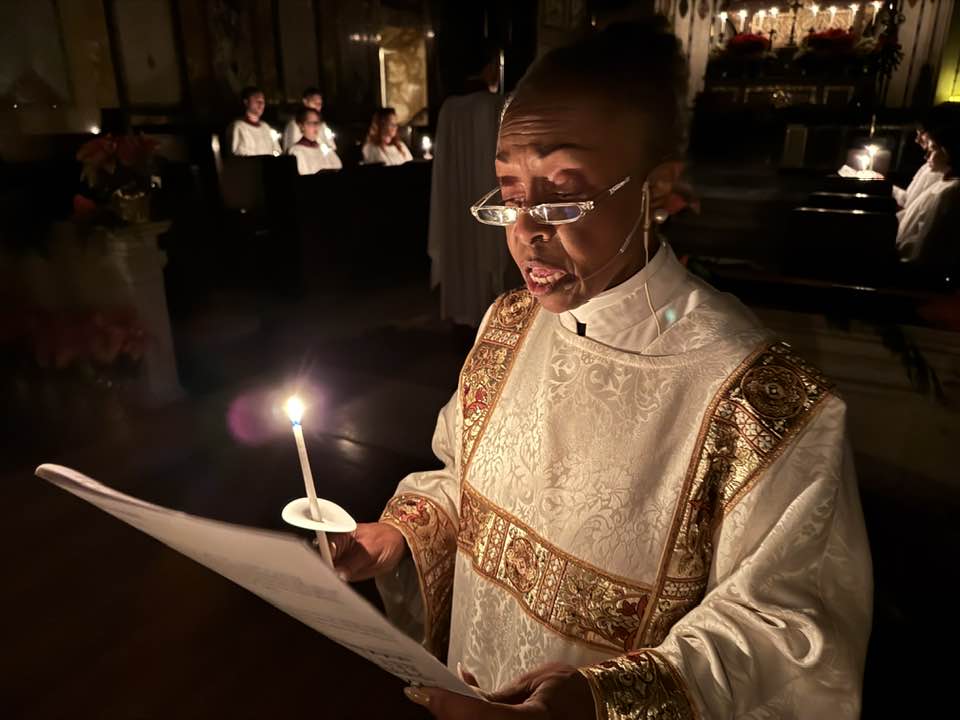
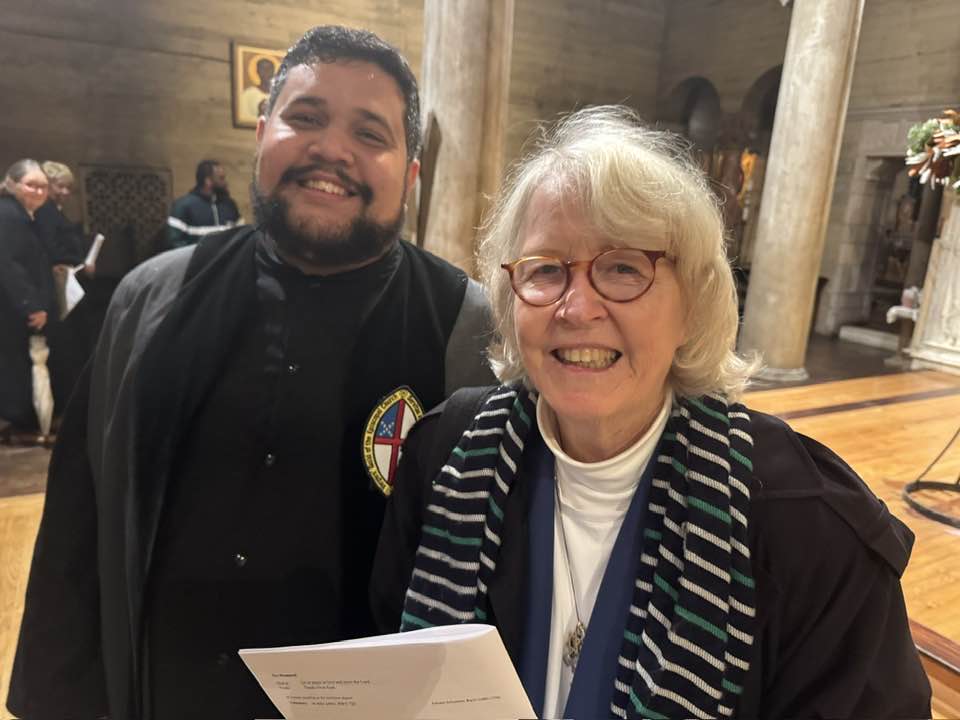
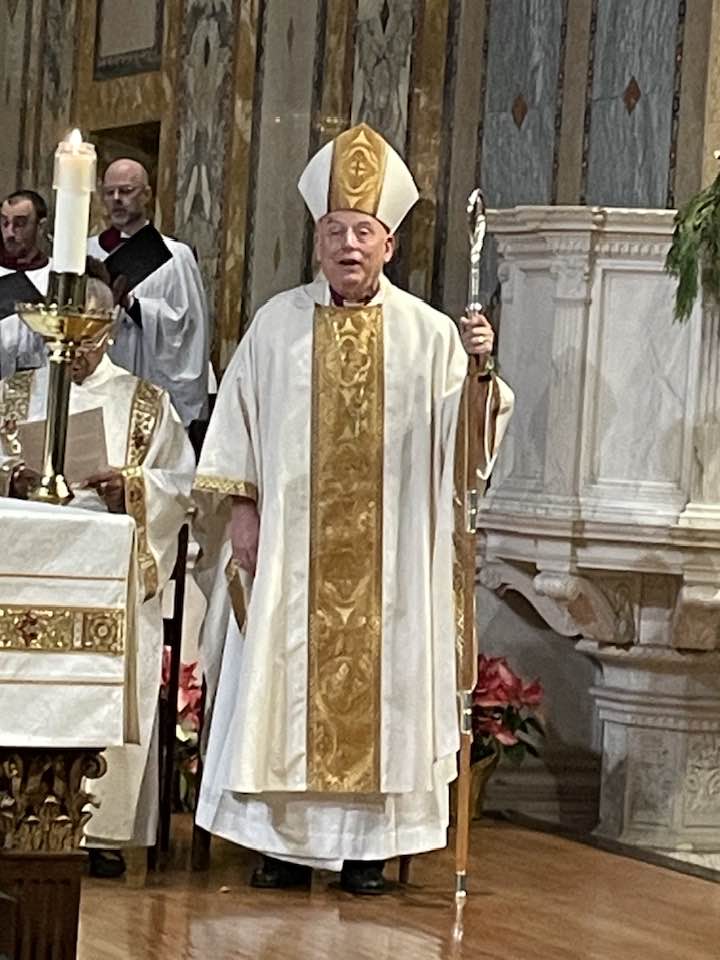
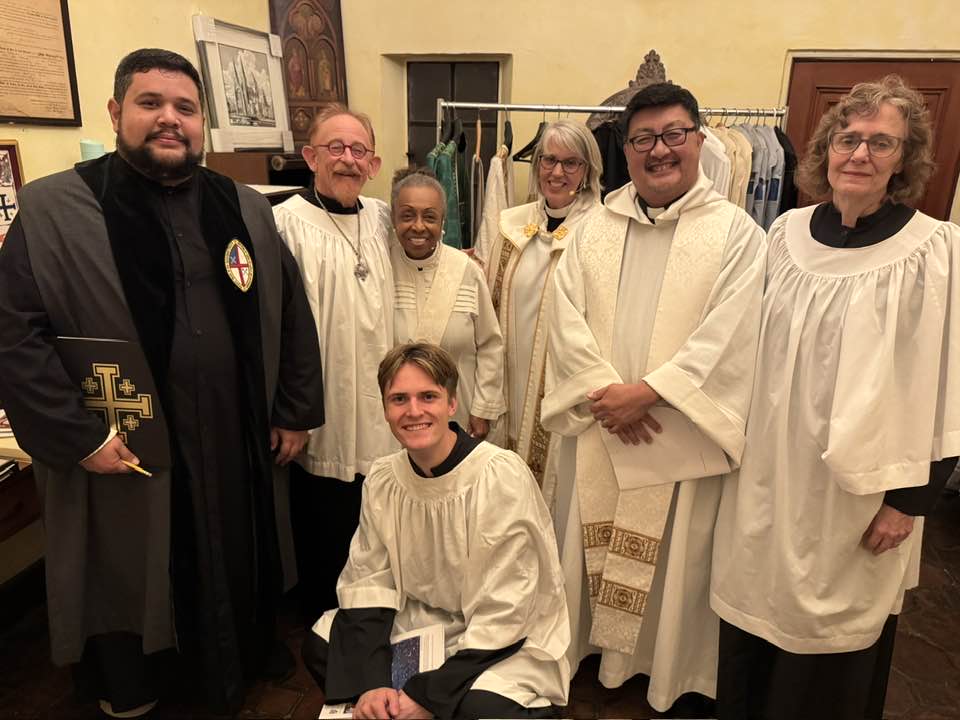
[My Christmas Eve sermon at St. John’s Cathedral in Los Angeles. Acting dean and priest in charge the Very Rev. Anne Sawyer and the Revs. Margaret Hudley McCauley and Mel Soriano assisted. Music director Christopher G. Gravis and his spouse, Melissa, are giving thanks for their 12-week-old daughter, Josephine.]