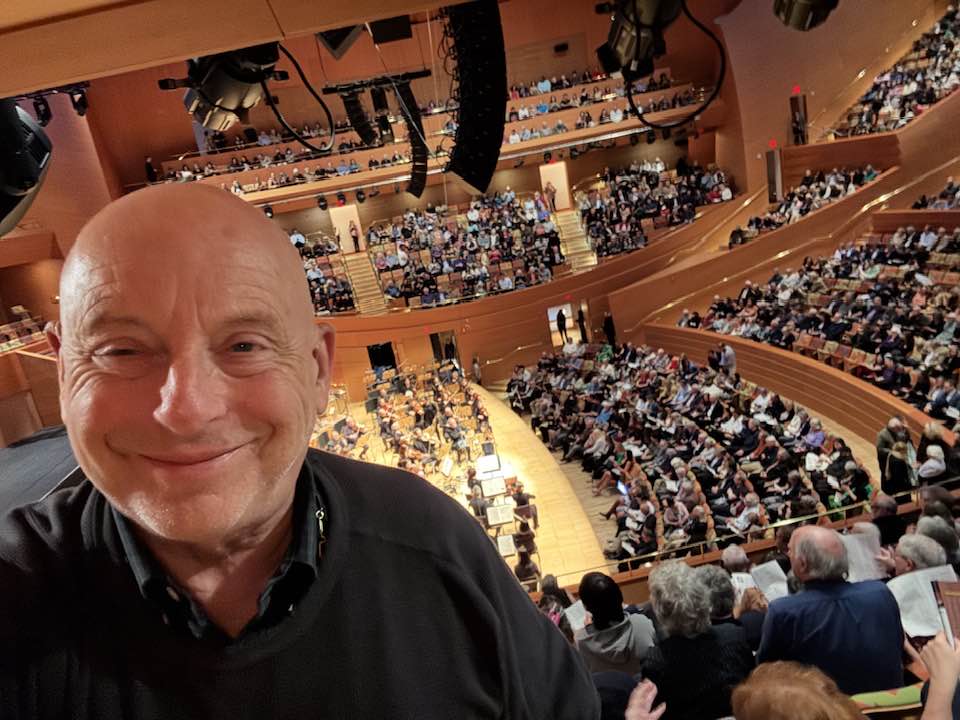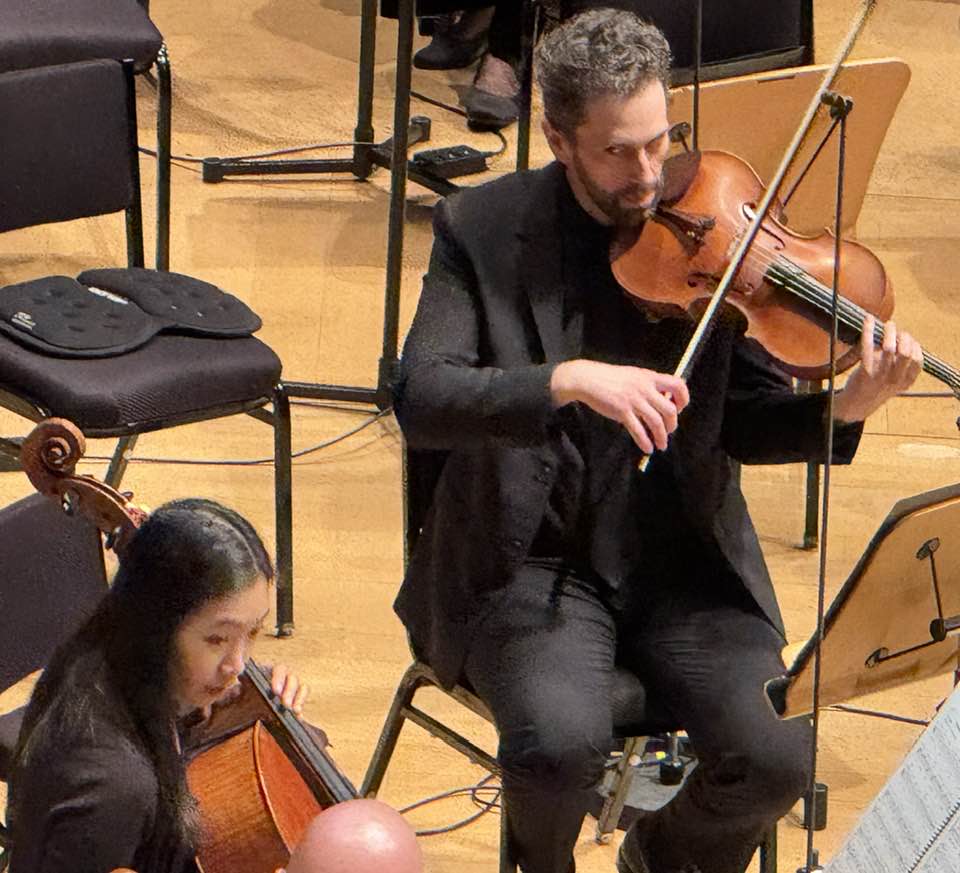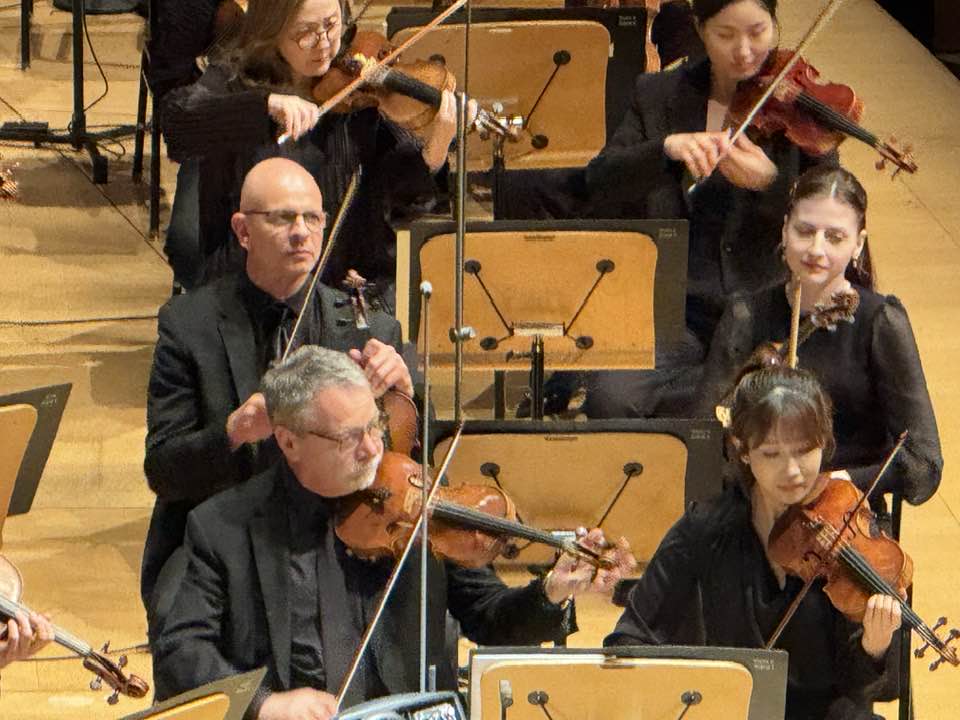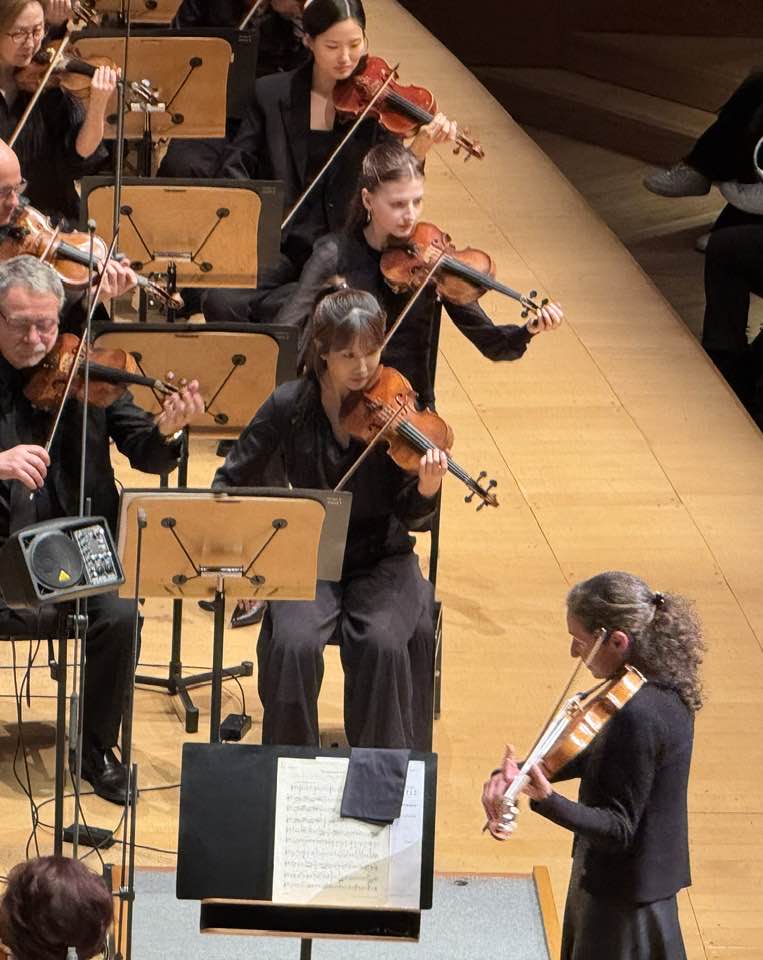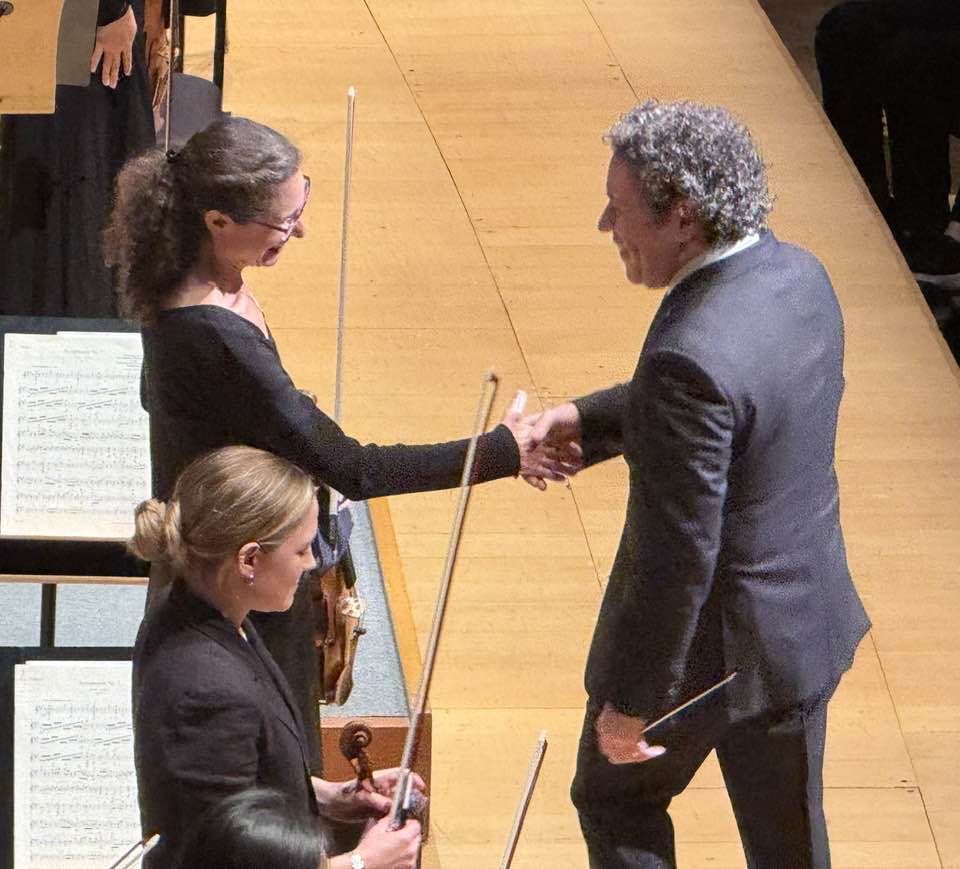
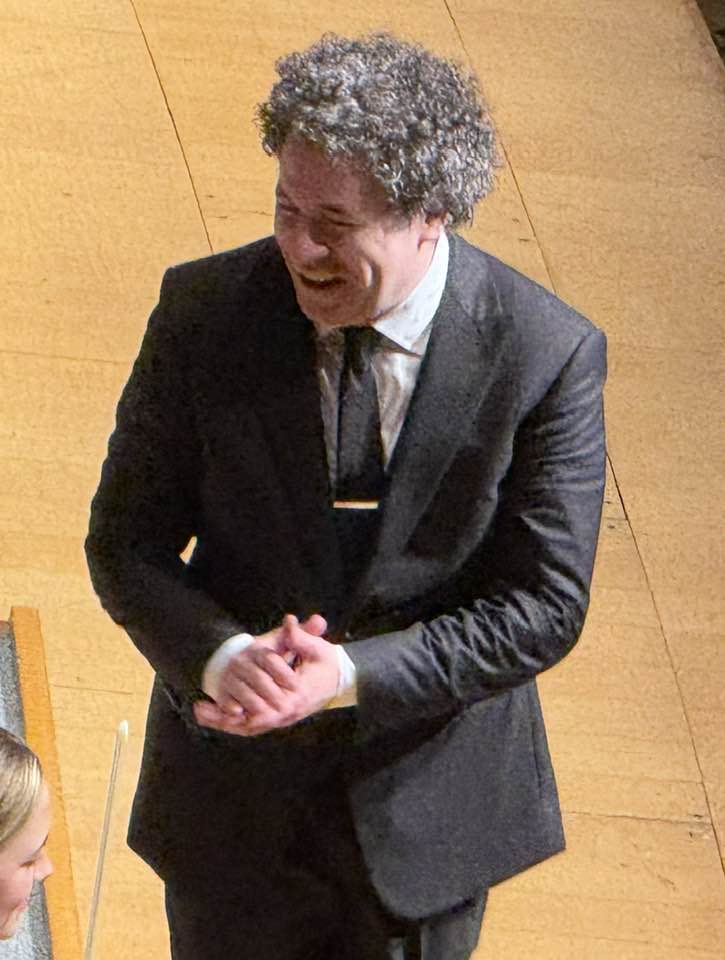
 Once more I took my weakening ears into the breach, that oasis of glorious sound, the Walt Disney Concert Hall, to see Gustavo Dudamel conduct the LA Phil before he decamps to New York at the end of this season. As the Eagles sang, I’m losing all my highs and lows. Music tends to fall apart in my ear. With recordings, especially today’s compressed digital files, I hear the sound without always locating the tonality. Live music is a little better.
Working eight minutes away from Disney has been a blessing. Kathy indulges my going alone a few times a season and getting a fantastic seat, looming over the orchestra stage left. For my finale Thursday, I enjoyed the whole package, parking by 6:30 p.m. and having a salad and coffee in the café before reporting for the pre-concert seminar at seven. I even pre-ordered an intermission beverage.
The evening began with Beethoven’s propulsive Symphony No. 7, which in his notes Dudamel, quoting Wagner, called “the apotheosis of the dance.” In the late seventies, when I was at UC San Diego, a visiting professor, an orchestral musician from upstate New York, featured it in a music history class, making me a forever fan.
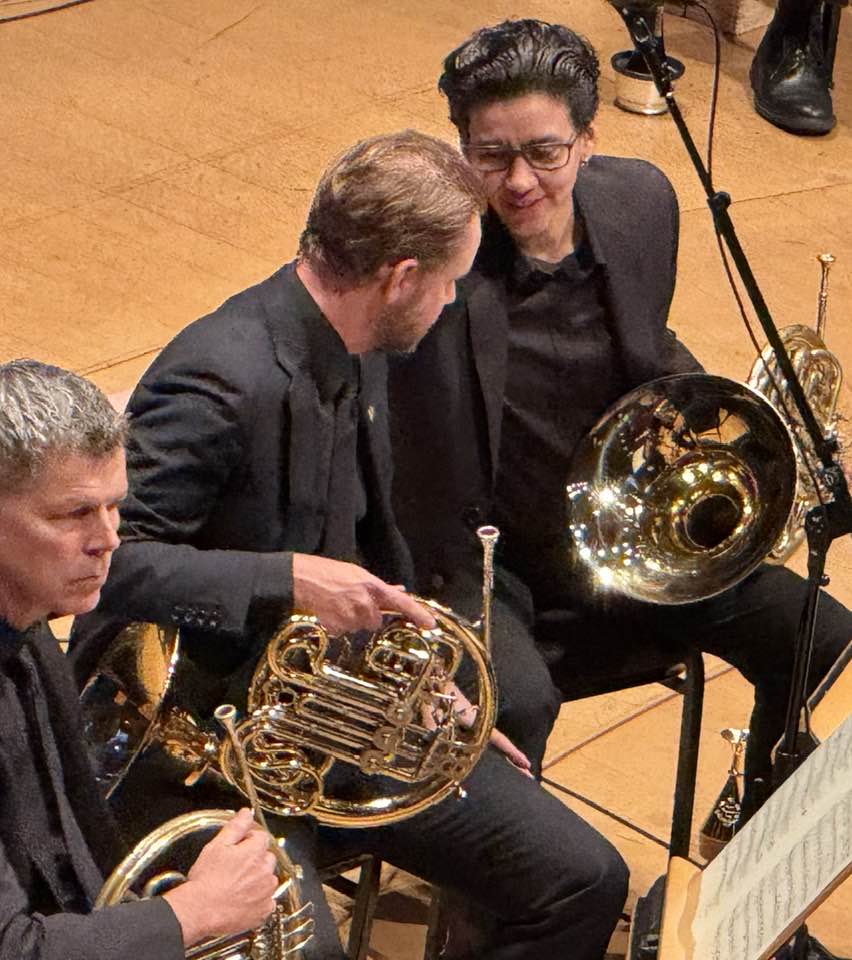
Some other students made fun of him because he wasn’t critical enough, as academics were often expected to be. He just loved music and wanted to share it. He played the symphony’s second movement for us, a plodding little tune Beethoven develops into an eight-minute miracle that will stay in your head all day. When you’re hard of hearing, music memory helps. The symphony has thrilling fanfares for three French horns and two flugelhorns. I knew they’d be right in my range, and I was waiting.
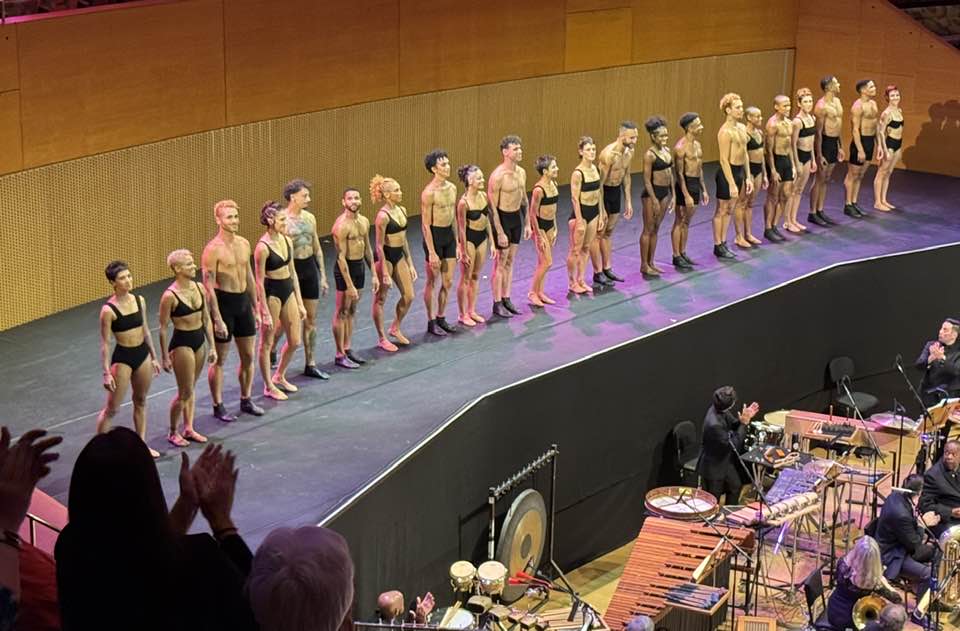
The dancing symphony gave way to the riveting second work, “Revolución diamantina,” which Dudamel commissioned, part of his 18-year practice of lifting up Latin American composers. It’s a ballet in six movements by Grammy-winning Mexican composer Gabriella Ortiz, the orchestra’s guest during the pre-concert seminar. She composed it to honor Mexican women for confronting authorities who failed to investigate and prosecute violence against women, including by police officers.
She told us that during the Glitter March in Mexico City in August 2019, since she was in Los Angeles, she had friends send her recordings from the scene. She wrote some of what she heard into the score, performed Thursday by members of the Los Angeles Master Chorale. The ballet corps comprised 22 members of Grupo Corpo, from Brazil. Ortiz said that the passionate music of Stravinsky was her principal inspiration. Her score and the choreography amply conveyed both agony and hope.