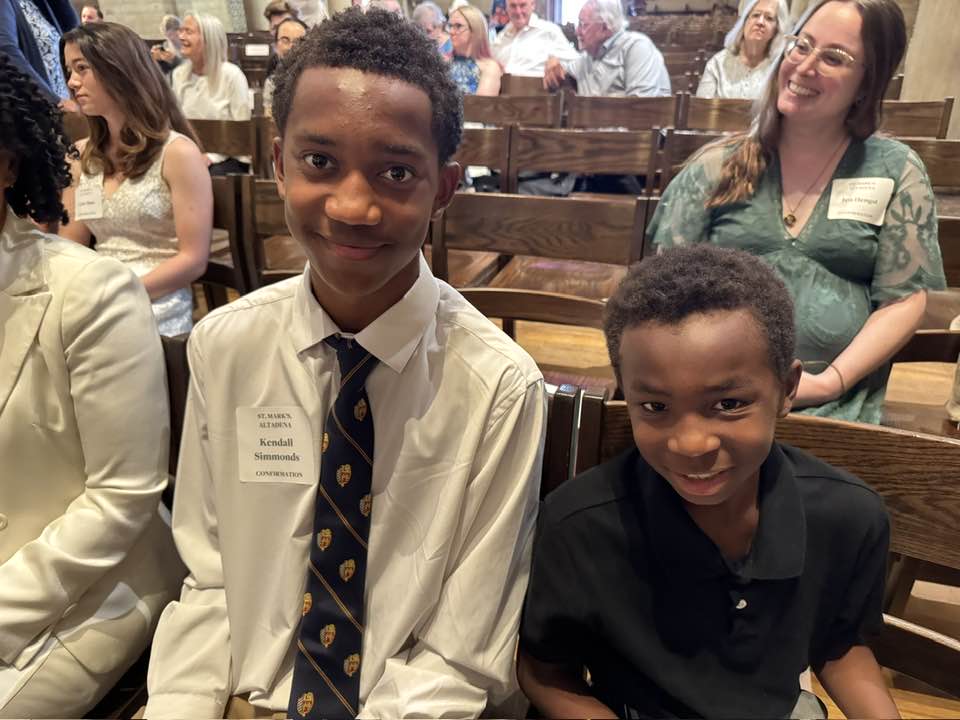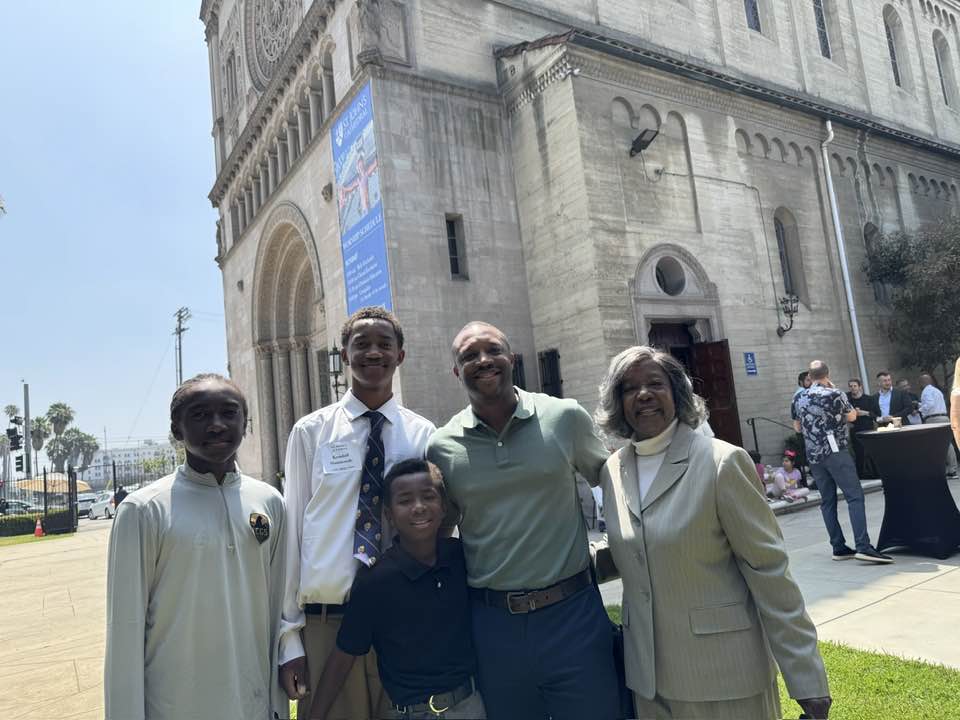
 On Saturday at St. John’s Cathedral in Los Angeles, 21 apostles promised to do their best to obey Jesus Christ’s 21-word sermon. Candidates for confirmation and reception in The Episcopal Church, they, and indeed all of us, pledged to respect the dignity of every human being. To learn what Jesus meant by that, we look to Matthew 7:12, also known as the golden rule: “In everything do to others as you would have them do to you, for this is the law and the prophets.”
In. Everything. If Jesus is Lord of the universe, imagine what he means by everything. It applies to an argument with our spouse about where to go to dinner. It applies to whether a nation goes to war. It applies to you and me. It applies to Trump and Putin. In. Everything.
Jesus also associates himself with what some critics of the post-Enlightenment church call modern biblical scholarship. Every gospel reader understands how well Jesus knew the Bible he had inherited, basically what we call the Hebrew Testament. Think of all the things we argue about. The creation story, saying that God started with two humans. The parting of the Red Sea and the talking donkey. The Deuteronomic code, moral and dietary laws dizzying in their complexity. The slaughters purportedly undertaken in God’s name and the miracles modern scientific minds cannot accept. Whether Isaiah was the work of one person writing 750 years before Christ or untold authors and compilers across two centuries.
Jesus leapfrogs all of these arguments. If it’s Bible study Tuesday, and after class you take him a text you have been grappling with and tell him you’re having trouble interpreting or even believing it, much less applying it to your life, Jesus would say, “It means that if you have an opportunity to treat someone as you would like to be treated, then go do it.”
We might also ask Jesus about the scriptural rules that seem to exclude queer people from the mainstream of life in the church. Jesus would say, “Act toward trans and nonbinary people as though they had formed a church that you decided you wanted to join for whatever reason, and therefore let them join your church, with all privileges and responsibilities thereto pertaining.” If women founded a church, and you were of another gender but thought you had a right to join their church and be ordained, then you had better let anyone who wants, especially women, be eligible for ordination in your church.
Jesus said nothing about excluding women and queer people. It is only a small stretch to assume he would also apply the golden rule to first century social mores that St. Paul and other New Testament writers proclaimed. I can imagine someone arguing that I could replace “queer person” and “woman” with bank robber, embezzler, or murderer, thus making this an exercise in refusing to take a moral stand about sin. The trouble with that is that even theological conservatives would have to accept the ontological difference between their queer or female neighbor, relative, and friend and a bank robber, embezzler, and murderer.
In short, the golden rule works for everything. It comes up 21 every time and makes us all winners when it comes to deserving and receiving the love of our God in Christ as mediated by the Church of Christ. It’s a way of thinking and living that enables us to treat all God’s people with fairness and equity so we can move on to the really difficult questions about grace, righteousness, and reconciliation, war and peace, and the care both of God’s people and our besieged creation.
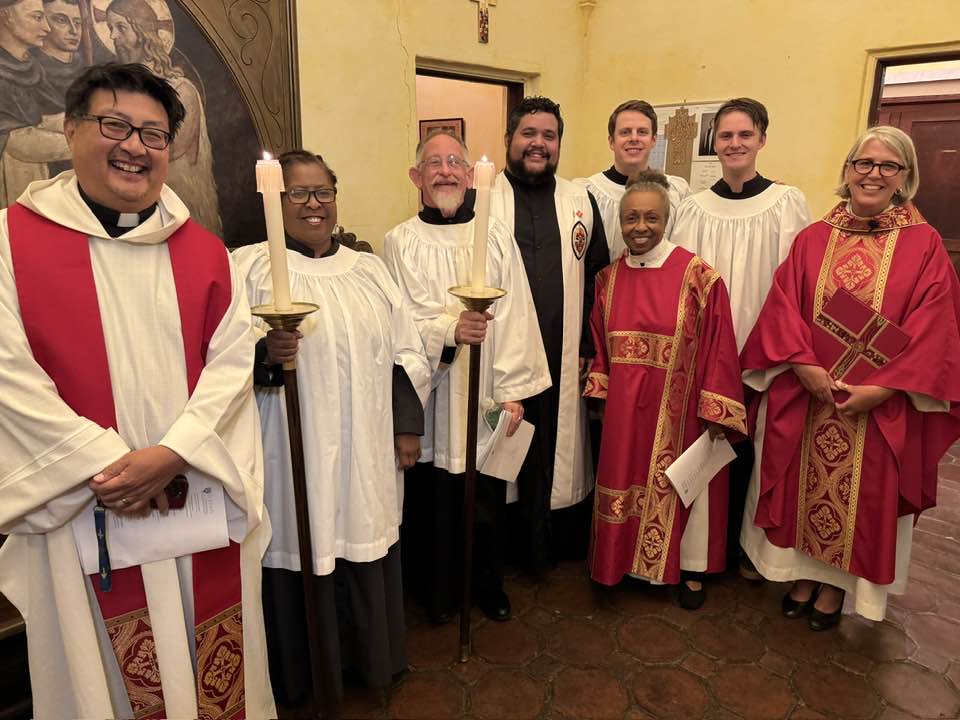
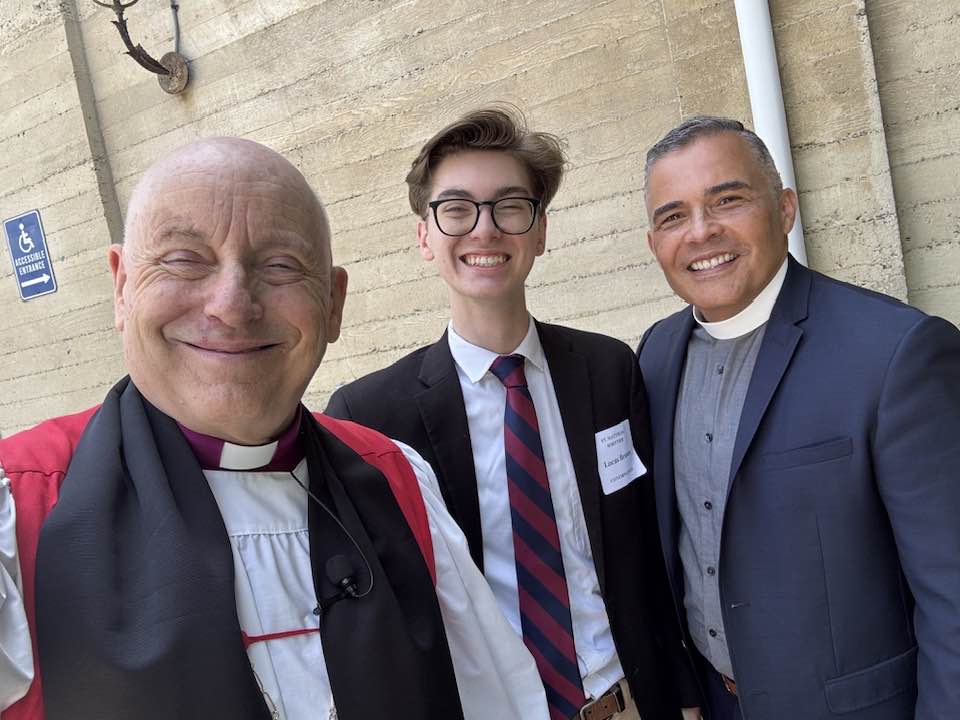
These and other questions were in the air during and after our festive confirmation service hosted by the Very Rev. Anne Sawyer, interim dean of St. John’s Cathedral, who celebrated Holy Eucharist, and her colleagues. I was aboard to preach and conduct the rite of confirmation and reception.
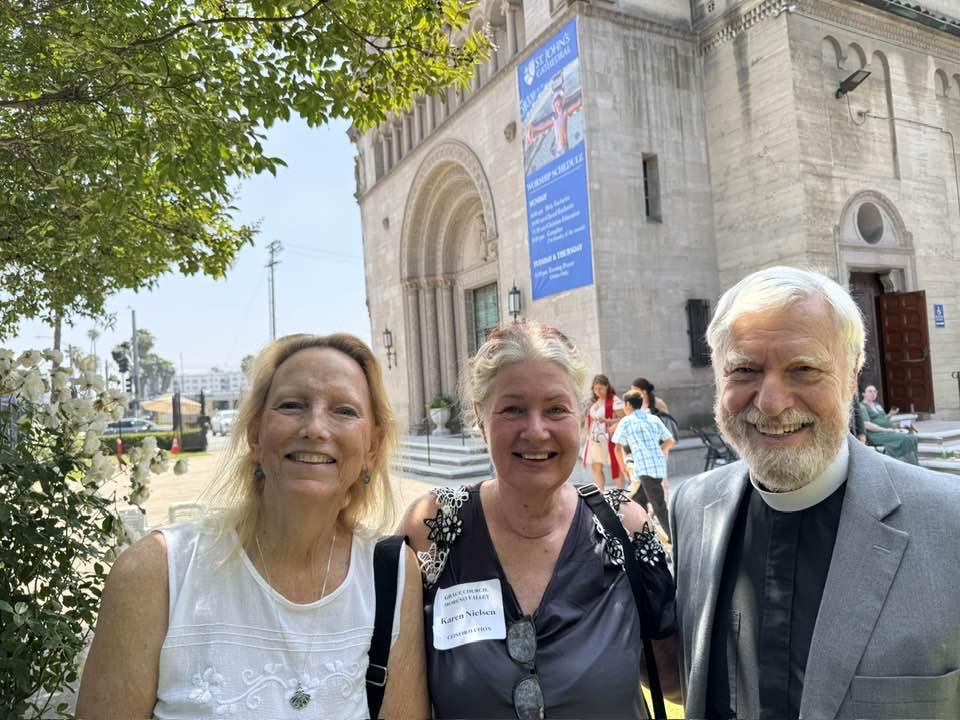
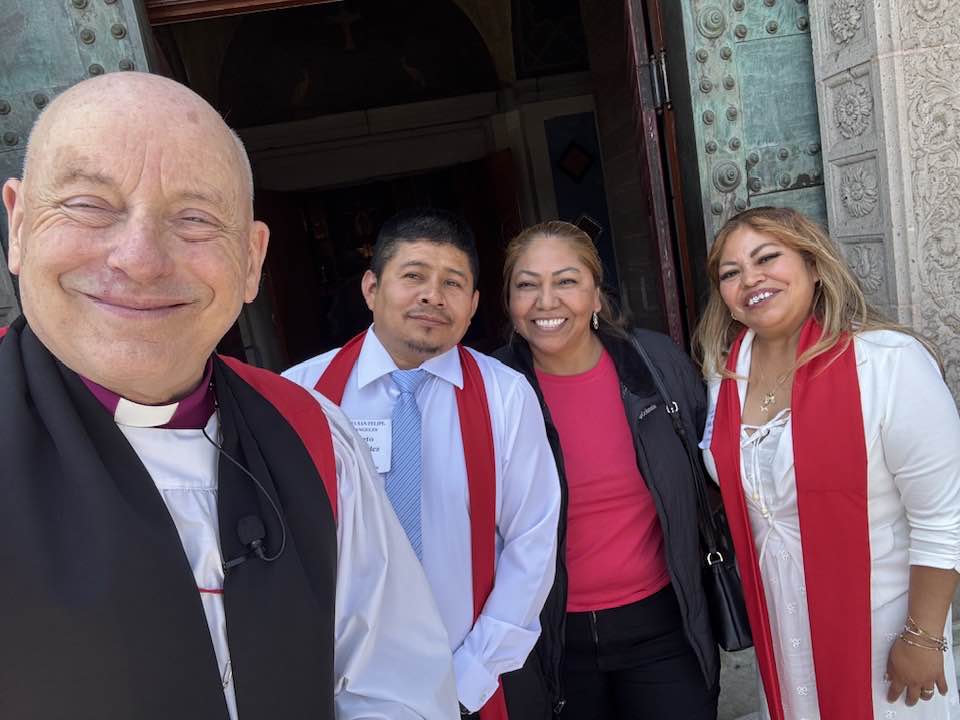
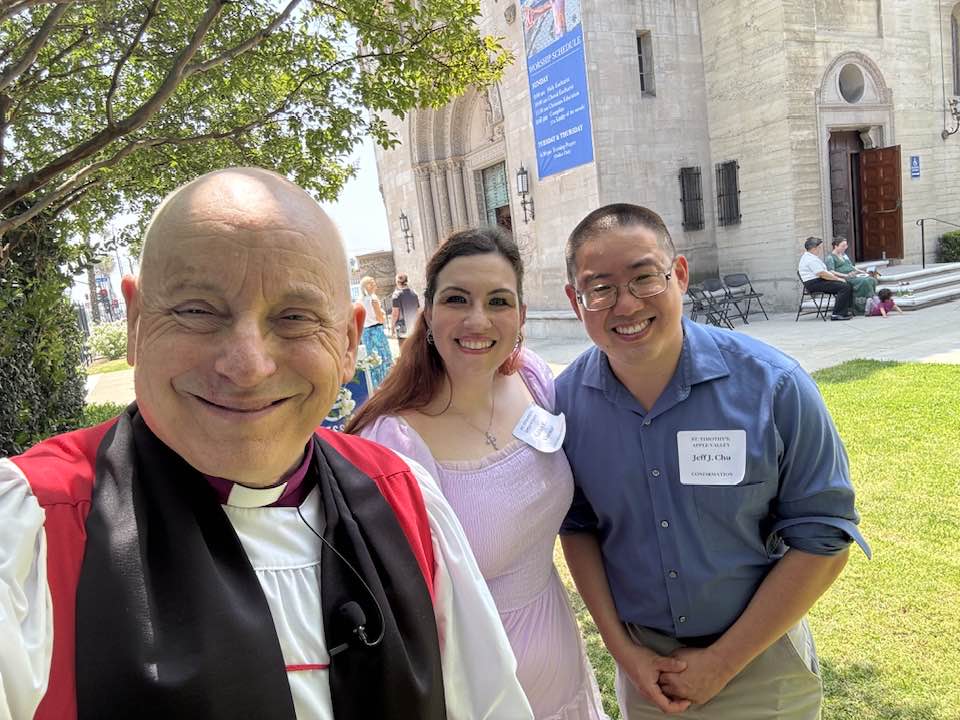
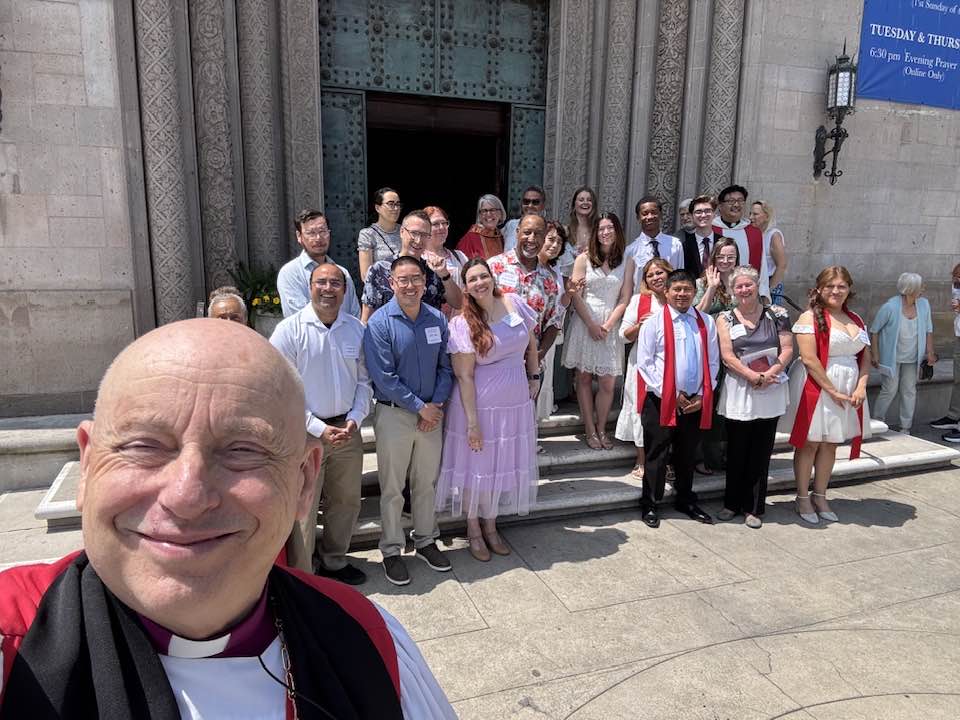
Bishop-elect Antonio Jose Gallardo Lucena was along as well, mixing and mingling at the reception in the cathedral gardens. The Cathedral’s the Rev. Mel Soriano was my gracious chaplain, the Rev. Margaret Hudley McCauley deacon of the mass. Christopher Gravis, Zach Neufeld, and elements of the St. John’s Choir offered magnificent music. Dean Anne and Canon for Parish Administration Kyle Black saw to every detail. Canon for Common Life Bob Williams snapped the official group photo; I snapped the unofficial selfie.
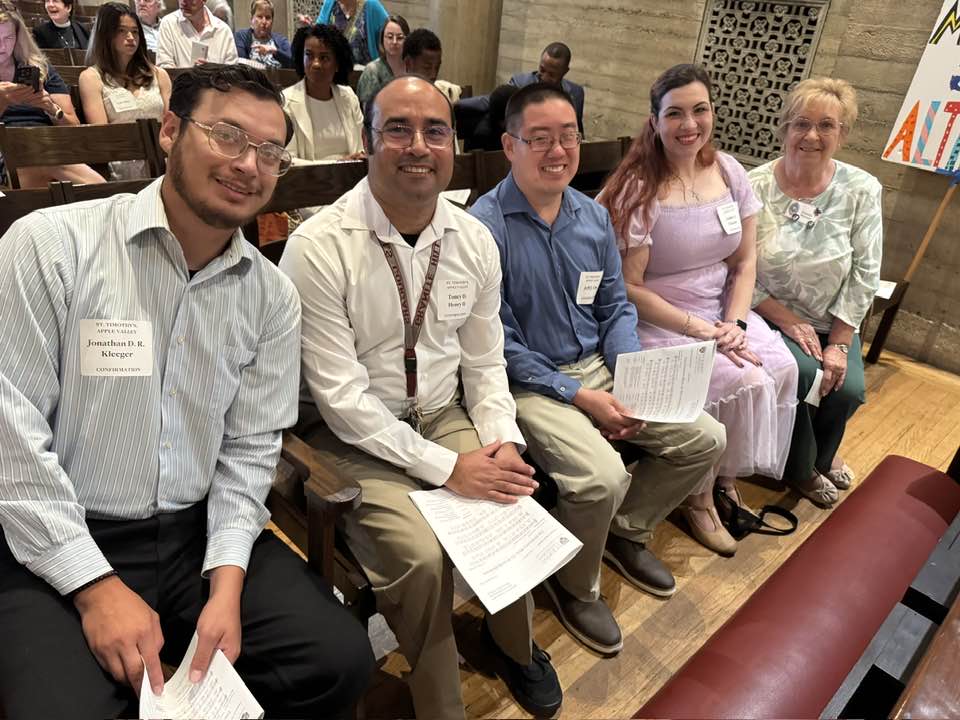
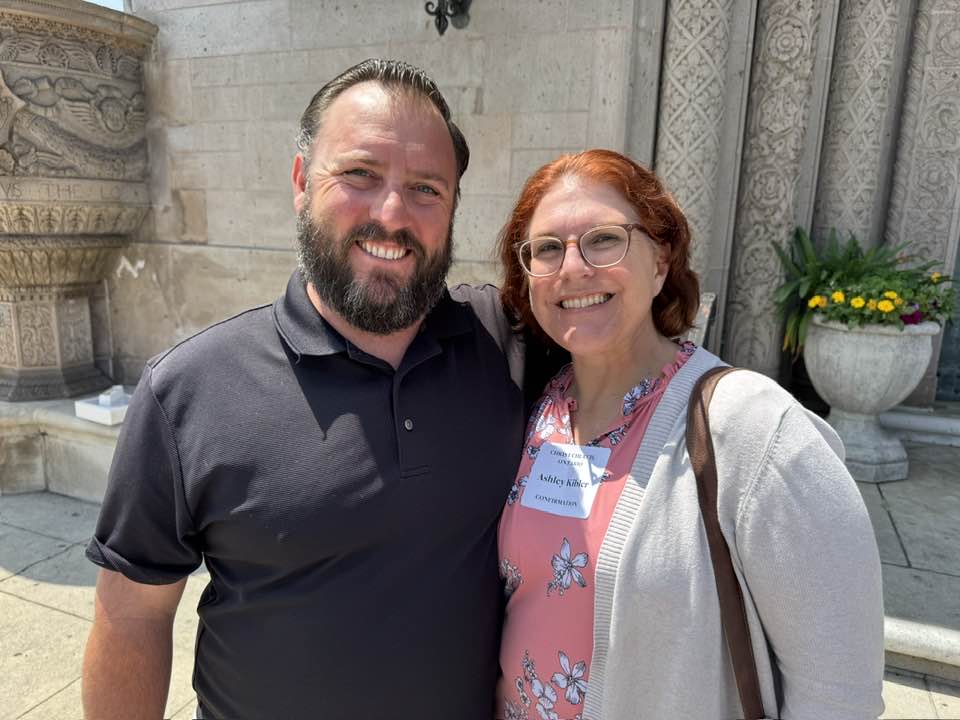
Candidates hailed from ten of the Episcopal Diocese of Los Angeles’s missions and parishes. One confirmand and their spouse are professors at community colleges in red neighborhoods in our diocese and also refugees from a post-denominational Christianity that does not construe the dignity of every human being as, at long last, The Episcopal Church has finally done.
In their classrooms, they proclaim and practice inclusiveness in a way that does not always sit well with all the members of the communities they serve. But they do it anyway. Because of the baptismal covenant. Because the civic definition of the dignity of every human being is liberty and justice for all, to which we pledge with our hands over our hearts. Because the golden rule is the only thing that works, and Jesus Christ gave himself up on the cross and was raised from the dead to prove it. Because Resurrection always helps us take risks for what is right.