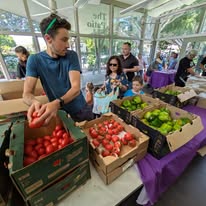
Seeds of Hope executive director Steve Trapasso distributes fresh produce at Virginia Avenue Park site in Santa Monica
“Eat, Pray, Move,” and “Food as Medicine” partnerships, creating fresh fruits and vegetable storage hubs, offering nutrition education, healthy cooking classes, gardening, food distribution and even case management are ways Seeds of Hope (www.seedsofhopela.org) aims for a healthier greater Los Angeles community.
The diocesan food justice ministry, launched in 2013, has exploded into a major network of church, municipal, community and health care partnerships, distributing more than 400,000 pounds of food at 80 sites (https://www.seedsofhopela.org/food-distributions.html) monthly in the greater L.A. area, according to Steve Trapasso, executive director. He anticipates delivering a robust total of about 5 million pounds of food in 2026. A Seeds of Hope (SOH) food hub at L.A.’s Christ the Good Shepherd Church (Christ the Good Shepherd | Christ the Good Shepherd), for example, has blossomed into fresh vitality for the congregation and healthy fruits and vegetables for its historic Leimert Park community in L.A., according to the Rev. Susan Anderson-Smith, priest-in-charge of the Leimert Park parish.

Seeds of Hope food hub at Christ the Good Shepherd.
“It’s exciting for the congregation to know that something miraculous is happening onsite and that we have this really wonderful partnership,” said Anderson-Smith while noting the congregation’s feeding ministry legacy, dating to its inception in the 1950s.
“They love being part of a movement for food justice and making sure that people have something to eat, that’s the ultimate ground for them.” The congregation operates a biweekly food pantry supplemented with nonperishable items from L.A. Regional Food Bank, serving more than 100 people weekly, she said.
“A real spiritual benefit is that the legacy of feeding has been able to continue—it’s just one of the ministries that defined this congregation and it’s very exciting for them to see the new iterations that they might not have even imagined was possible, and they love that part,” she said.
“We’re deeply grateful to Steve and to Seeds of Hope, for reaching out and identifying and wanting to create a partnership that’s really been a breath of fresh air.”
SOH built the hub, which consists of two 20-foot refrigerated shipping containers that can hold 14 pallets, as much as 20,000 pounds of food at a time. We have food going there every day of the week and partners picking up—food that is delivered from local farmers,” Trapasso said.
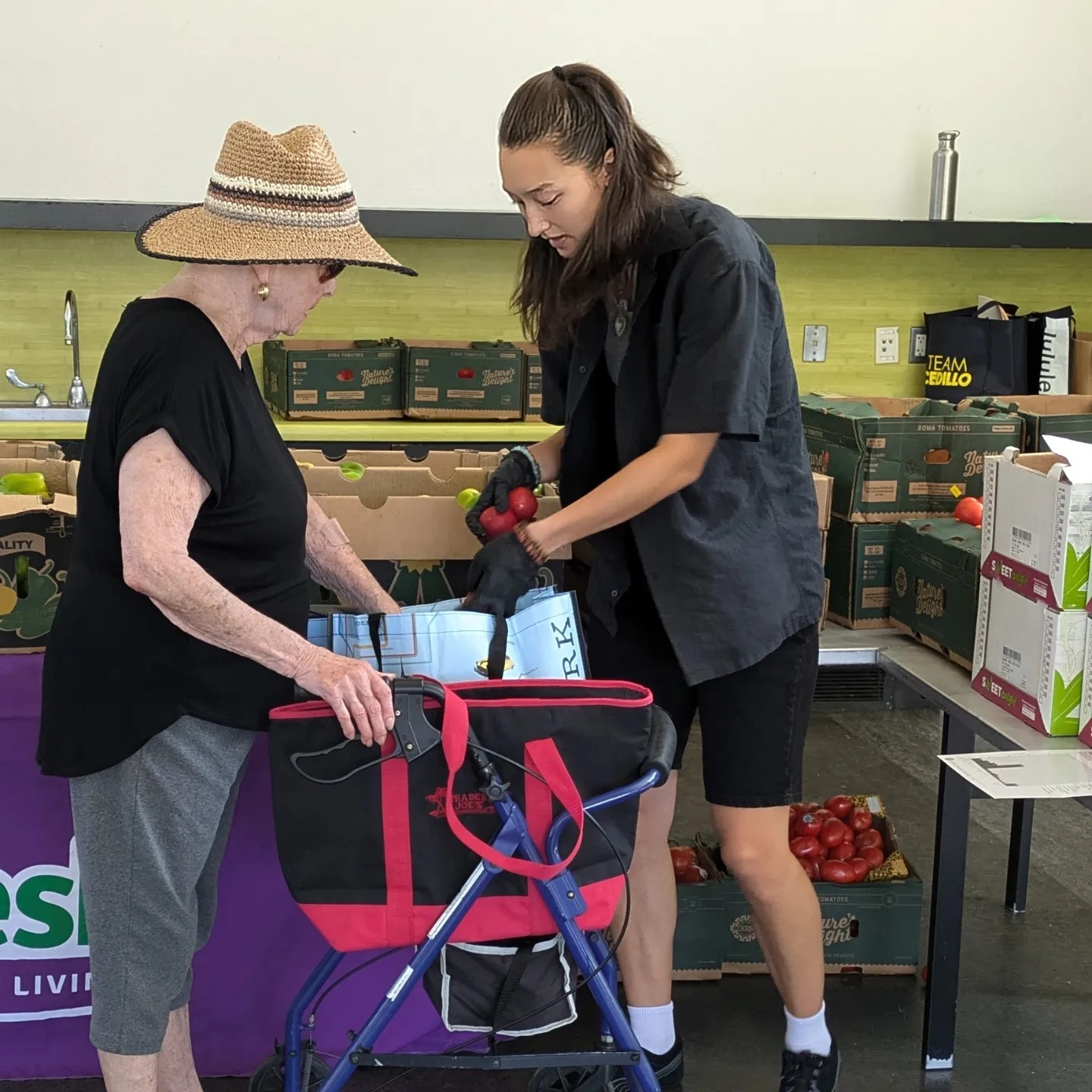
Seeds of Hope food distribution in Virginia Avenue Park site in Santa Monica.
A similar food hub is planned for St. Simon’s/San Simón Church in San Fernando, with distributions possibly made to local “corner stores” to increase community access, he added.
Plans for additional outreach just keep growing and blossoming, including:
n Partnering with Cal Poly Pomona’s 125-acre Spadra Farm this fall, planting butternut, acorn and other varieties of squash, with an anticipated yield of 1 million pounds of food, Trapasso said.
n “Eat, Pray, Move,” a Rand Institute and National Institute of Health grant with SOH in 10 South L.A. churches will attempt to measure the results of promoting nutrition and healthy eating via congregations. The effort includes working with pastors to raise awareness through sermons; creating health fairs and promotion; gardening and offering nutrition classes. A similar effort (https://pmc.ncbi.nlm.nih.gov/articles/PMC12447656/) in 2024 yielded “adults in intervention churches had significantly less weight gain and greater weight loss, lower BMI, and healthier self-reported diet at follow-up than controls.”
In Additionally, a recent study of 40 participants in a Seeds of Hope “Food as Medicine,” partnership with Kaiser Permanente and the South Central Family Health Center yielded a significant improvement among participants with high blood pressure and diabetes.
“SOH is a high-impact, cost-effective program (that) addresses social determinants of health (e.g. food insecurity) the non-medical factors that influence a person’s health outcomes and overall well-being,” according to a SCFHC report.
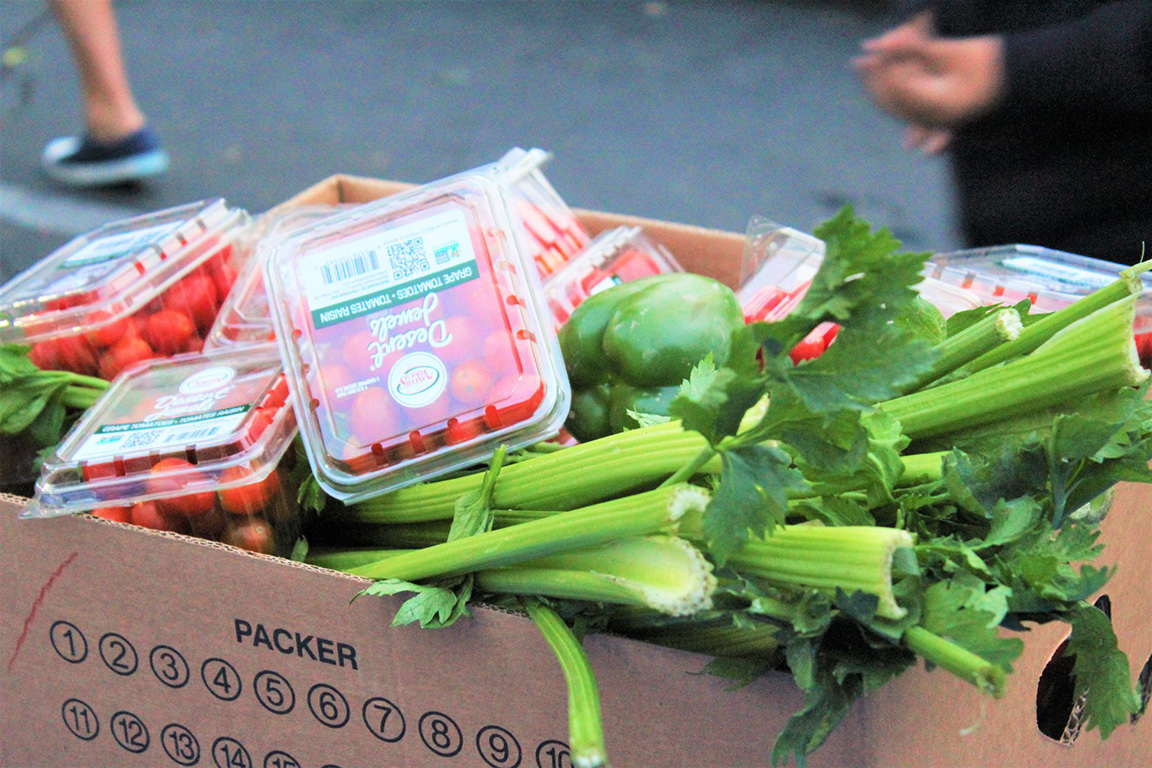
Produce distributed at a Seeds of Hope site.
Another group of 40 participants will begin in mid-June, and plans are also underway to begin a “Food as Medicine” partnership with six San Gabriel Valley clinics this August. Community health workers are available on site to assist navigating the system, signing patients up for food stamps and insurance, as needed, according to Trapasso.
“A main complaint that people have about not eating healthy is that they don’t have the time, money, and they don’t know how to cook,” Trapasso said. “So, taking one of those barriers away, which would be prescribing healthy food and paying for it instead of paying for cholesterol or diabetes meds, in the long run could save health care companies a bunch of money.”