
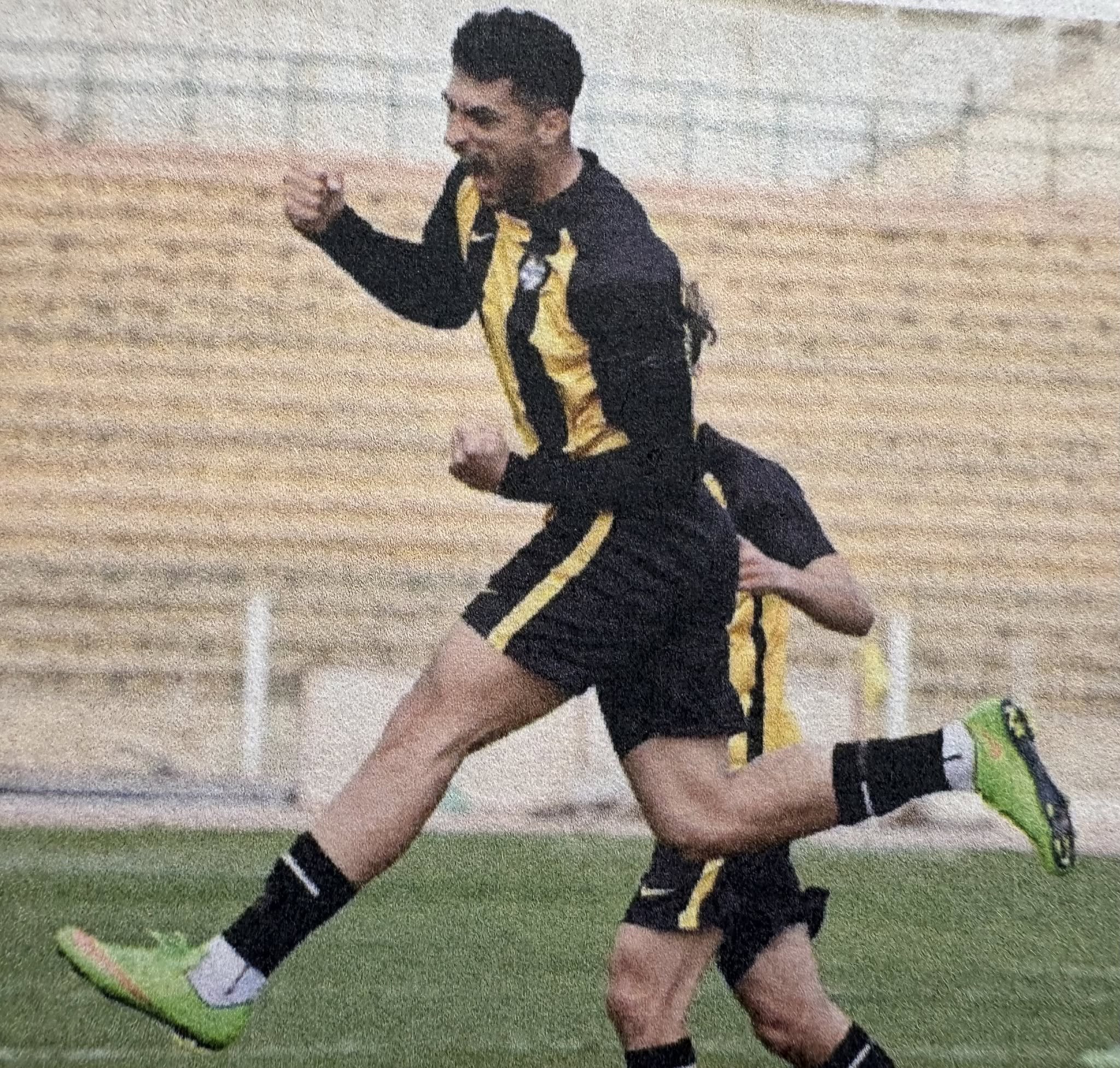
 Gaza-born Mohammed Balah, 32, is watching the World Cup from an apartment in Doha, Qatar, where he plays on the Al Shahaniya team. Named Palestine’s most valuable player in 2017, his thrilling play earned him the sobriquet “Ronaldo of Gaza,” after the Portuguese superstar.
Israeli has cruelly put Palestinian nationhood on hold. But the Palestine National Team isn’t waiting for the politicians. In the 2024–2025 runup to the World Cup, they fell just short of a berth despite losing managers and family members in the Gaza war. If it hadn’t been for the war, Mohammed would probably have been playing. The Palestine team might’ve made it to North America.
Think of Gaza and West Bank footballers among us in the United States this summer, expressing their passion for the prize of nationhood with every shot on goal. We’ll never know, of course. Either way, Mohammed is not a complainer. His favorite expression is “Alhamdulillah” — “with God’s grace.”
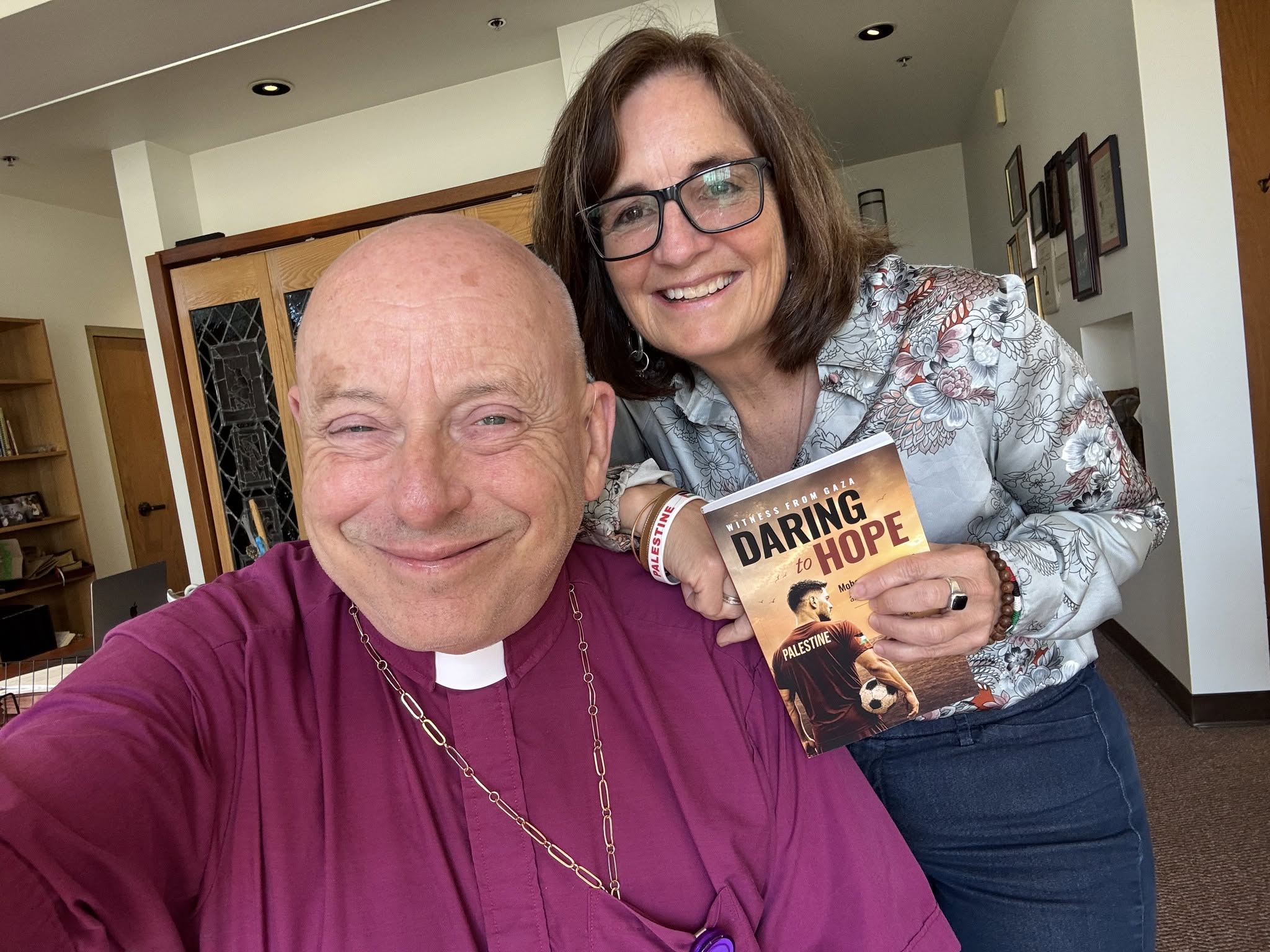 We can read his epic story in “Daring to Hope: Witness from Gaza,” which he co-wrote with economist and humanitarian activist Anne Habiby. In 2022, he returned to Gaza to get married. After the vicious Hamas attacks on Oct. 7, 2023 and the beginning of Israel’s disproportionate assault on Gaza, in which at least 73,000 are known to have died, Anne set out to write a freelance article on the Palestine National Team. She soon realized that Mohammed was stranded in Gaza. She texted him — and he astonished her by texting back.
She helped him and his pregnant spouse, Maryam, make plans to get out. He made it. Maryam was scheduled to come 10 days later, but Israel closed the border. She’s still in Gaza with their 18-month-old son, Hamza, which means lion. Mohammed calls Hamza, whom he has never met, their lion protector. With the help of three gracious Egyptian businessmen Anne fortuitously met at an embassy party in Riyadh, Saudi Arabia, one of the places she calls home, she got Mohammed a Cairo apartment and a trainer to help him get ready to play again. He plays for Palestine, Maryam, and Hamza, for their eventual reunion and aspirational nation.
“Daring to Hope” is also a moving account of Gazans as refugees in their own country, their courage, and their enduring humanity. Fleeing south as Israeli attacks escalated, Mohammed and his extended family, 15 in all, left his physician father behind so he could continue working at al-Naser Children’s Hospital. They pushed his grandmother in her wheelchair along bomb-ravaged streets. Friends extended the graces of safe harbor, extra mattresses, food, and water. In the first seven months of the war, Mohammed moved his family five times, often fearing they wouldn’t survive the night.
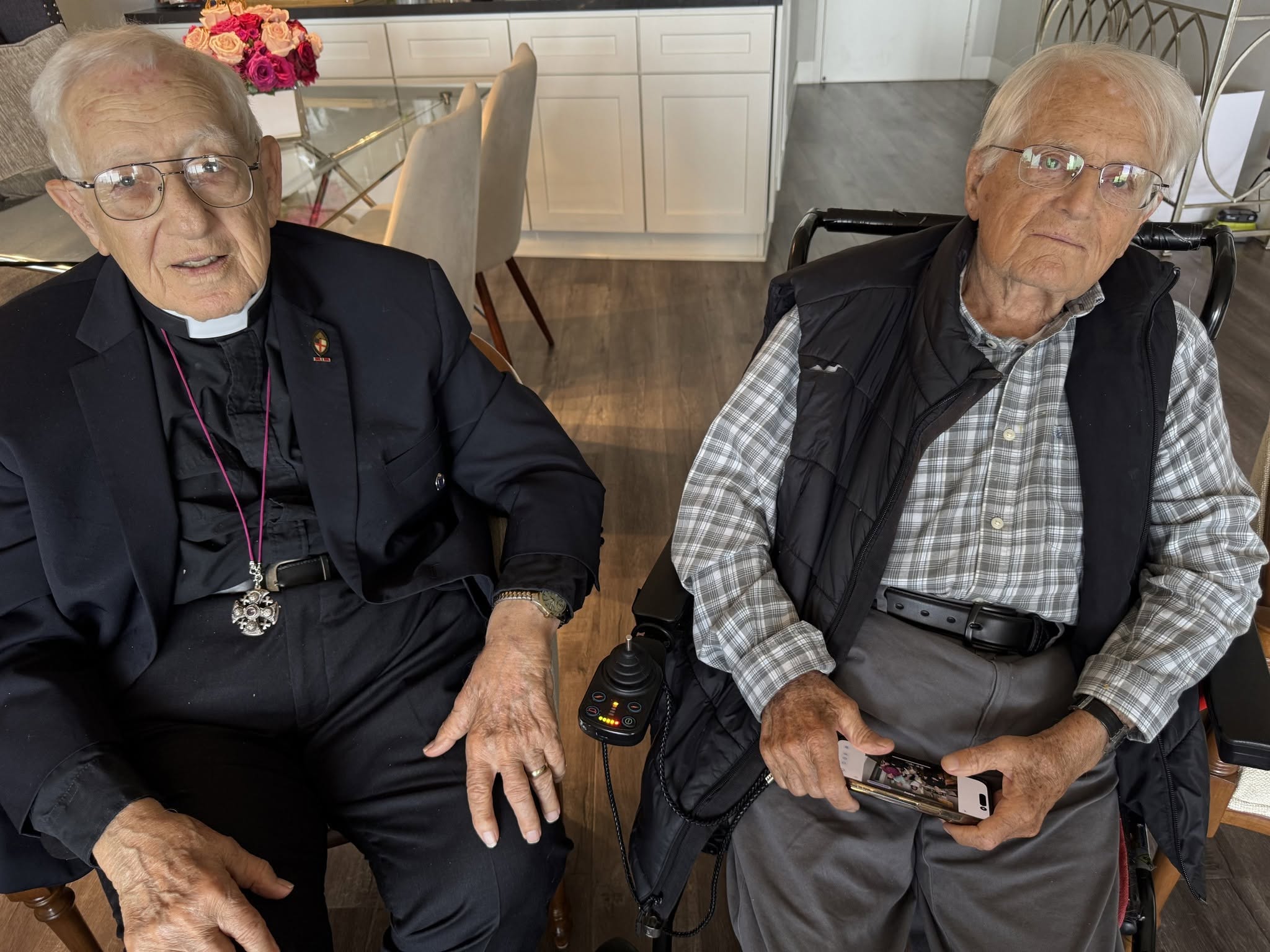 Co-author Anne, who came to visit me last week at St. Paul’s Commons, Echo Park, is the daughter of attorney and philanthropist Armond Habiby of The Parish of St. Matthew – The Episcopal Church in Pacific Palisades and the niece of the Rev. Canon Samir Habiby, a legendary retired Episcopal Diocese of Los Angeles priest and top official of The Episcopal Church. The photo shows them last June in Los Angeles. Their father was a judge in the British Mandate courts. The family had lived in Haifa for centuries when the Israeli Army drove the Habibys into exile during the 1948 war of independence. Armond and Samir continue to battle in Israeli courts for compensation.
 Anne confirms that Mohammed’s spouse and son are trapped in Gaza City, living in his father’s heavily damaged apartment. Israel still won’t let anyone leave. They’re in regular touch with Mohammed. One can only imagine the heartbreak of their separation. Anne’s account of conditions in Gaza mirror what little is available in the media. Israel severely restricts food and humanitarian aid, though, oddly, they let in plenty of Coca-Cola and candy. Hundreds of Palestinian journalists died in the war. Anne says 20,000 children and nearly 1,000 athletes were killed.
No outside journalists, not even progressive Israelis, are permitted. Israel blames Hamas for its hard line. But Netanyahu’s relentless opposition to Palestinian nationhood may now be the dominant factor. Before the ceasefire, Israel destroyed or damaged 80% of Gaza’s buildings and laid waste to its 36 hospitals as well as schools, churches, and other institutions, including sports facilities. After World War II, the U.S. helped rebuild its former enemies Germany and Japan. So far, we’re seeing no signs of Gaza’s reconstruction. If Israel isn’t ashamed of what it is doing, it should let the world see. Otherwise, it will be harder and harder to escape the conclusion that Israel has the genocidal aim, separate from the tactical challenge of opposing Hamas, of weakening Palestinian Gaza as a distinct community and culture.
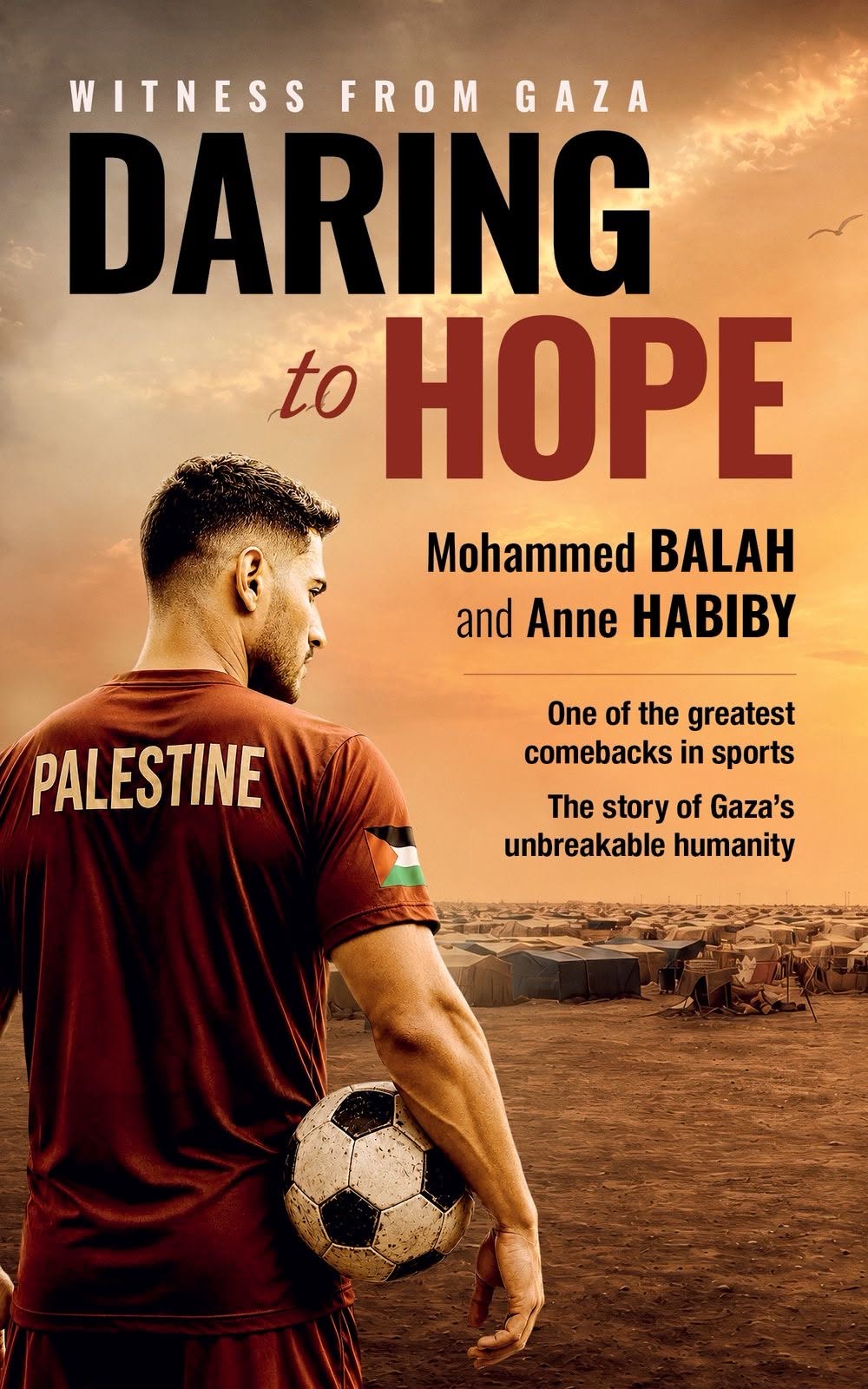 Nevertheless, Anne told me, “Gazans aren’t going anywhere.” Her and Mohammed’s prose is gripping. They took turns writing chapters. Anne said that Mohammed wrote in classic Arabic, like a poet. Anne shares the poet’s gifts. “Israel’s assault became the deadliest conflict for journalists in modern history,” she wrote. “More killed than in Iraq, Afghanistan, and Ukraine, combined. Reporters lost their own families and went back to film. Some died with their cameras still running. And students took high school exams in tents. University students defended dissertations on-line, atop concrete. Artists and musicians made beautiful what was broken.” And hope, against all odds, remains alive.
[Anne and Mohammed’s book is available here: Daring To Hope: Witness From Gaza: A True Story of Faith, Freedom and Football: Balah, Mohammed, Habiby, Anne: 9798273987654: Books – Amazon.ca
Reach out to Anne at ahabiby@allworldlive.com if you would like to invite her to speak at your church or other institution.]